Roundabouts and priority junctions
Priority on a roundabout, choosing your lane with several lanes, stopping at sign B7 and a priority road that bends away: as the CBR asks it.
At an equal intersection, there are no traffic lights, priority signs, or road markings regulating priority. Then you solve the situation with the standard rules: traffic from the right goes first, and on the same road straight traffic goes before turning traffic.
If you face each other on the same road and both turn, then: the short turn goes before the long turn.
Traffic signs at priority junctions
Sign B1 indicates that you are driving on a priority road and have priority over side roads.
Yield lines / shark's teeth on the road surface have the same legal meaning as sign B6.
At yield lines / shark's teeth, you give priority to drivers on the intersecting road.
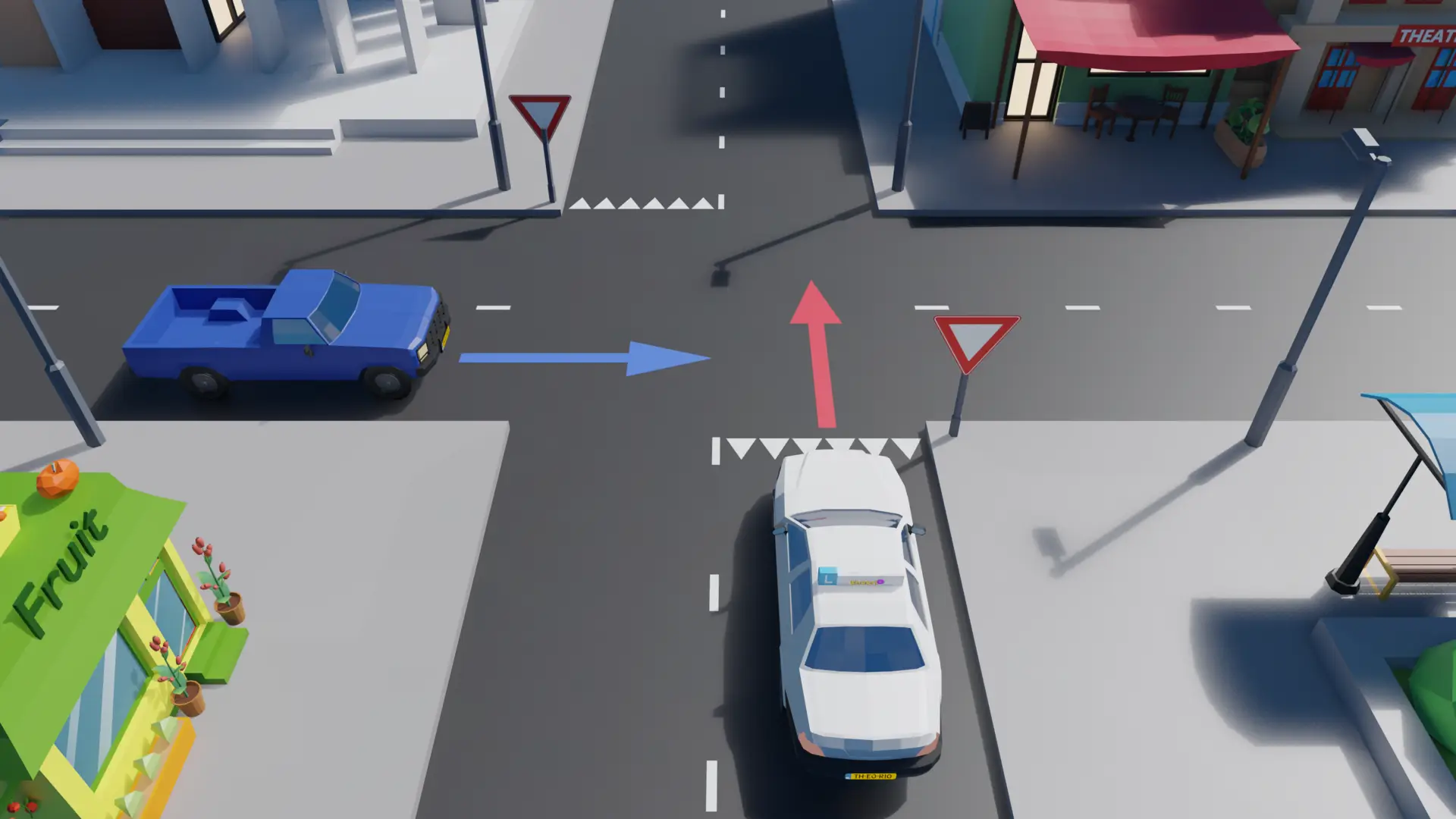
Mandatory stop at sign B7 and stop line
Sign B7 requires you to always stop physically at the white stop line.
You must also stop if, at that moment, no other traffic is approaching.
Priority road that bends away
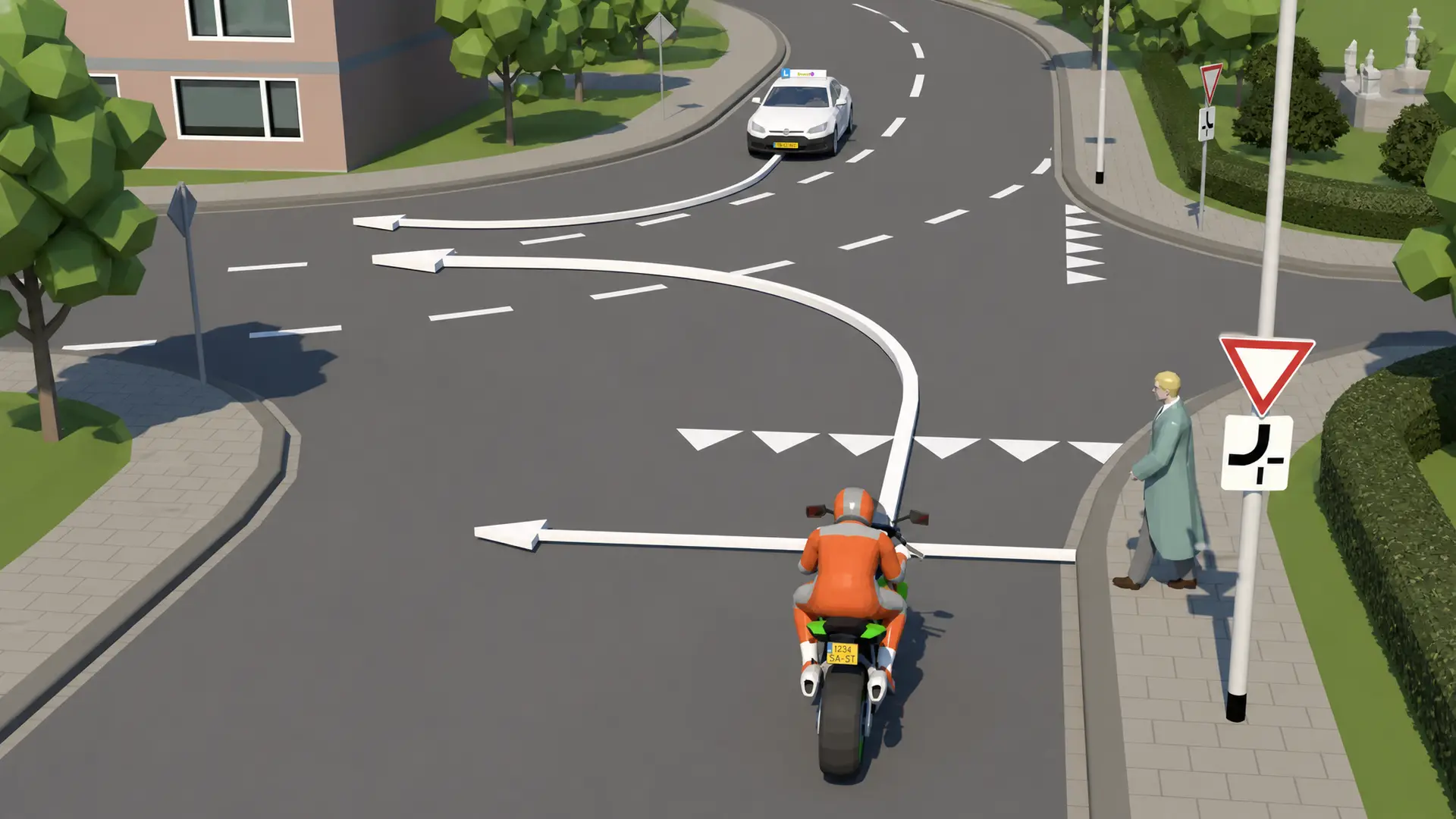
A priority road that bends away is indicated with a thick curved line on a supplementary sign.
If you stay on the priority road, you keep priority over the other traffic.
If you leave the priority road, you must give way to through traffic on the priority road.
Priority rules at roundabouts
Are sign D1 and yield lines / shark's teeth placed at the entrance to a roundabout?
Then traffic on the roundabout has priority over the entering traffic.
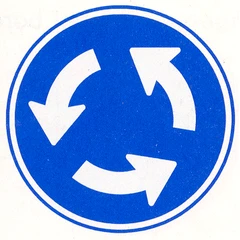 Sign D1 (Roundabout): Compulsory direction of travel on a roundabout.
Are there no signs or yield lines / shark's teeth at a roundabout?
Then it is an equal-priority roundabout where traffic from the right (the entrance) has priority.
| Roundabout type | Signs / markings | Who has priority? |
|---|---|---|
| Priority roundabout | Sign D1 + yield lines / shark's teeth at the entrance | Traffic on the roundabout goes first |
| Equal-priority roundabout | No signs or markings present | Traffic from the right (entrance) goes first |
| Leaving the roundabout | Indicate to the right | Through cyclists/pedestrians go first |
Getting into the correct lane in time at a roundabout with multiple lanes
A roundabout is an exception to the rule that you always position yourself as far to the right as possible. If the roundabout has multiple lanes, it is usually indicated with arrows on the road surface which lane leads to which exit. Follow those arrows.
If you want to take the last exit, it makes no sense to position yourself in the far-right lane — there you can only go straight on or turn right. If two lanes lead to your exit, you may use both.
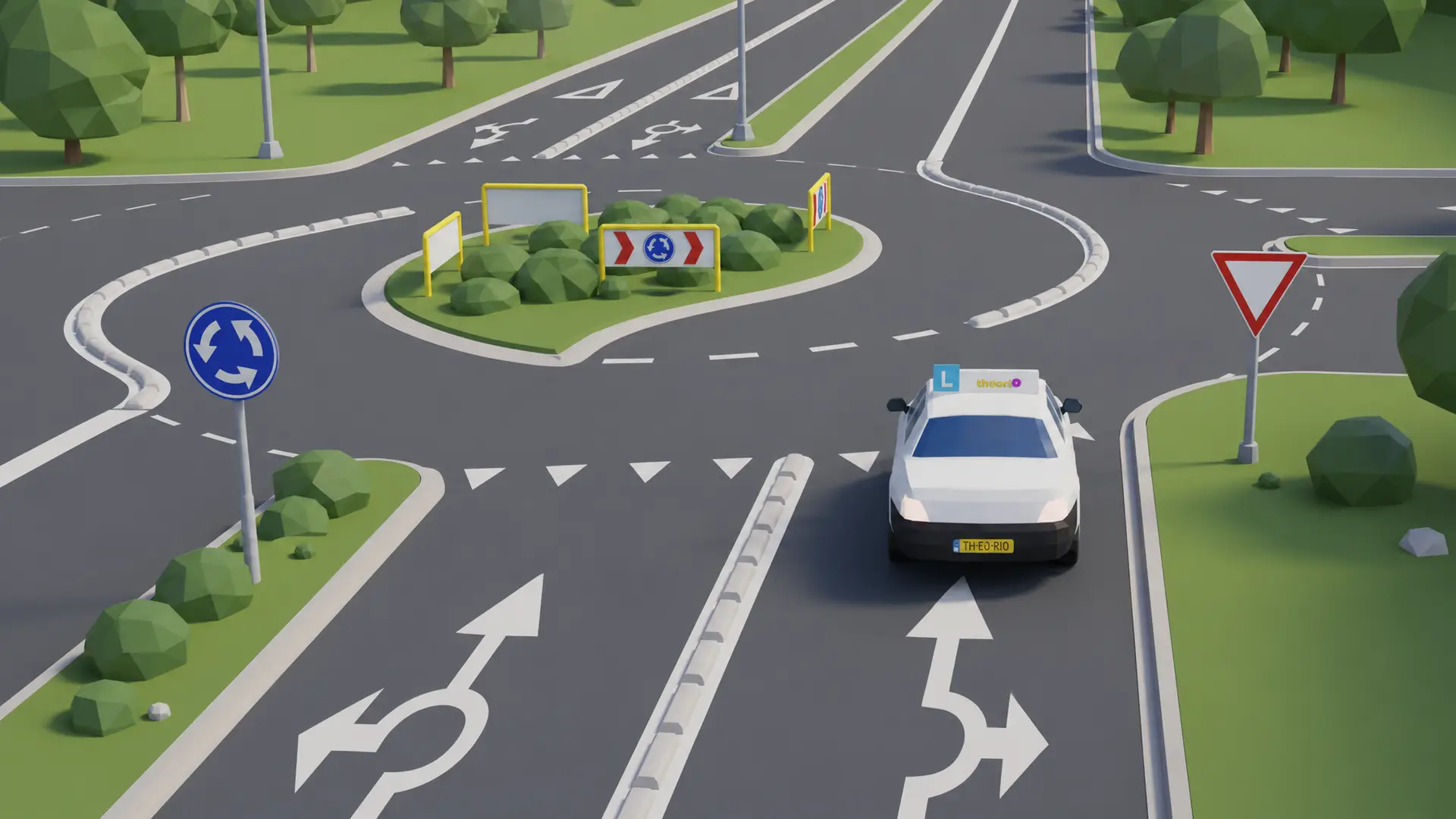
If you can already see, before the roundabout, a sign for a roundabout with multiple arrows on the road surface, you can assume that the roundabout has multiple lanes. Then position yourself in time so that you can leave at the correct moment.
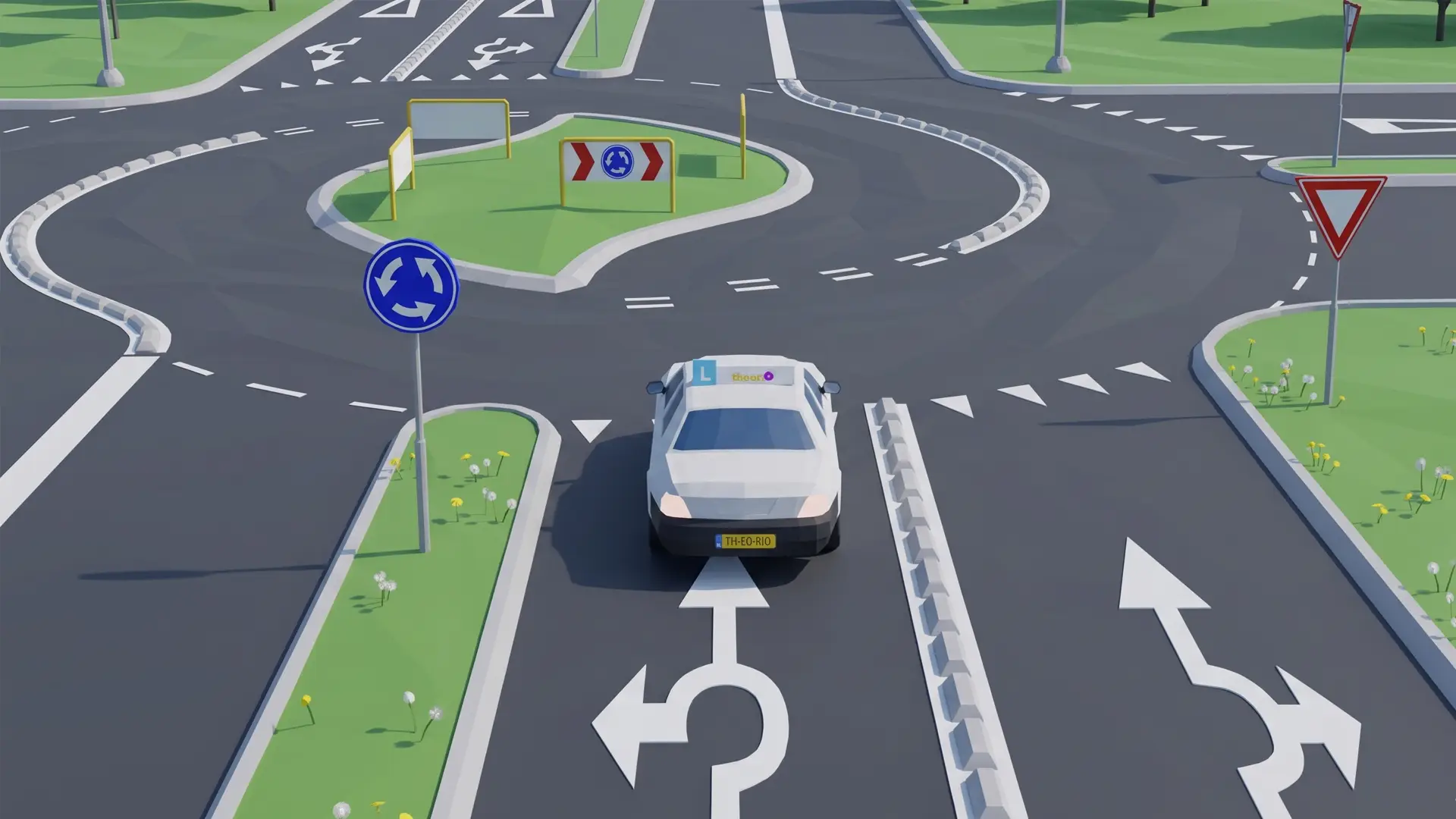
In time on the right lane
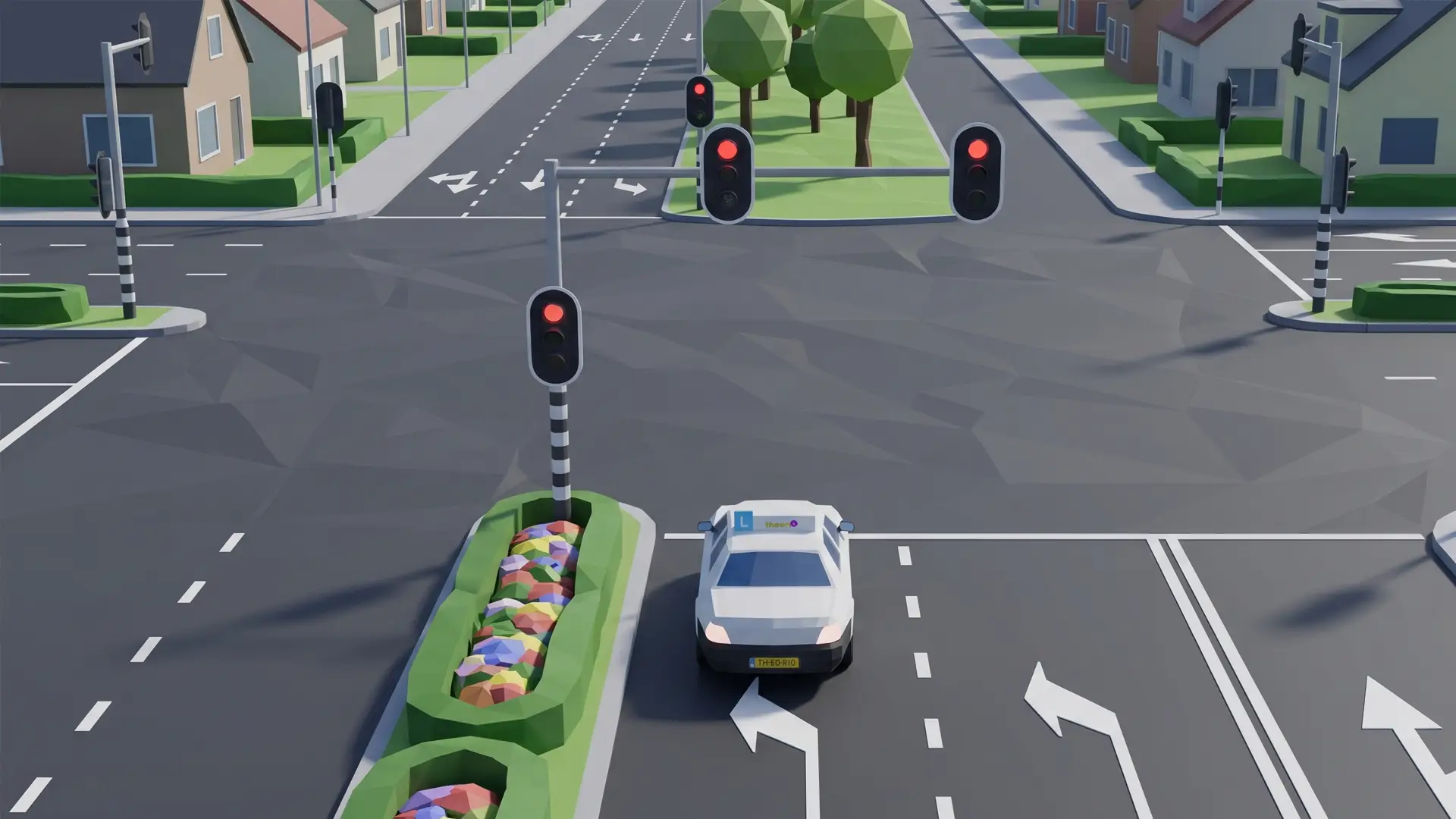
If you are in a lane that only goes left, but you still want to go straight ahead, you may not simply move over. If there is a continuous line between the lanes, you are stuck: you should have changed lanes earlier, when the line was still broken.
If you are still next to a broken line, you may change lanes. So pay close attention to where the line changes from broken to continuous.
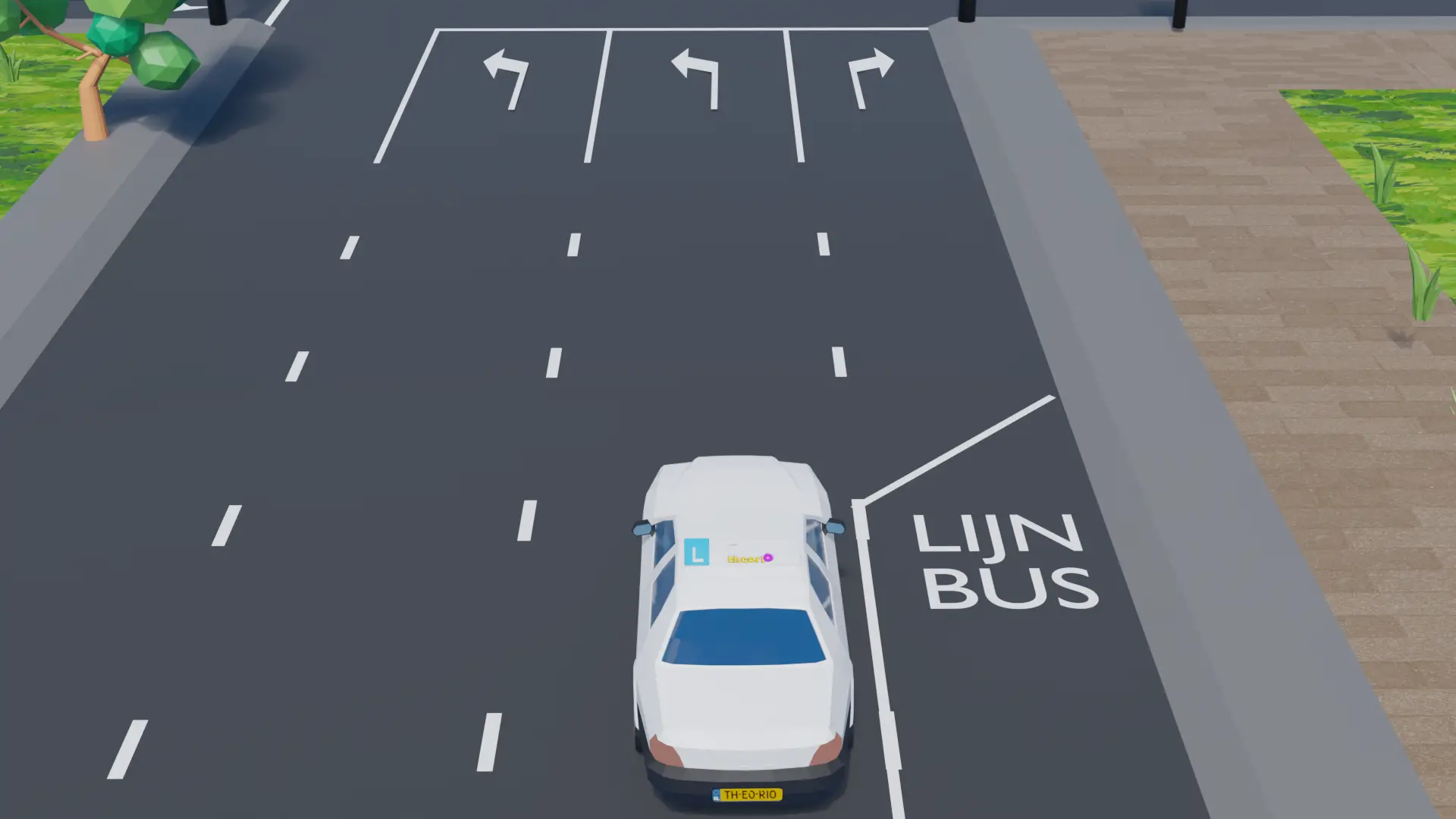
Bus lanes at an intersection
A bus lane is often separated from the rest of the road by a continuous line. At an intersection or traffic lights, that line usually changes into a broken line, so other traffic is allowed to use the bus lane there to turn right.
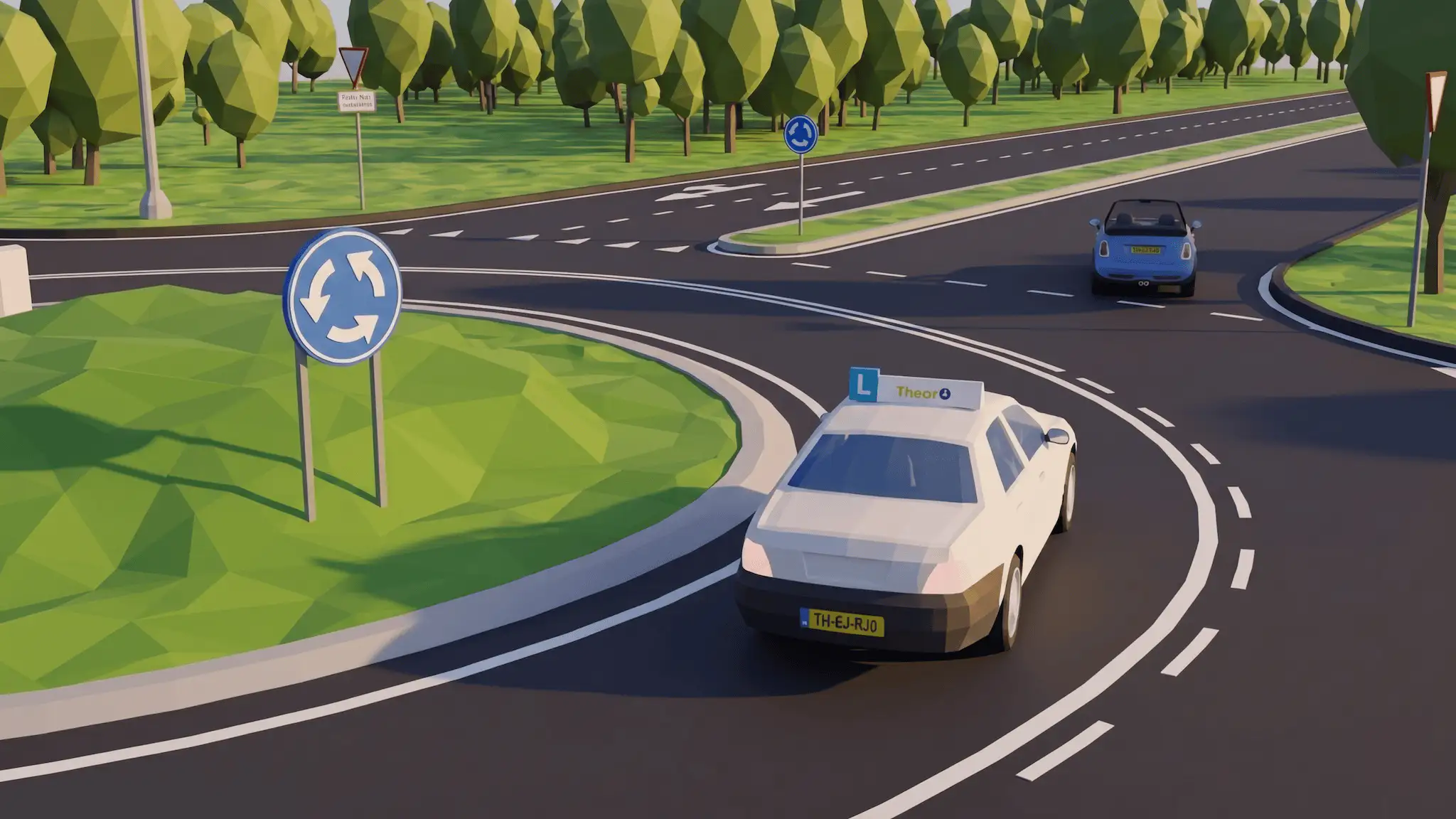
A continuous line on the roundabout itself
The normal line rule also applies on a roundabout. If there is a continuous line to your right, you may not turn off there to leave the roundabout. Then you drive around one more time until the line is broken.
Anticipate at intersections and exits
Other drivers do not always behave in a predictable way, but sometimes you can see their behaviour coming. Do you see a traffic jam further ahead and is there an exit right before it? Then there is a good chance that cars are taking that exit to avoid the traffic jam.
Most drivers change lanes in time. But someone who is distracted does it at the last moment. Take that into account, especially right before an intersection or an exit.