Autoweg (expressway): speed and rules
On an autoweg, usually 100 km/h applies and at least 50 km/h. Pay attention to signs and active matrix signs: those are leading.
For the CBR, you must recognise an autoweg immediately by the blue sign with a white car. Then you determine the speed: normally a maximum of 100 km/h and a minimum of 50 km/h, unless signs or matrix signs indicate something else.
In exam questions, the difference with the motorway is important: autoweg = white car on a blue sign, no motorway symbol.
Autoweg or motorway? This is how you see the difference
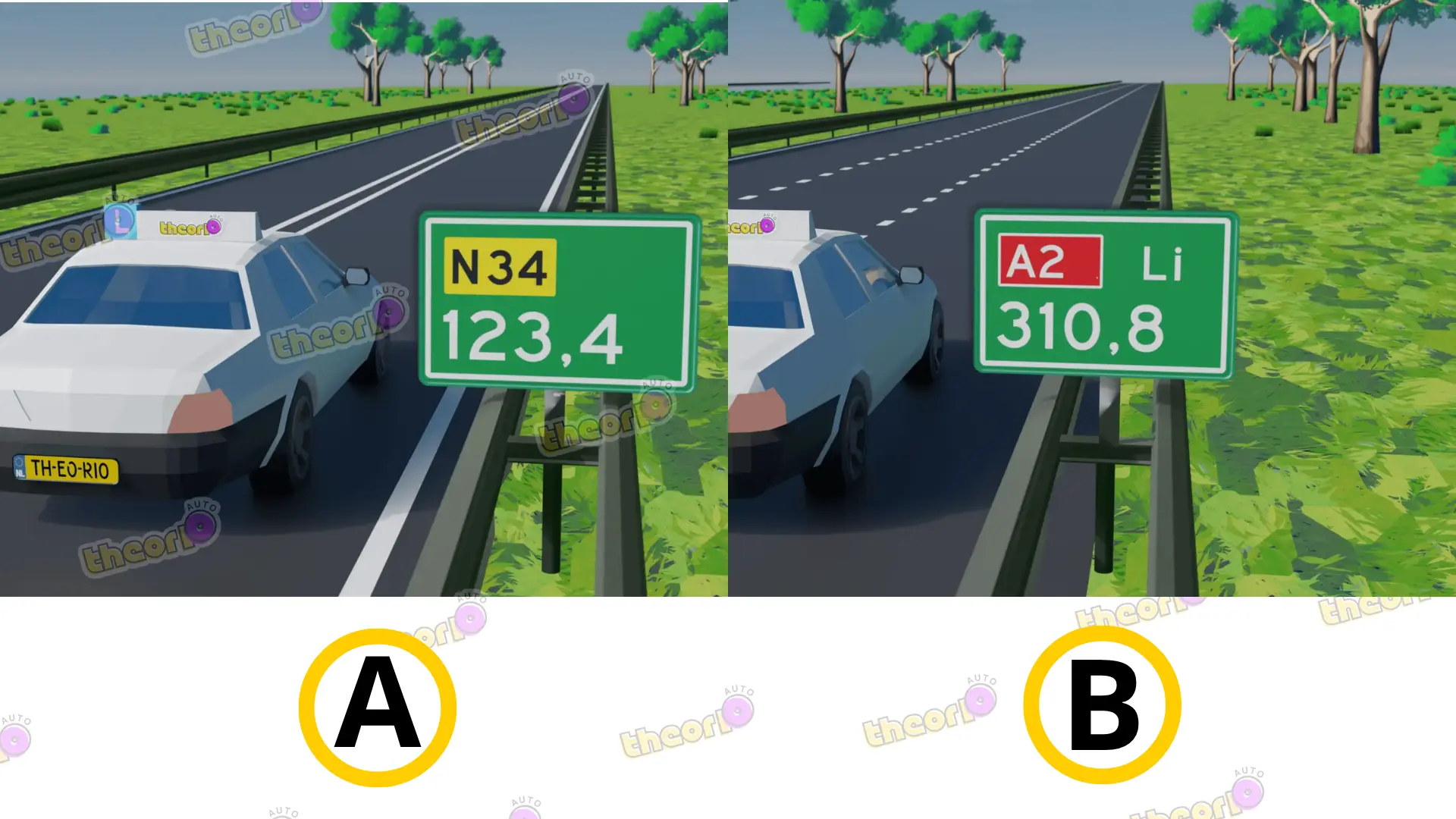
You probably know roughly what a motorway looks like, but in an exam question that is not always very clear. There are two reliable ways to determine it: the sign and the hectometre signs.
A autoweg is indicated with a blue sign with a white car on it. If you see the sign with the car, then you are on the autoweg. A motorway has a blue sign with a dual carriageway and a viaduct.
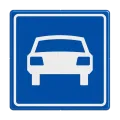
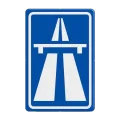
If there is no sign visible, look at the hectometre signs along the road:
- A + number = Motorway (A4, A2).
- N + number = Non-motorway (N11, N207).
3 types of markings
A. Double white centre lines with green colour in between: 100 kilometres per hour
B. Double white centre lines without green colour: 80 kilometres per hour
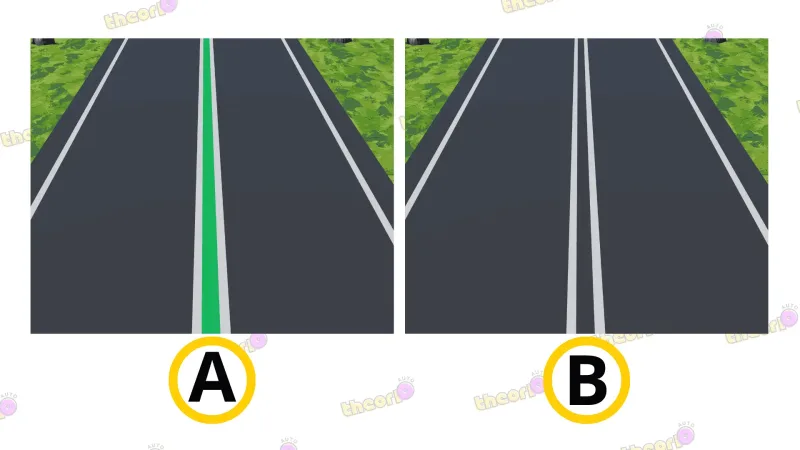
C. No centre line: 80 kilometres per hour
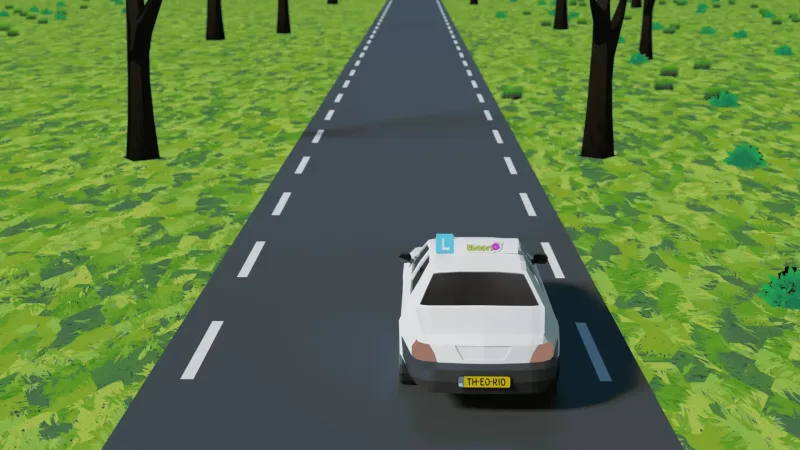
Memory aid for the green strip: a 100 euro banknote is also green. Green = 100 km/h.
Always check whether signs adjust the speed
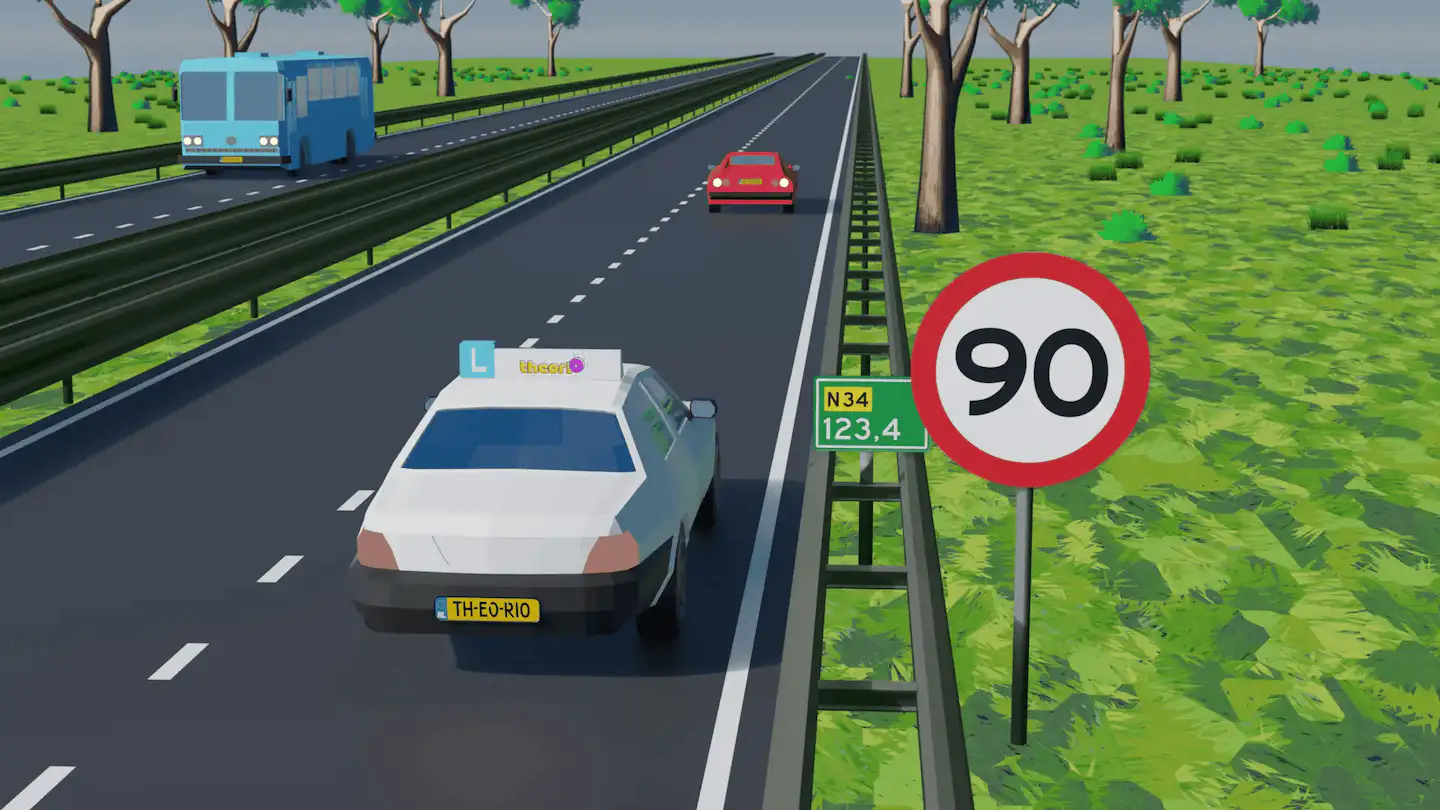
- Just like on other roads, the speed on an autoweg can be adjusted.
- If you see a round white sign with a red border and a speed, then that maximum speed applies. Here the maximum speed is 90 km/h.
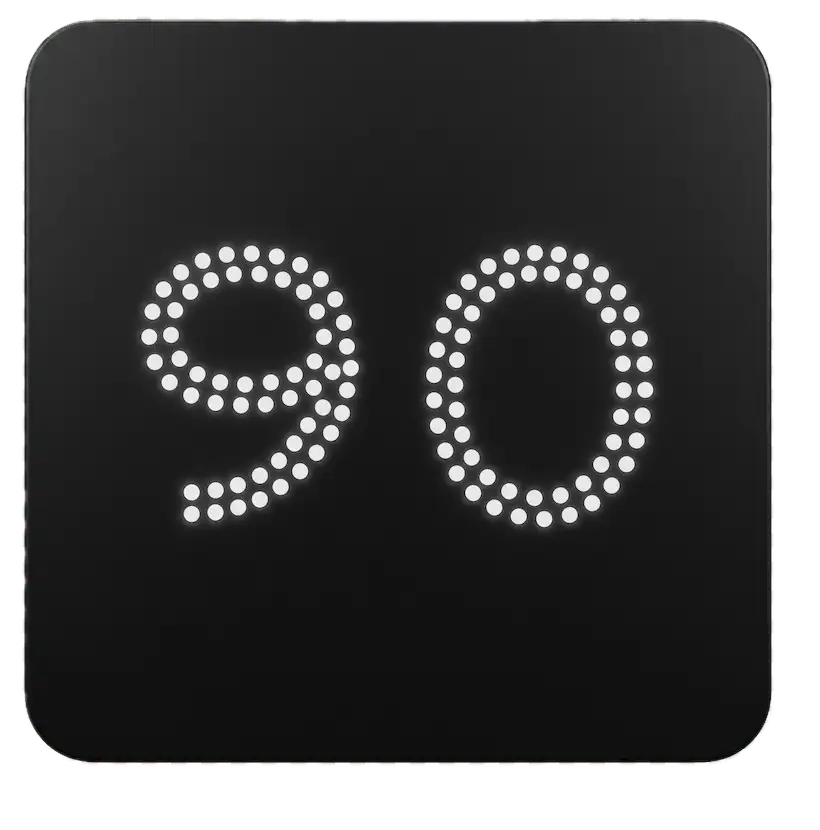
- If you see an active matrix sign, then it is leading.
Why an autoweg has risks you don’t expect
A-roads — motorways — are relatively safe despite the high speed: everyone drives in the same direction, there are no intersections and no oncoming traffic.
Most accidents happen on roads where you may drive 50 to 80 km/h. On those roads, vehicles with very different speeds drive alongside each other, and you do have to deal with intersections and oncoming traffic.
Drivers see motorcyclists arriving more slowly. That is why collisions between cars and motorcycles often occur on this kind of road. So when you approach an intersection or carry out an overtaking manoeuvre, consciously look again extra carefully.
Differences the CBR likes to test
| Situation | Autoweg | Motorway |
|---|---|---|
| Recognition sign | Blue sign with a white car | Blue sign with road/viaduct |
| Hectometre sign | N + number | A + number |
| Normal maximum speed | 100 km/h | 130 km/h, unless indicated otherwise |
| Minimum speed | 50 km/h | 60 km/h |
| Matrix sign active | Follow | Follow |
CBR trap
Many candidates accidentally choose 130 km/h on an autoweg, because they confuse the sign with a motorway or think that “fast road” automatically means motorway. On the exam you must first recognise the correct sign and only then choose the speed. RVV 1990 article 42
A second mistake is thinking that 100 km/h only means maximum. On the autoweg there is also a minimum speed of 50 km/h.
A third mistake is ignoring an active matrix sign. If the matrix sign shows a lower speed, that speed applies at that moment.
Last common mistake: The minimum speed on an autoweg is 50 km/h. Vehicles that cannot reach that speed, such as a tractor, brommobielen and mopeds, are therefore not allowed to drive on an autoweg. More information about these vehicles you can find here.