Parking disc and parking rules
Learn exam-focused how the parking disc works, when you may park, and how to recognise parking bans and special bays.
In a parking disc zone, you may only park in the indicated bays or with blue markings, for a limited time and with a properly set parking disc.
Other parking bays are reserved for a specific vehicle or for permit holders. So always check whether the bay is intended for you.
Key rule for the exam: a parking bay is not automatically for you. Look at the colour of the marking and at the sign next to it. Stopping to let someone get in or out or to load and unload is allowed at all these bays.
Parking disc zone
Blue stripes along the bays or a blue kerb edge mean a parking disc zone, also called a blauwe zone. You may only park there for a limited time, and only in the bays that are marked or provided with a blue stripe.
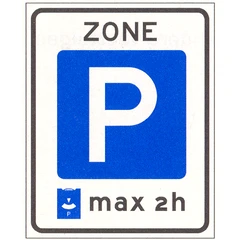
E10 — start of parking disc zone. From here you need a parking disc to be allowed to park.
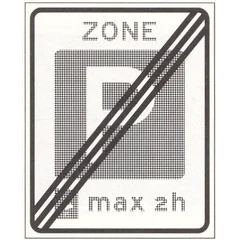
E11 — end of parking disc zone. From here the disc requirement no longer applies.
Using the parking disc
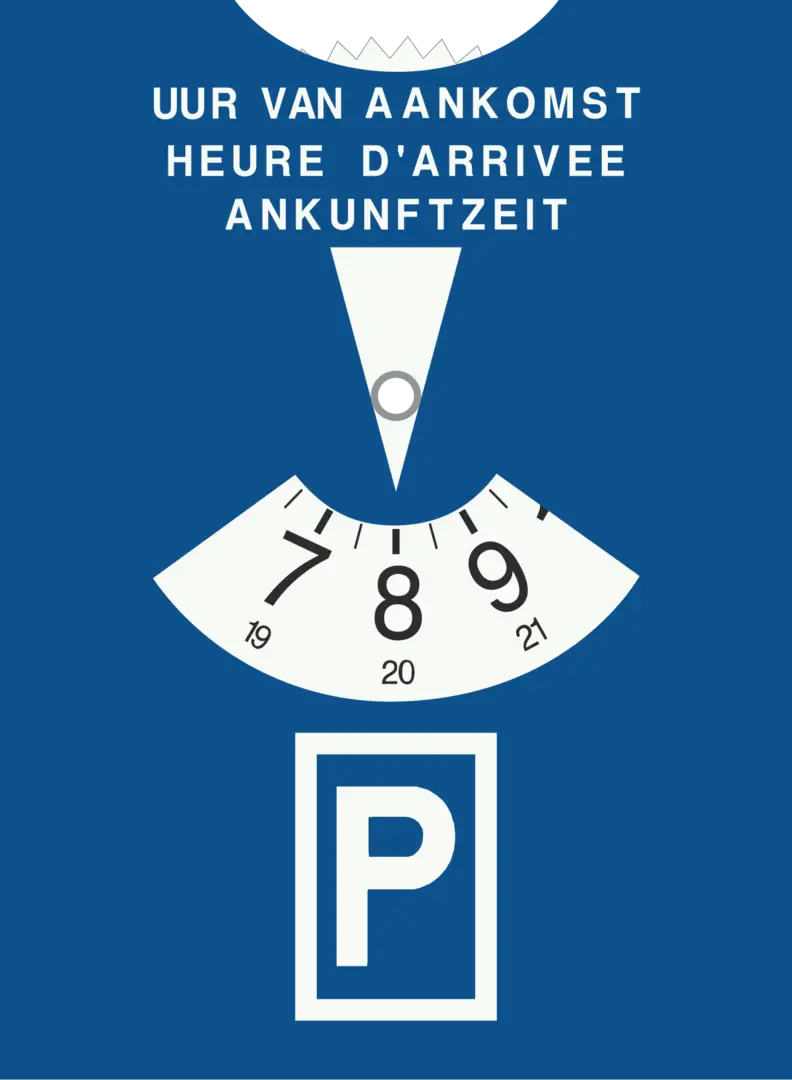
- Set the disc to your arrival time and place it behind the windscreen, so the parking attendant can see it.
- You may round your arrival time in your favour, usually to the next half hour. If you arrive at 13:35, the disc may be set to 14:00. If you arrive at 14:15, it may be set to 14:30.
- If days or hours are shown on a sub-sign, then the disc requirement applies only then. Outside those times you park without a disc.
- Stopping is allowed here without a parking disc, as long as you are only letting someone get in or out or loading and unloading.
Bays reserved for a specific vehicle
A blue sign with a P and a symbol underneath indicates for whom the bay is intended. If there is a passenger car underneath, then the bay is for passenger cars; if there is a lorry underneath, then it is only for lorries. The same applies to taxi ranks.
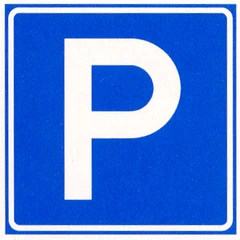
E4 — parking facilities. Without a sub-sign or symbol, everyone may park here.
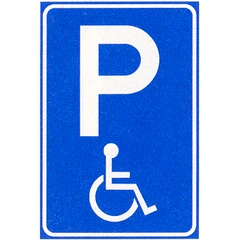
E6 — disabled parking space. Only for holders of a disabled parking card.
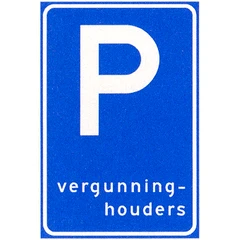
E9 — permit holders. Only drivers with the corresponding parking permit may park here. You see this sign mainly in cities, where spaces for residents must remain available.
For all these bays the same applies: parking is not allowed, stopping is allowed. Letting someone get in or out or loading and unloading is permitted. Sitting there briefly to make a call is not allowed, because that is parking.
White cross or NP
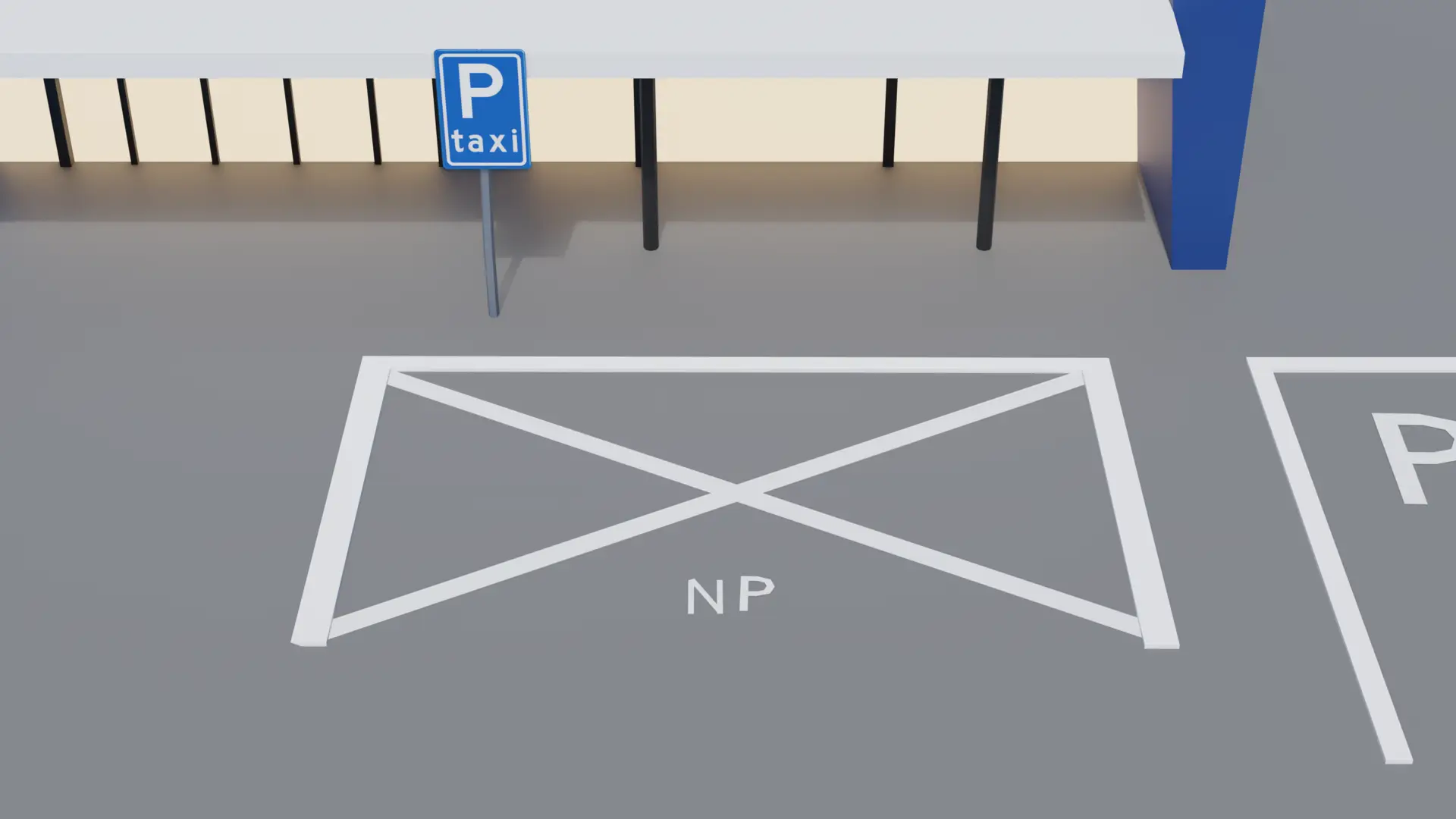
If you see a bay or a section between two bays with a white cross in it, or with the letters NP, then you may not park there. Often otherwise you would block an exit.
Parking on the way: recreation and P+R
Two square blue signs point you to a parking lot instead of forbidding something.
- Recreation area. A blue rectangle with a P and the symbol of a person at rest: here visitors to the recreation area may park.
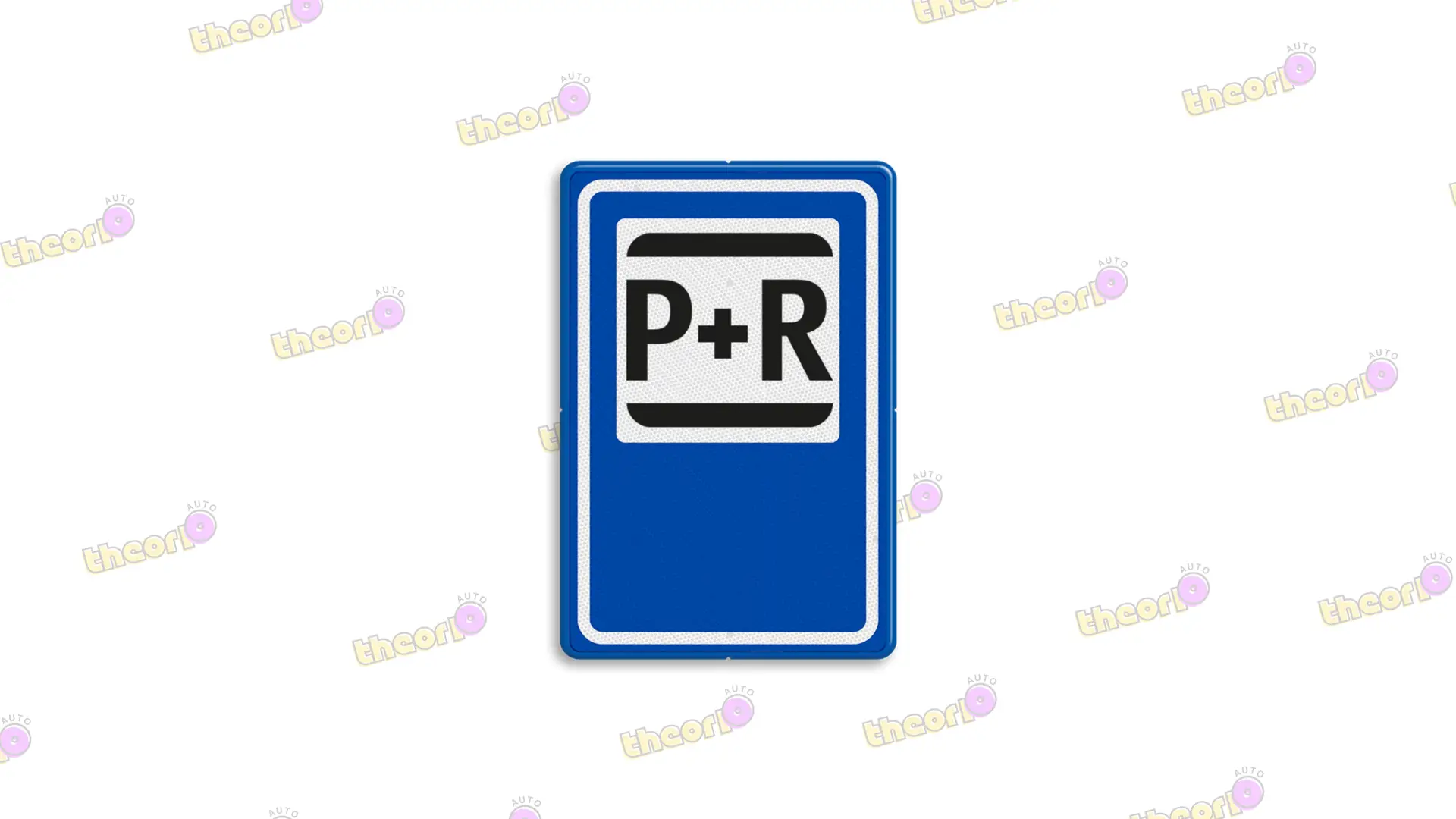
- P+R. Stands for Park and Ride: you park the car and travel further by public transport. Easy to remember as Parking + Rails, because the train, tram and metro run there.