Special manoeuvres
Special manoeuvres: who must wait when merging, turning around, reversing, getting out and driving away.
With a special manoeuvre, you must always let the other traffic go first. Think of reverse, merging, turning around, getting out, parking and driving away.
For the CBR, the main question is always: are you the one performing the manoeuvre? Then you may not hinder or startle anyone.
Key rule for the exam: if you perform a special manoeuvre, then you let all other traffic go first, including pedestrians and also on a parking lot. If someone else performs the manoeuvre, then you have priority.
The six special manoeuvres
- Reverse
- Getting in and out of traffic lanes
- Turning around
- Getting in and out
- Parking
- Driving away
Carry them out calmly, so you do not startle anyone. The exam question is almost always the same: who is doing something special here? That driver waits.
If someone reverses out of a parking bay or merges, then you do not have to stop. But do not automatically assume that the other person really will wait: preventing a collision comes before giving priority.
Exception: the bus at a stop
If a bus inside the built-up area indicates that it wants to drive away from a stop, then you must let it go first. This applies to all buses: line buses, coaches, school buses.
- Inside the built-up area you drive at a maximum of 50 km/h, so you can stop in time. That is why the bus has priority there.
- Outside the built-up area you drive up to 80 km/h and suddenly stopping is dangerous. There you do not have to let the bus go first; it waits until you have passed.
- If the bus is stationary because people are still getting in and it does not indicate a direction, then you can pass it calmly. But watch out for oncoming traffic.
- If a coach comes out of a parking bay instead of a stop, then the exception does not apply and you simply have priority.
Merging and getting out
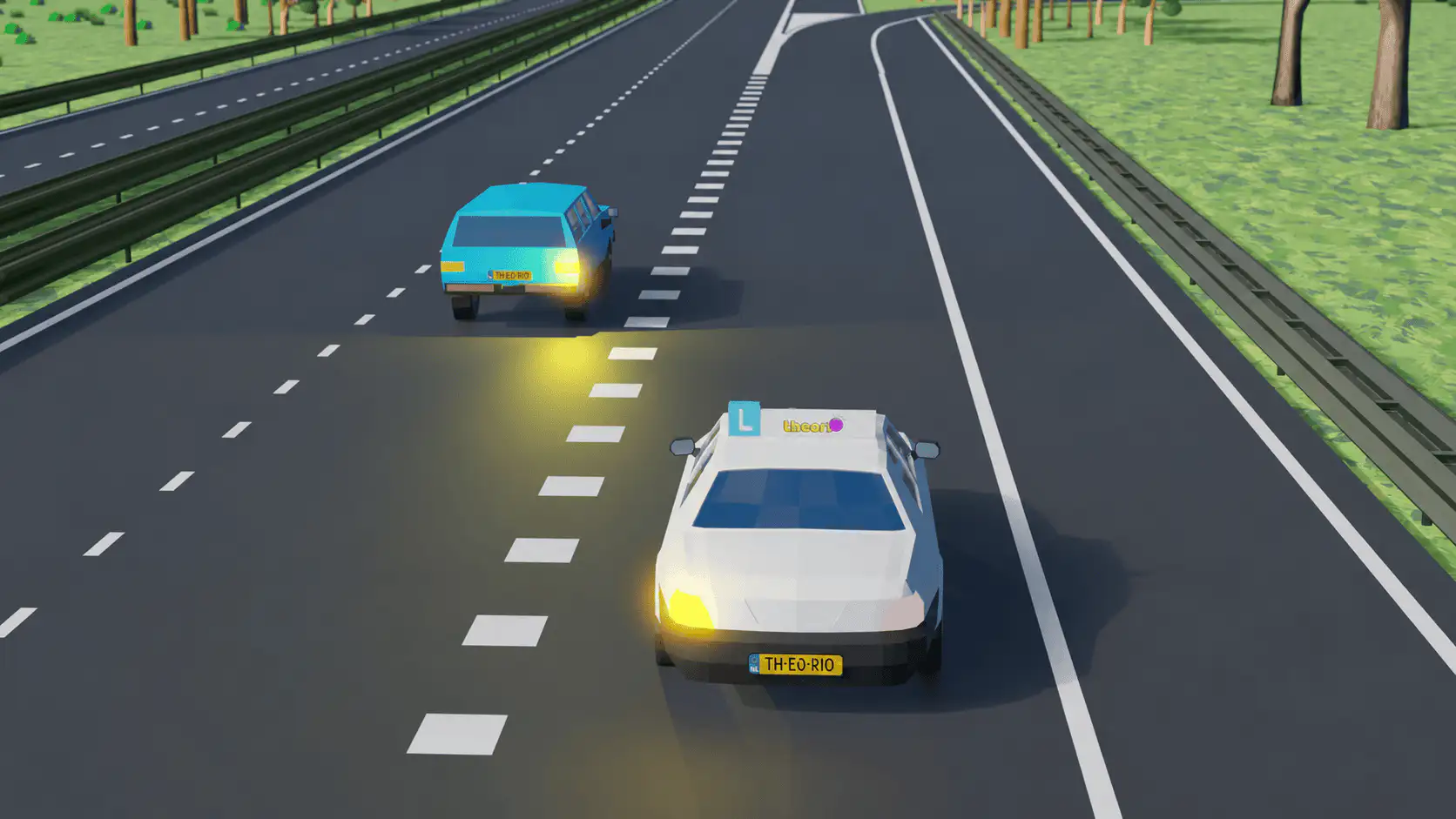
Merging is a special manoeuvre, so the traffic on the lane you want to go into goes first. You do not have to use the entire acceleration lane: as soon as you have enough speed and there is space, you may merge in. After that, do not slide into multiple lanes at once; first merge, look again, and only then possibly take another lane.
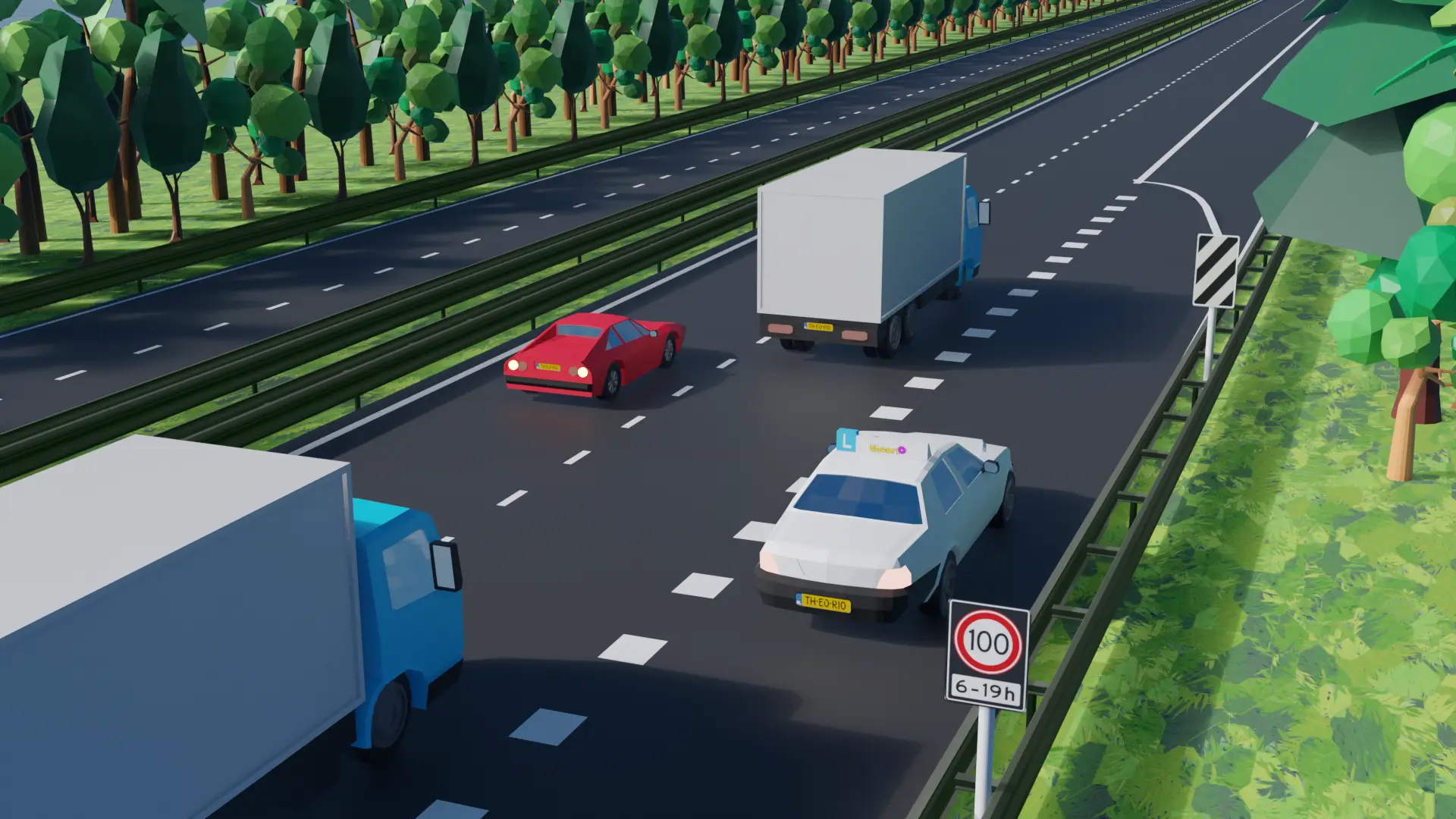
If you want to merge while someone else wants to get out at the same spot, then you wait. Just like in a lift: first let people out, then you get in.
Turning around
- On a normal road you may turn around, but only if it is safe. Outside the built-up area on a road with traffic in two directions, this usually works.
- If there is a continuous stripe, then you may not turn around.
- On an autoweg and an autosnelweg you may never turn around, even if there is no central reservation: traffic arrives there at high speed. You recognise an autoweg by the blue sign with a car on it, or by a green central stripe. You drive on until you find a place where turning around is allowed.
- On a one-way street you may not turn around, because then you would drive against the traffic.
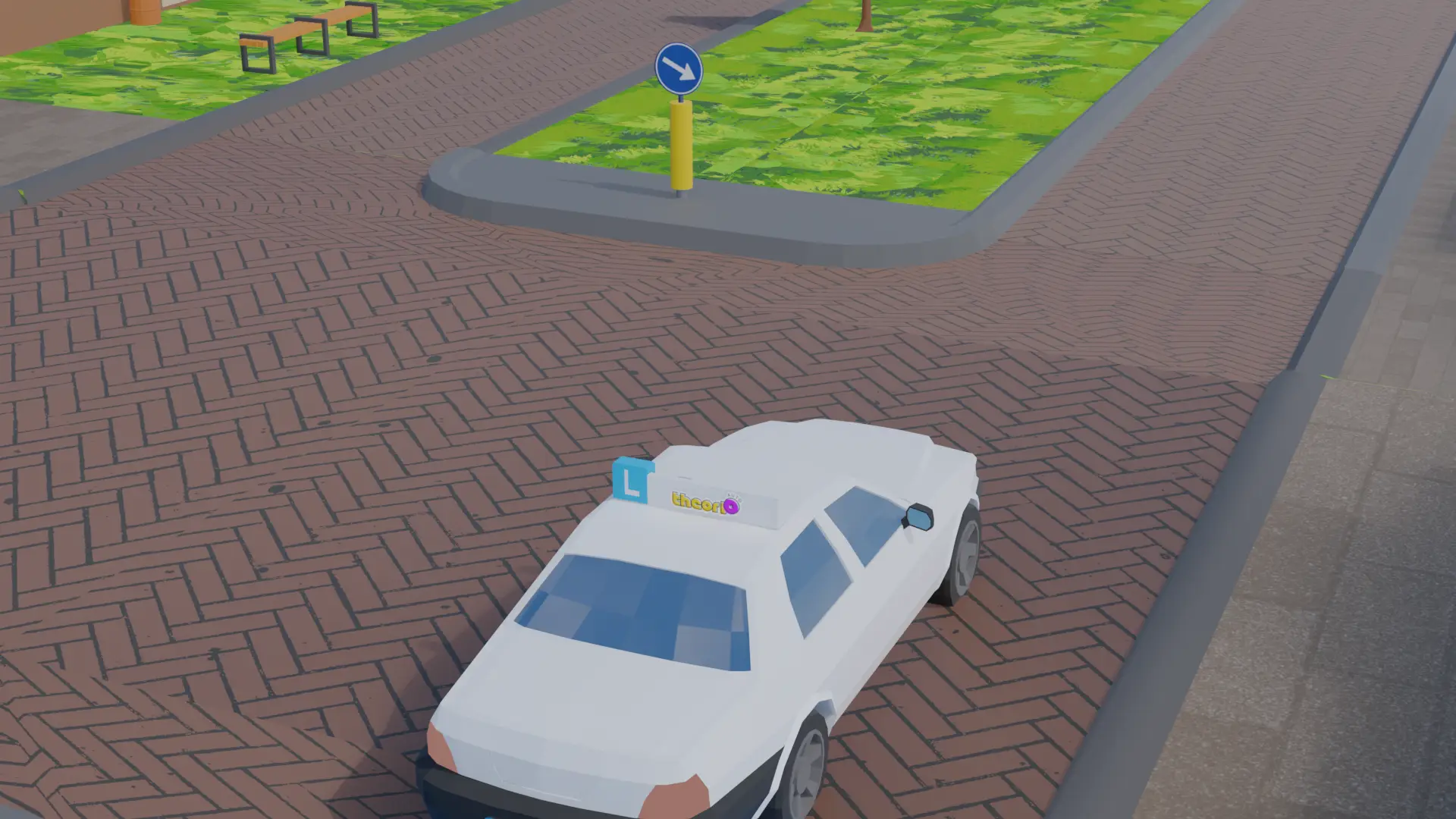
This round blue sign with the slanted arrow pointing to the bottom right means that you must stay to the right of the central divider. Driving along the left side of the sign is forbidden, because then you would drive against the traffic. Turning around and turning left are allowed here.
Wrong exit taken
If you miss an exit, you can sometimes go back, but only if it is safe and you have not yet passed the first exit. If you have already passed it, then you drive on to the next exit.
Reverse and driving away
Reverse is allowed on a normal road, inside and outside the built-up area, as long as you do not hinder anyone. It remains a special manoeuvre, so you look extra carefully and drive at walking pace.
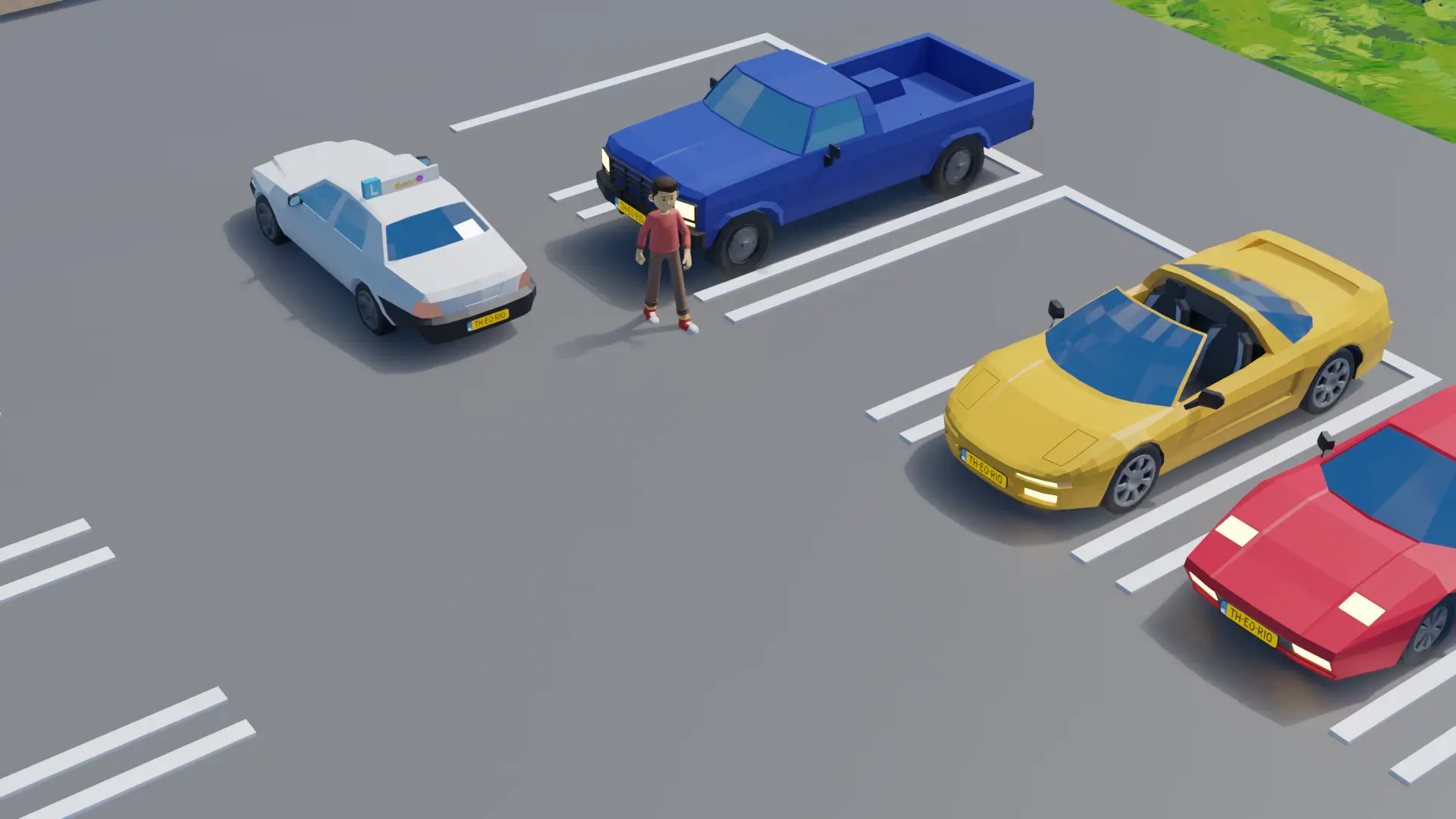
You may only drive away once you are not hindering any other road user. Indicate a direction, even if you think no one is coming.
Example situations like in the CBR
Situation 1
You drive straight across a parking lot. On the right, a car reverses out of a bay. The other driver waits. Reverse is a special manoeuvre; you do not have to stop, but keep an eye on them.
Situation 2
You are inside the built-up area and a line bus indicates at a stop that it wants to drive away. You brake and let the bus go first. Outside the built-up area you would simply be allowed to drive on.
Situation 3
You are outside the built-up area on a two-way road and you are going the wrong way and want to turn around. There is a continuous stripe. This is not allowed. Drive on until you reach a place where the stripe is broken.
CBR trap
Students think that by using the entire acceleration lane or by having enough speed, they get the right to merge in. That is not the case: merging remains a special manoeuvre, so the traffic on the main carriageway lane always goes first. Also do not forget pedestrians — when getting out and on parking lots, they count just as much as cars.