Part 4 of 6 in Special Manoeuvres & Vehicles
Large vehicles and oncoming traffic
Lorries and buses can't simply move aside, so you make room. And who waits on a narrow road with a passing place?


Written by Chris Prosman Reviewed by Dirk van Zuijlen
Updated Reviewed on 4 min read
Free mock exam · no account needed
A lorry or bus has large blind spots and needs a lot of room when turning. So do not stay next to or just in front of the cab. In a built-up area you let a bus pull away from a stop. On a narrow road you wait at a passing place.
Lorry blind spots: where are they?
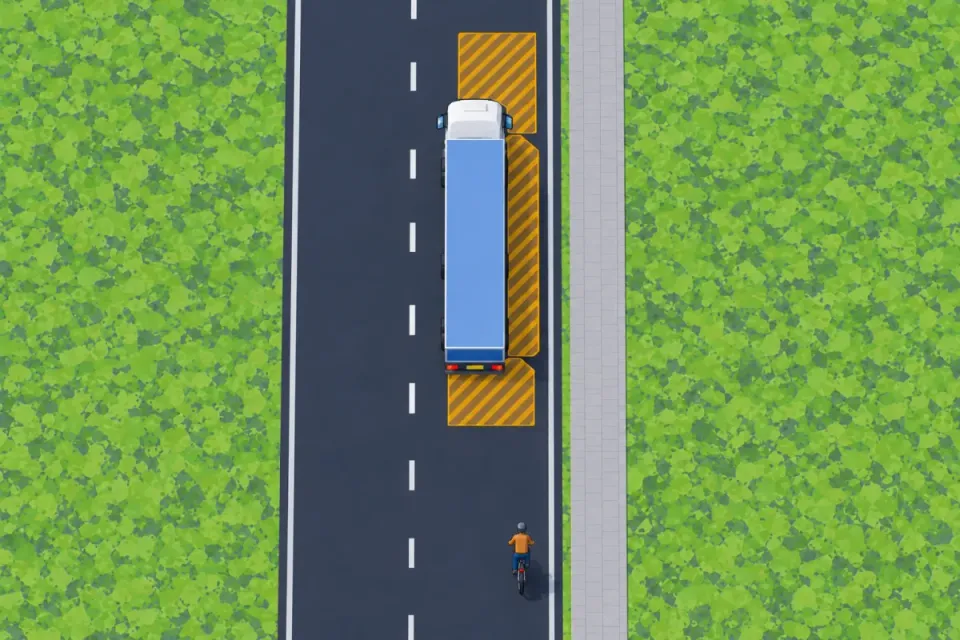
The blind spot is the area around a vehicle that the driver cannot see, not even in his mirrors. On a lorry these areas are large. A lorry’s blind spots are mainly:
- just in front of the cab: the driver sits high and cannot see what is low in front of him;
- on the right side of the lorry: a whole cyclist can be out of view there;
- directly behind the lorry.
Mirrors and cameras help the driver, but they do not solve it completely. Can you see the driver in his mirror? That may help. It does not mean he can see you. Read about the blind spot of your own car in mirrors and blind spots.
Lorry turning right: stay behind it
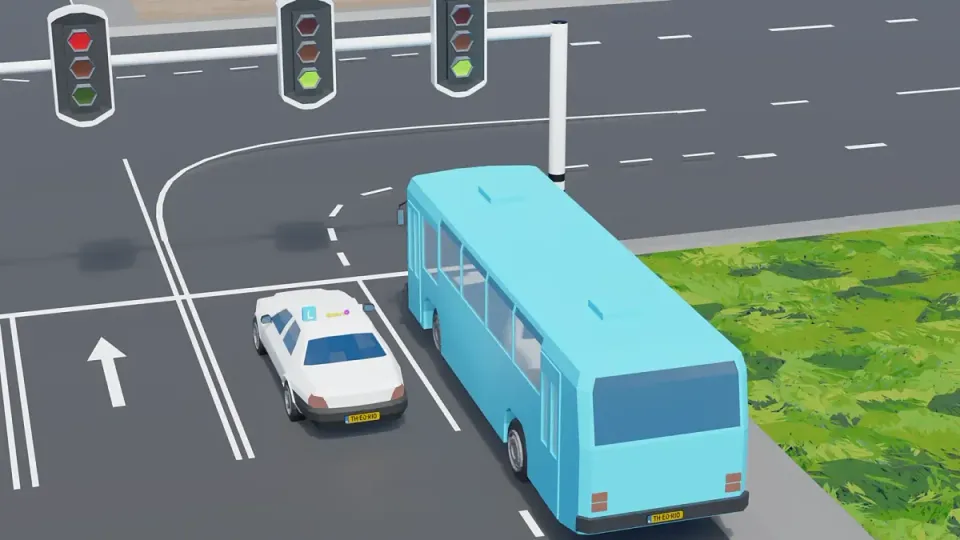
A long vehicle needs a lot of room when turning. The rear wheels cut inwards and the back can swing outwards. So do not drive next to a turning lorry or bus. Stay behind it, also on a bicycle.
Want to give a large vehicle room at a junction? How to position yourself is explained in lane positioning.
A bus’s blind spots
A bus also has large blind spots: just in front of and next to the bus, and directly behind it. Keep the same distance as with a lorry.
Reversing and pulling away
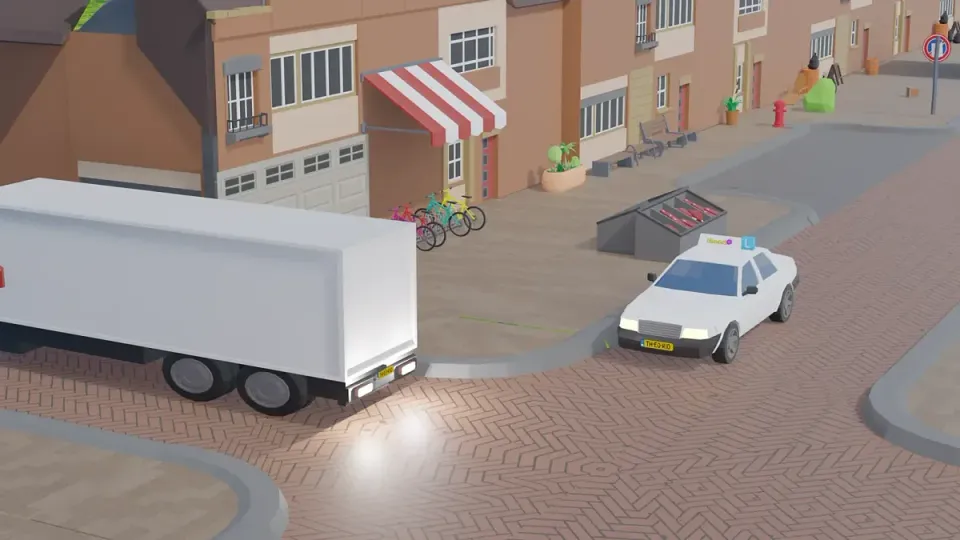
A lorry that is reversing or pulling away must let you go first. Is it already reversing? Then stop at a good distance and only drive on when it is safe. Never stand right behind a lorry. Read more in special manoeuvres.
When does a bus have priority in the Netherlands?
Only when the bus wants to pull away from a bus stop inside a built-up area and signals. Then you give it room to pull away. Memory aid: in town the bus is in a hurry.
| Picture | Situation | What do you do? |
|---|---|---|
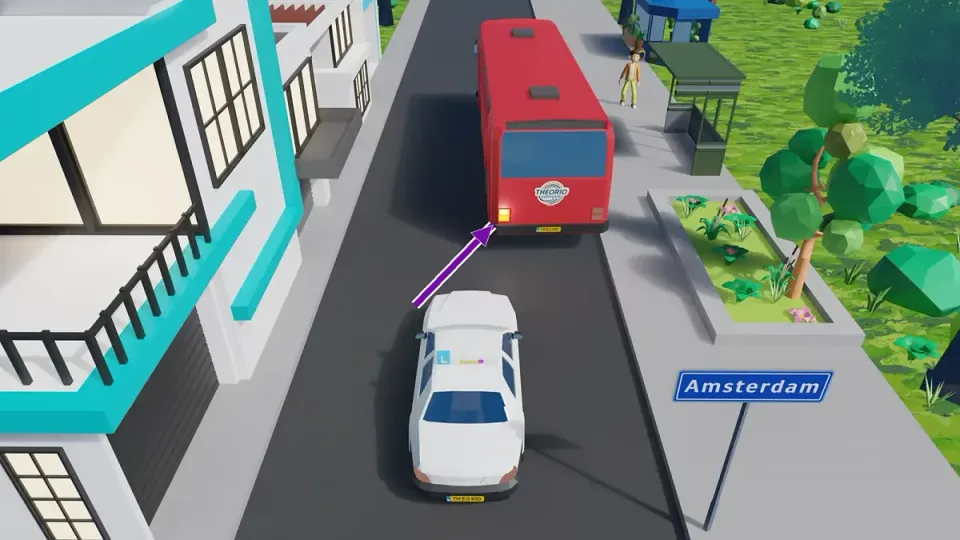 | Inside a built-up area. The bus signals left and wants to pull away from the stop. | Let the bus go. Brake in time and calmly. |
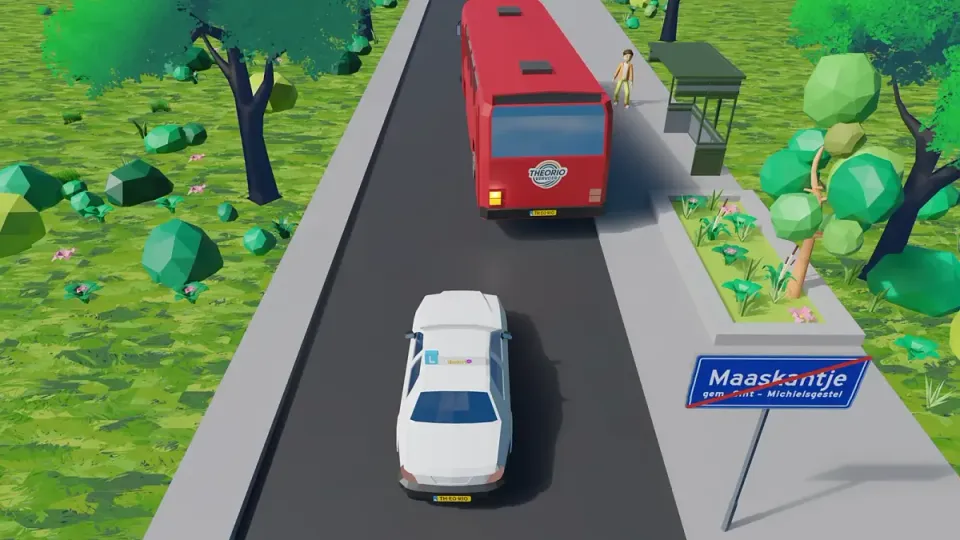 | Outside a built-up area | You go first. For the bus, pulling away is a special manoeuvre. Do stay alert. |
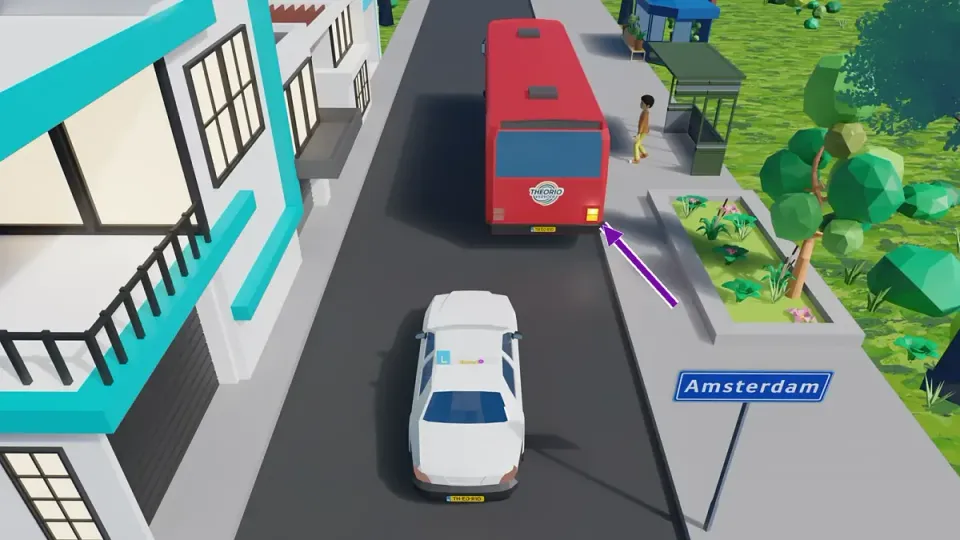 | The bus signals right at the stop | It wants to stop, not pull away. Drive on and watch for passengers. |
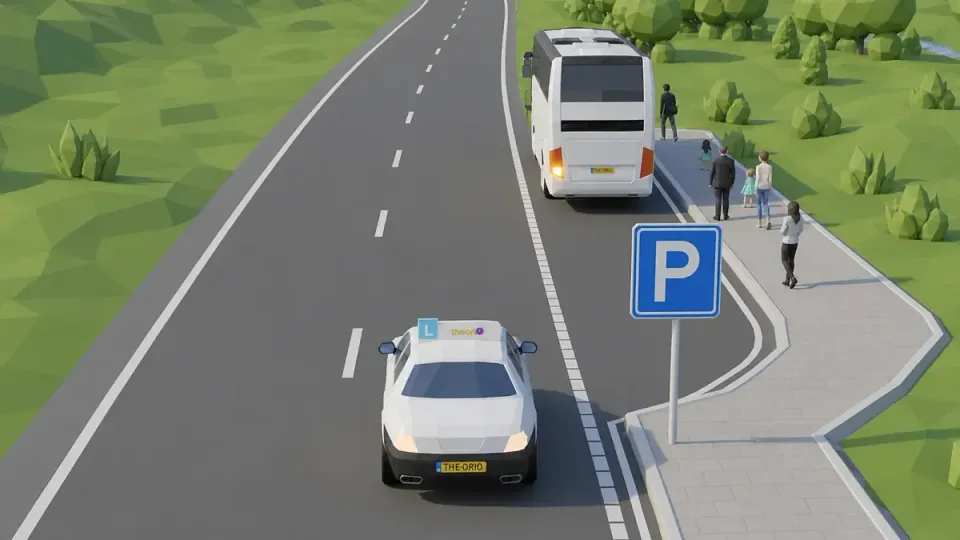 | A coach leaves a car park, not a bus stop | You go first. The rule only applies at a bus stop. |
The rule applies to all buses: a service bus, but also a coach. Military convoys and funeral processions do not have to let a bus pull away.
Is a bus or tram standing at a stop with people getting on or off? If you pass on the side where they get off, let them get on and off first. Also watch for people crossing in front of or behind the bus.
Passing places: who has to wait on a narrow road?
| Sign L20 | How it works |
|---|---|
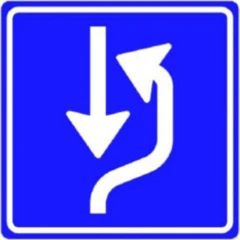 Sign L20 shows a passing place. There you can move aside so that oncoming traffic can pass. | 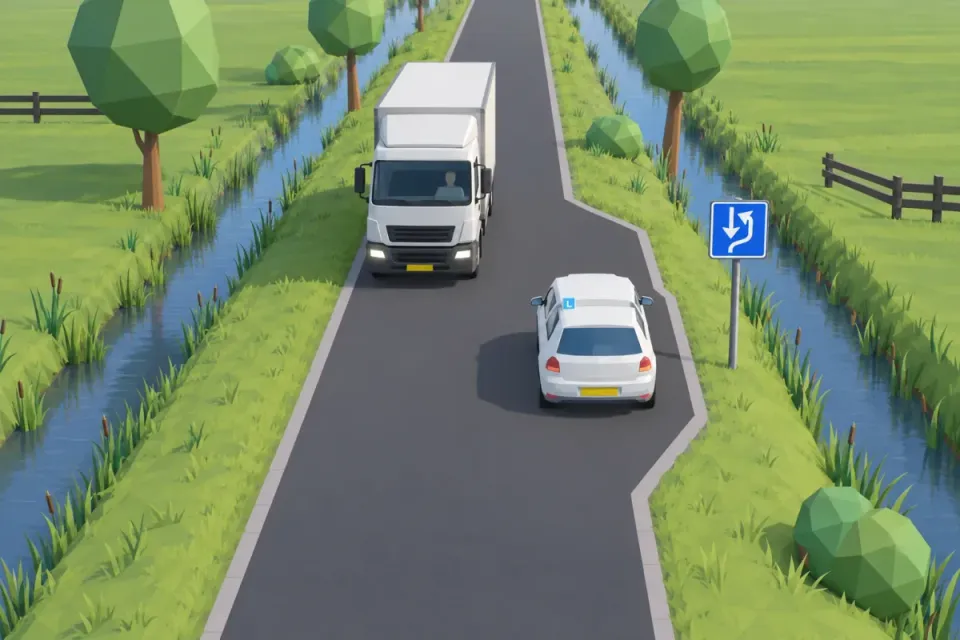 The learner car waits in the passing place at sign L20. The truck can now pass. |
On a narrow road two vehicles sometimes do not fit side by side. A passing place (uitwijkplaats) is a wider part of the road where you can move aside. Are you closest to the passing place? Then wait there, so the oncoming vehicle can pass. Do not drive past it, or you will have to reverse back later.
Do not expect a lorry to drive onto the verge. The verge can be too soft: the lorry can sink in or tip over. So make room yourself where you can.
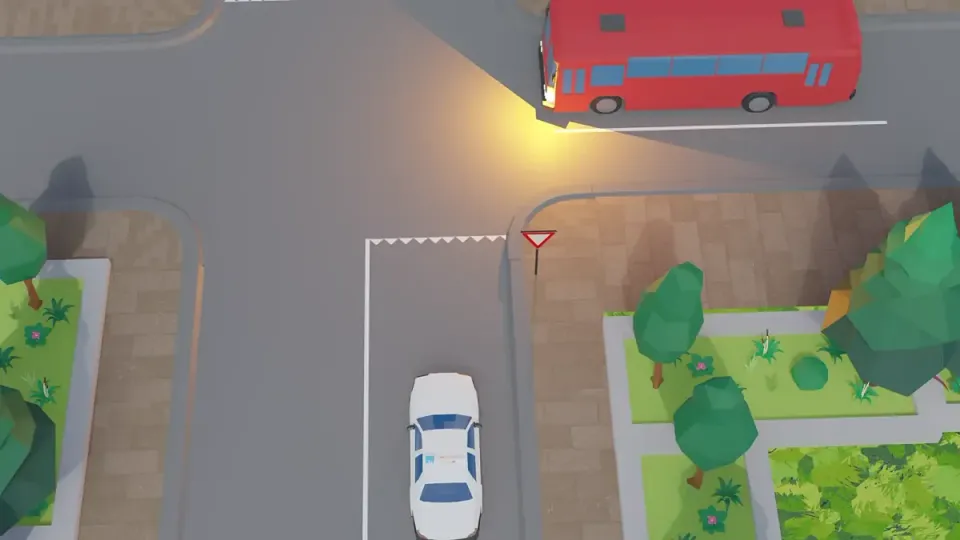
Is there an obstacle on your half of the road? Then let oncoming traffic pass first. At signs F5 and F6 you follow what the signs say about who goes first.
Practise like the exam
Example questions like in the CBR exam
Real questions from the Theorio app. You can expect similar questions in your CBR exam.
Question 1 of 6
Do you have to give way to the bus?
Tap the answer you think is right.
Do you have to give way to the bus?
Tap the answer you think is right.
Do you have to give way to the bus?
Tap the answer you think is right.
Do you have to give way to the bus?
Tap the answer you think is right.
What should you expect here?
Tap the answer you think is right.
The truck is reversing. Who is at risk of being involved in a collision?
Tap the answer you think is right.
Answers and explanations for the example questions
Question 1: Do you have to give way to the bus?
Correct answer: Yes
Buses departing from a stop within the built-up area have priority. This supports a smooth flow of public transport. Note! this is only within the built-up area and at a stop.
Question 2: Do you have to give way to the bus?
Correct answer: No
Outside the built-up area, this priority rule does not apply. The bus does not have priority here.
Question 3: Do you have to give way to the bus?
Correct answer: No
The bus is signaling to the right to stop at the stop, not to drive away. In this case, the bus does not have to give way.
Question 4: Do you have to give way to the bus?
Correct answer: No
This is a parking lot, not an official stop. The coach does not have priority here.
Question 5: What should you expect here?
Correct answer: The bus comes a bit into your lane
A bus is very large and long. In a turn, a bus needs a lot of space. It often cannot stay exactly within its own lines. The bus can then swing out. That means that the front or the back of the bus crosses the line. The bus then comes into your lane. So do not drive next to it, but stay a little behind.
Question 6: The truck is reversing. Who is at risk of being involved in a collision?
Correct answer: Both
Both are at risk of a collision. The truck driver has a large blind spot while reversing. He can easily overlook both vehicles. ⚠️
FAQ
Frequently asked questions
Short answers to questions that often come up on this subject.
Who has to make room when you meet a lorry on a narrow road?
A lorry does not automatically have priority because it is large. Slow down, assess signs such as F5/F6 and find a safe passing place; someone may need to wait or return to a refuge. A heavy lorry may sink or overturn on a soft verge. Allow for that, but do not blindly steer into an unsafe verge yourself.
May you drive beside a bus that swings out in a bend?
Do not enter the space the bus needs while turning. Slow down and stay behind it where necessary; watch the rear swinging out and nearby cyclists. Size gives no general priority. When a bus signals departure from a bus stop inside a built-up area, drivers must give it the opportunity to leave; that special rule does not apply outside the built-up area.
Ready to practise?
Test your knowledge of Special Manoeuvres & Vehicles with 75 practice questions in the app.
Free mock exam · no account needed
Your first quiz is free, no account needed. After that from €34.99 for 90 days of access.