Part 4 of 8 in General Legislation & Driver Requirements
Seat belt, head restraint and child seat: rules and the fine for not wearing a belt
Fine for not wearing a seat belt: from age 12 the passenger is fined, below that the driver. Plus head restraints, child seats and airbags.


Written by Chris Prosman Reviewed by Dirk van Zuijlen
Updated Reviewed on 4 min read
Free mock exam · no account needed
Wearing a seat belt is compulsory, in the front and in the back. If you do not wear one, you get a fine. Here you read who gets that fine, how to set the belt and head restraint, up to what height a child seat is required and when the airbag must be off.
Is it mandatory to wear a seat belt in the Netherlands?
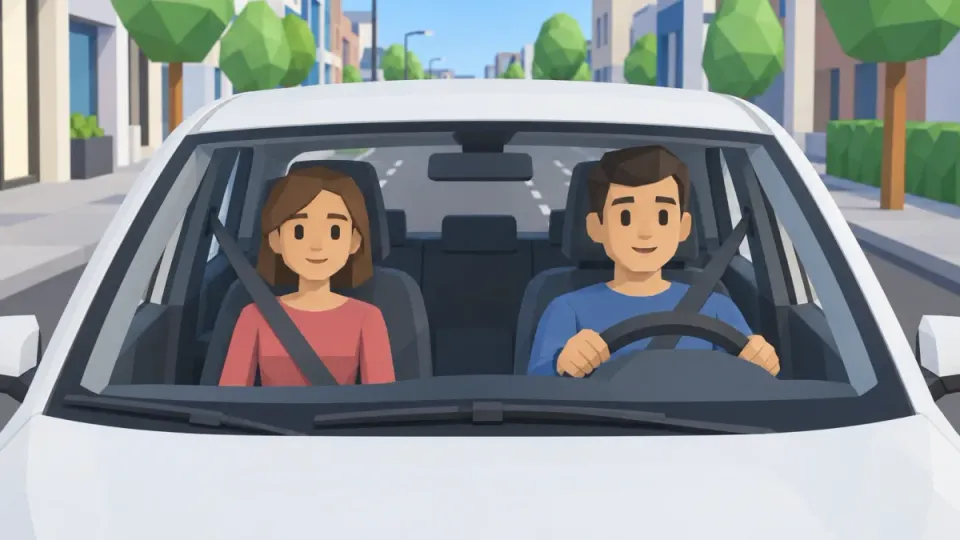
Yes. If your seat has a belt, you must wear it. That applies in the front and in the back, for the driver and all passengers. Source: Dutch government: seat belts.
Wear the belt like this: the shoulder part runs across your shoulder and chest, the lap part low over your hips. Pull it tight and make sure it is not twisted. The belt does not belong in your neck, behind your back or under your arm. Pregnant? Let the lap part run below your belly.
The belt keeps you in place in a crash and works together with the airbag. An airbag does not replace the belt. Does the belt of a seat not work? Then do not use that seat.
Adjusting the head restraint
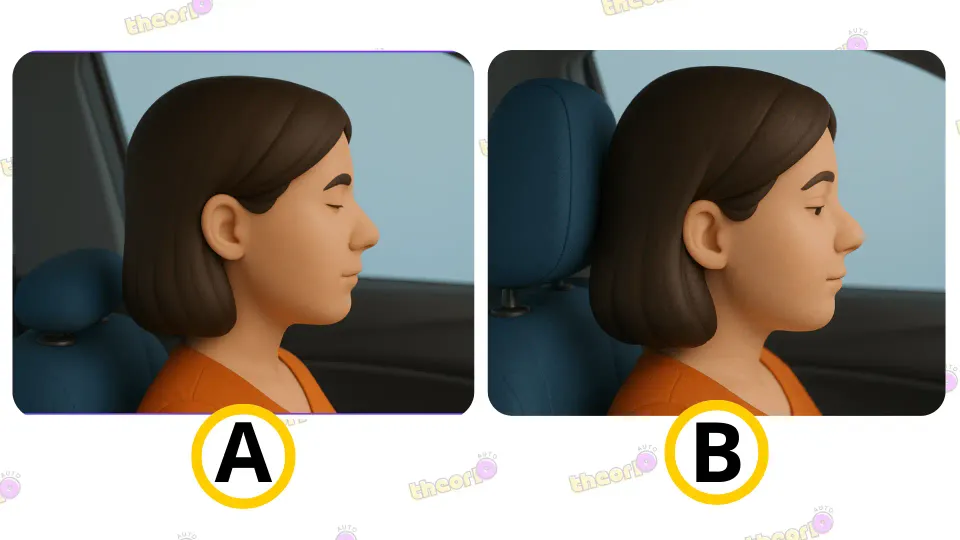
A good head restraint protects your neck in a rear-end crash. Set it as close behind your head as possible. The top should be about as high as the top of your head. Too low or too far back does not help well. Adjust it for everyone in the car.
What is the fine for not wearing a seat belt?
If you do not wear a belt, you get a fine of €190, plus €9 administration costs (OM fines database, offence code R 533, amount from February 2025). You find the current amount in the OM fines database (Boetebase).
Who gets the fine depends on age:
- Passenger under 12: the driver gets the fine. So you make sure young children are properly secured.
- Passenger aged 12 or older: gets the fine themselves, also in the back.
- Driver: always gets the fine themselves for not wearing a belt.
A belt worn the wrong way, for example under your arm, also counts as not using it properly.
Until what age is a car seat required?
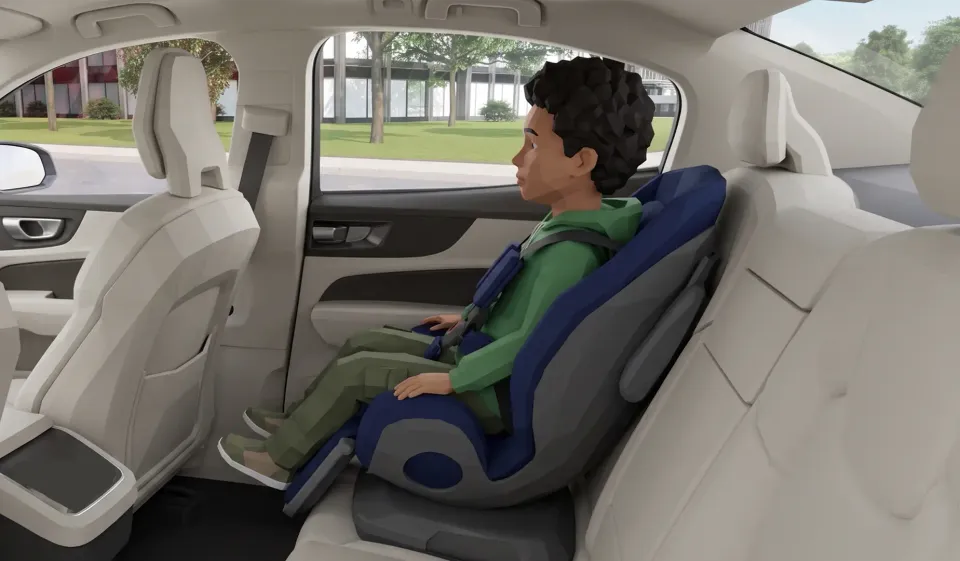
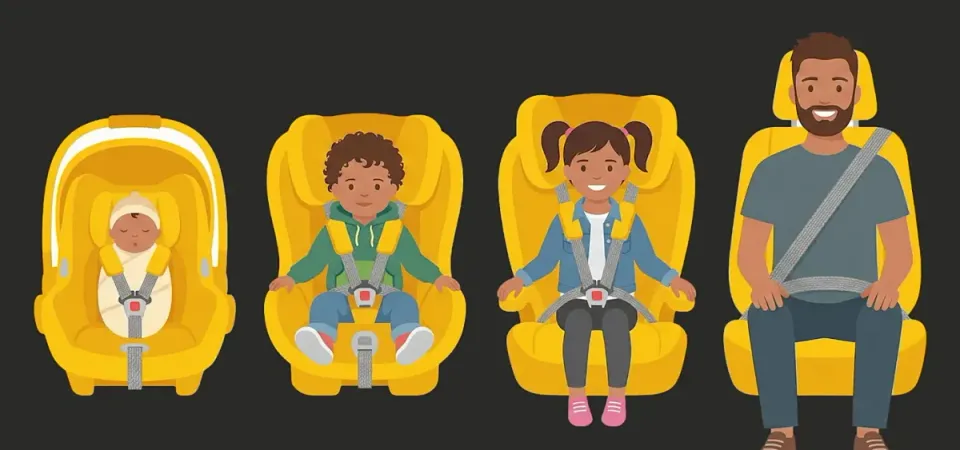
Height counts, not age. A child shorter than 1.35 m sits in an approved child seat, in the front and in the back. From 1.35 m the child may use the normal seat belt. Source: Dutch government: child seats.
A child of 4 or 5 is almost always shorter than 1.35 m. So a car seat is required. Also in someone else’s car, such as the grandparents’.
Choose a seat that fits your child’s height and weight. New seats carry the R129 approval mark. Older approved seats with R44/03 or R44/04 may still be used if they fit and are undamaged. Never use one belt for two children.
Child seat in the front: must the airbag be off?
Do you put a rear-facing child seat in the front? Then the airbag for that seat must be off. An airbag inflating against a rear-facing seat is life-threatening.
| Picture | Situation | What do you do? |
|---|---|---|
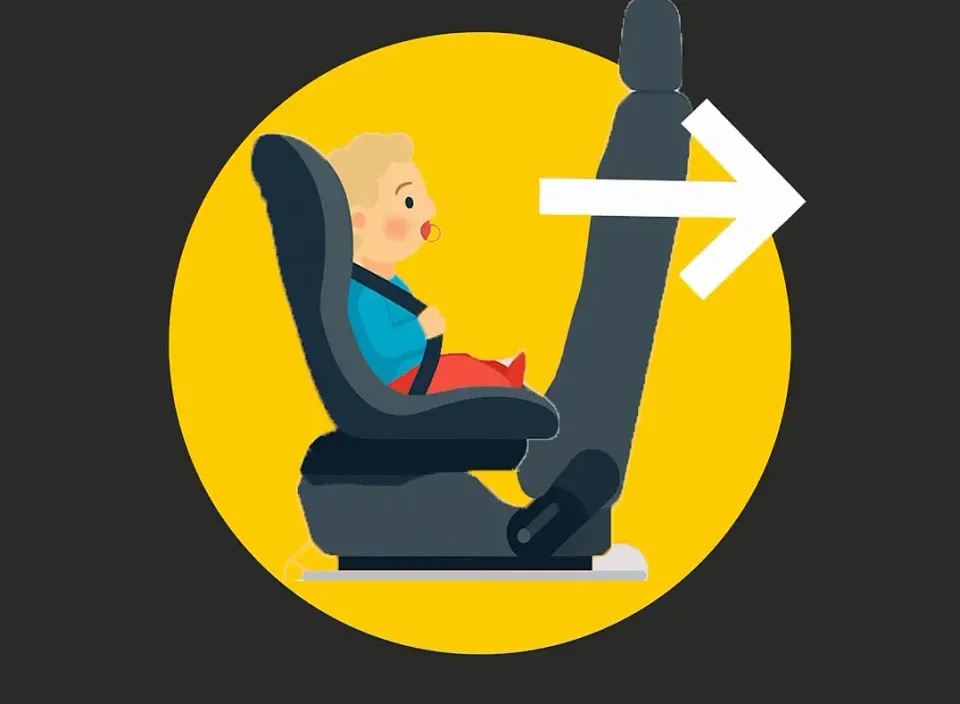 | Rear-facing seat in the front | Airbag for that seat off. Check in the manual how this works in your car. |
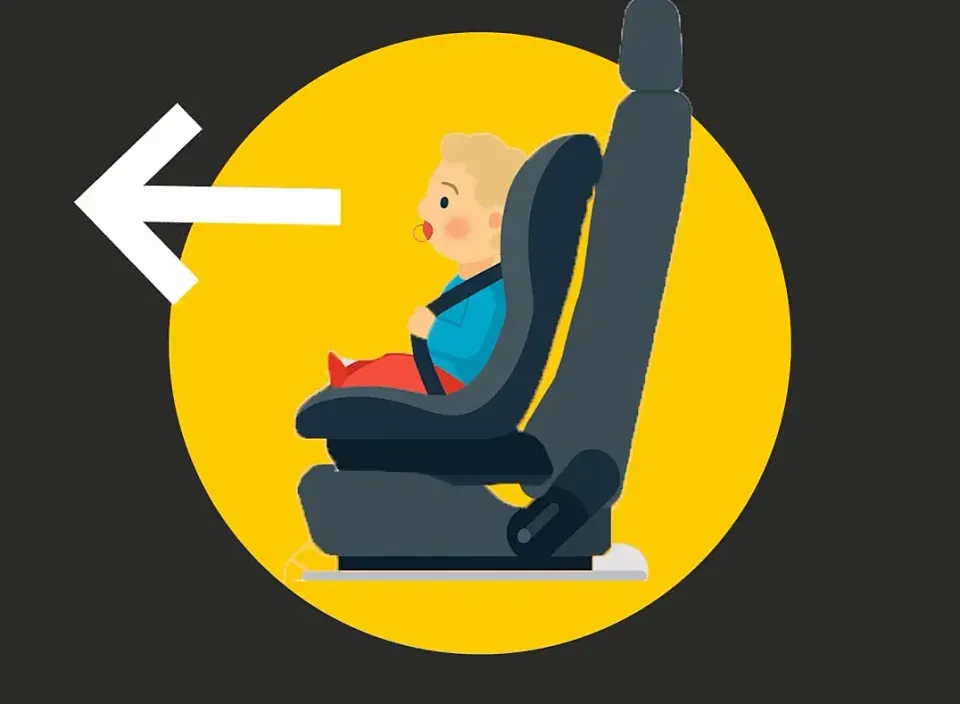 | Forward-facing seat | Follow the manuals of the car and the seat for the airbag and seat position. |
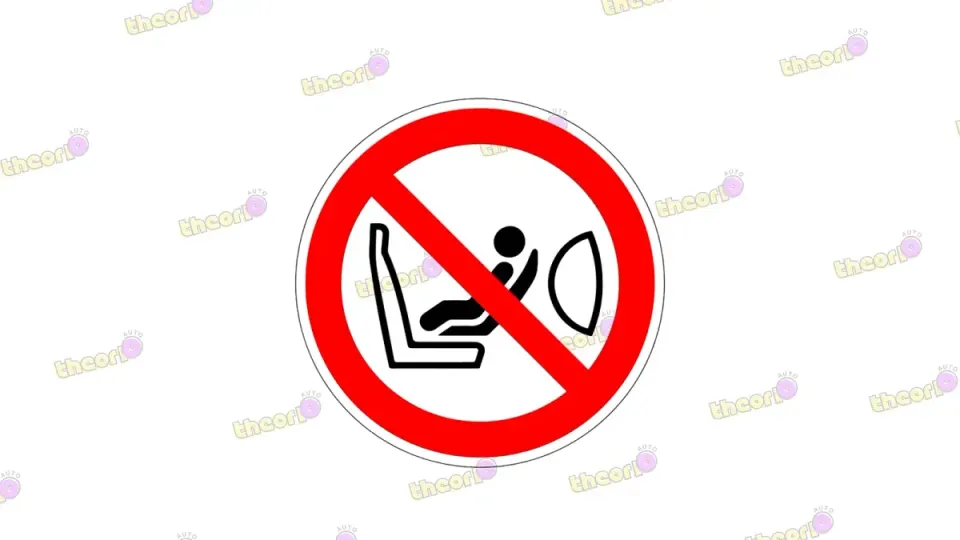 | Warning sticker | This does not prove the airbag is off. Check it yourself. |
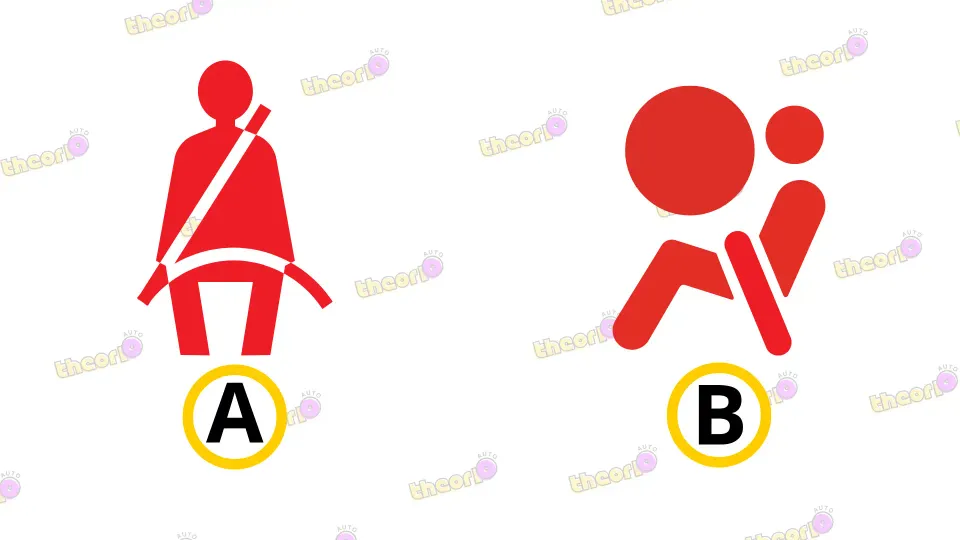 | Red airbag light | This is a fault, not a sign that the airbag is off. Have it checked. |
Lights differ per car. Only the indicator from the manual, such as PASSENGER AIRBAG OFF, gives certainty.
When should a child use a booster seat in the car?
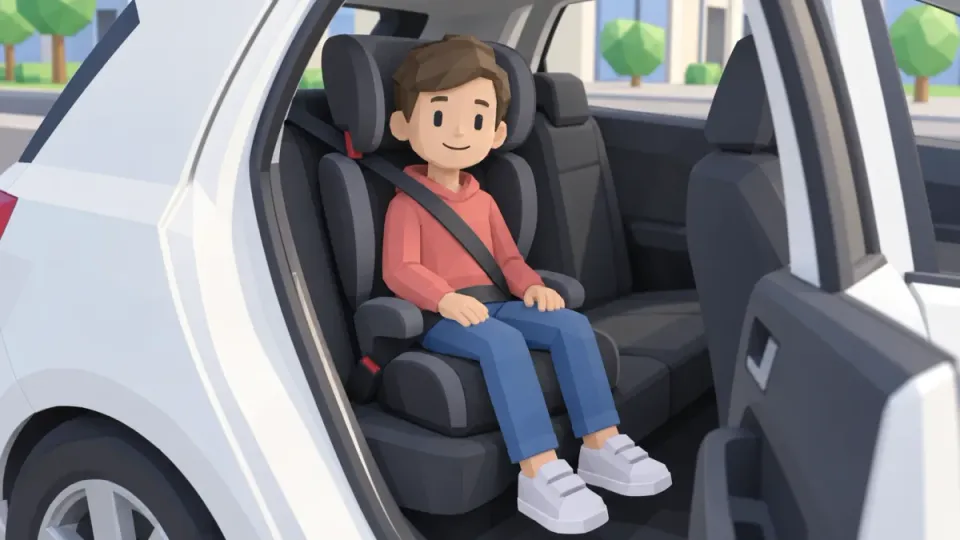
You use a booster seat when your child is too big for its child seat, but still shorter than 1.35 m. A booster seat counts as an approved child seat.
Check the label for the height and weight the booster is approved for. A booster with a backrest gives more support at the sides. The belt must run over the shoulder, not along the neck, and low over the hips.
A child of, say, 1.30 m who outgrows its seat therefore moves to a bigger seat or a suitable booster. Not to the belt alone.
Practise like the exam
Example questions like in the CBR exam
Real questions from the Theorio app. You can expect similar questions in your CBR exam.
Question 1 of 6
Is the seatbelt positioned correctly? The seatbelt is currently along the neck.
Tap the answer you think is right.
Which headrest is correctly adjusted?
Tap the answer you think is right.
Is it allowed to transport a child of 1.10 meters without a child seat?
Tap the answer you think is right.
Is it allowed to transport a child of 1.50 meters without a child seat?
Tap the answer you think is right.
In which situation should you disable the passenger airbag?
Tap the answer you think is right.
Is a pregnant driver allowed to use the three-point seatbelt as a lap belt?
Tap the answer you think is right.
Answers and explanations for the example questions
Question 1: Is the seatbelt positioned correctly? The seatbelt is currently along the neck.
Correct answer: No
A seatbelt should not run along the neck. It must be correctly positioned over the shoulder for optimal safety. 🔒
Question 2: Which headrest is correctly adjusted?
Correct answer: Situation B
The headrest should be adjusted to head height for optimal protection. In situation B, this is correctly adjusted. ✅
Question 3: Is it allowed to transport a child of 1.10 meters without a child seat?
Correct answer: No
Children under 1.35 meters are required to sit in a child seat 👶
Question 4: Is it allowed to transport a child of 1.50 meters without a child seat?
Correct answer: Yes
From 1.35 meters, a child may be secured with the regular seatbelt without a child seat, this provides sufficient protection. 🚗
Question 5: In which situation should you disable the passenger airbag?
Correct answer: Situation B: With a rear-facing child seat in the front seat
If a rear-facing child seat is placed in the front seat, you must disable the passenger airbag. Otherwise, the child may be injured by the airbag. 👶
Question 6: Is a pregnant driver allowed to use the three-point seatbelt as a lap belt?
Correct answer: No
The pregnant driver must also use the three-point seatbelt correctly. It is not allowed to wear it only as a lap belt. 🤰
FAQ
Frequently asked questions
Short answers to questions that often come up on this subject.
Who gets the fine if a passenger does not wear a seat belt?
If the passenger is 12 or older, they get the fine themselves. For passengers under 12 you, the driver, are responsible.
Must the airbag be switched off if there is a child seat in the front?
A rear-facing child seat in front requires the frontal airbag for that position to be deactivated. Confirm the actual status using the vehicle manual: a warning sticker or red SRS fault light does not prove deactivation. For a forward-facing seat, follow car and child-seat instructions for airbag and seat position.
Ready to practise?
Test your knowledge of General Legislation & Driver Requirements with 80 practice questions in the app.
Free mock exam · no account needed
Your first quiz is free, no account needed. After that from €34.99 for 90 days of access.