Cargo: how far may it stick out?
Learn the CBR rules for cargo: secure it properly, maximum protrusion, trailer marking, and when cargo may not protrude.
With cargo, the CBR looks at three things: secure it safely, how far cargo may protrude, and clear visibility of the number plate.
Remember the difference between a car and a trailer: with a car, cargo may protrude at the front and rear; with a trailer, not at the front.
Core rule: cargo must be transported in such a way that it cannot slide, fall, or cause danger. With a car, non-divisible cargo may protrude by a maximum of 20 cm per side and 1 metre at the front and rear. With a trailer, cargo may not protrude at the front.
Cargo in the car
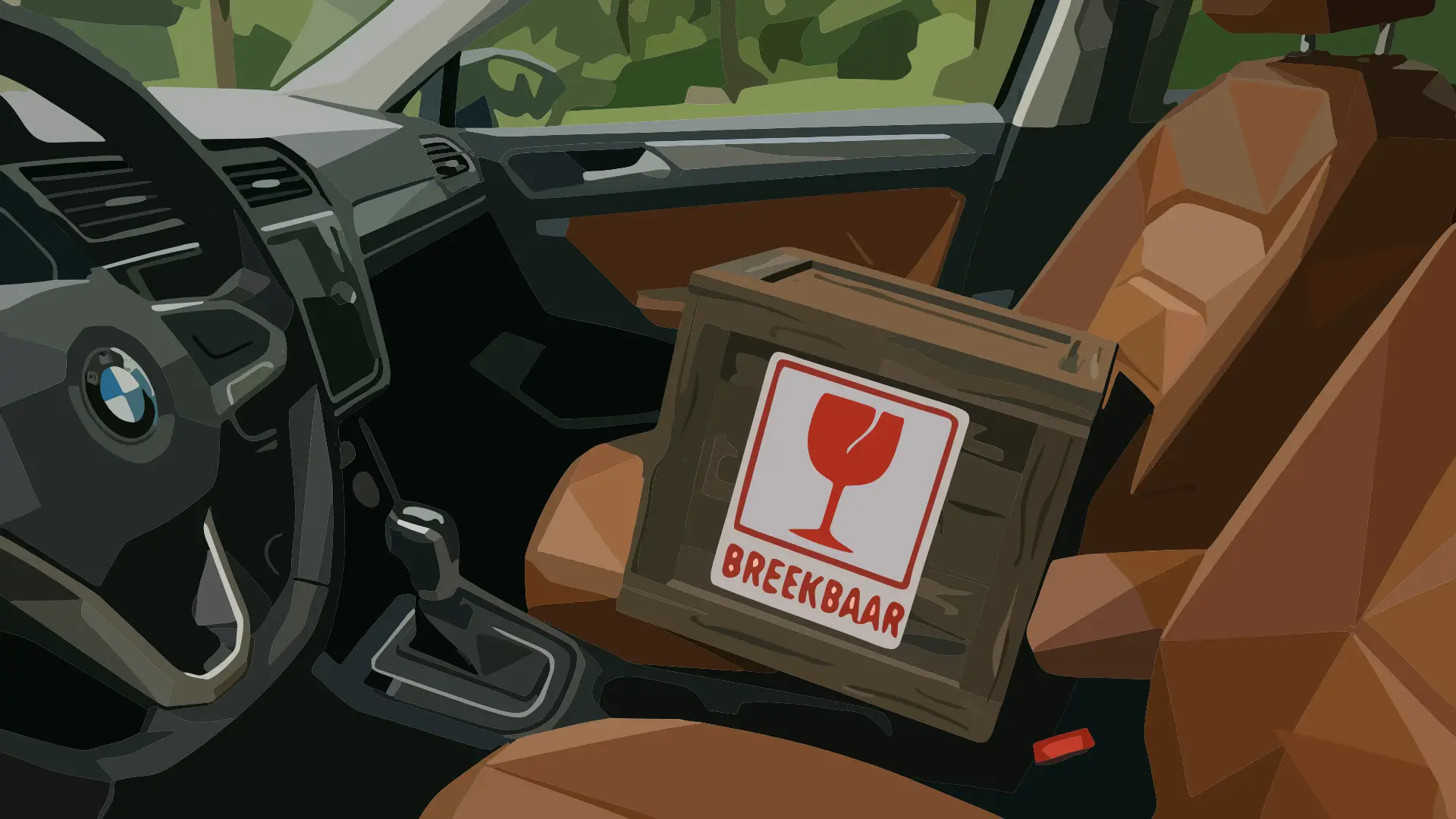
Loose cargo in the car is wrong. When you brake hard, it shoots forward: long boards lying between the front seats then end up on the road together with the windscreen.
What fits in the boot (trunk) you transport there. If it doesn’t fit in the car, it can go on the roof or in a trailer.
Cargo on and behind the car
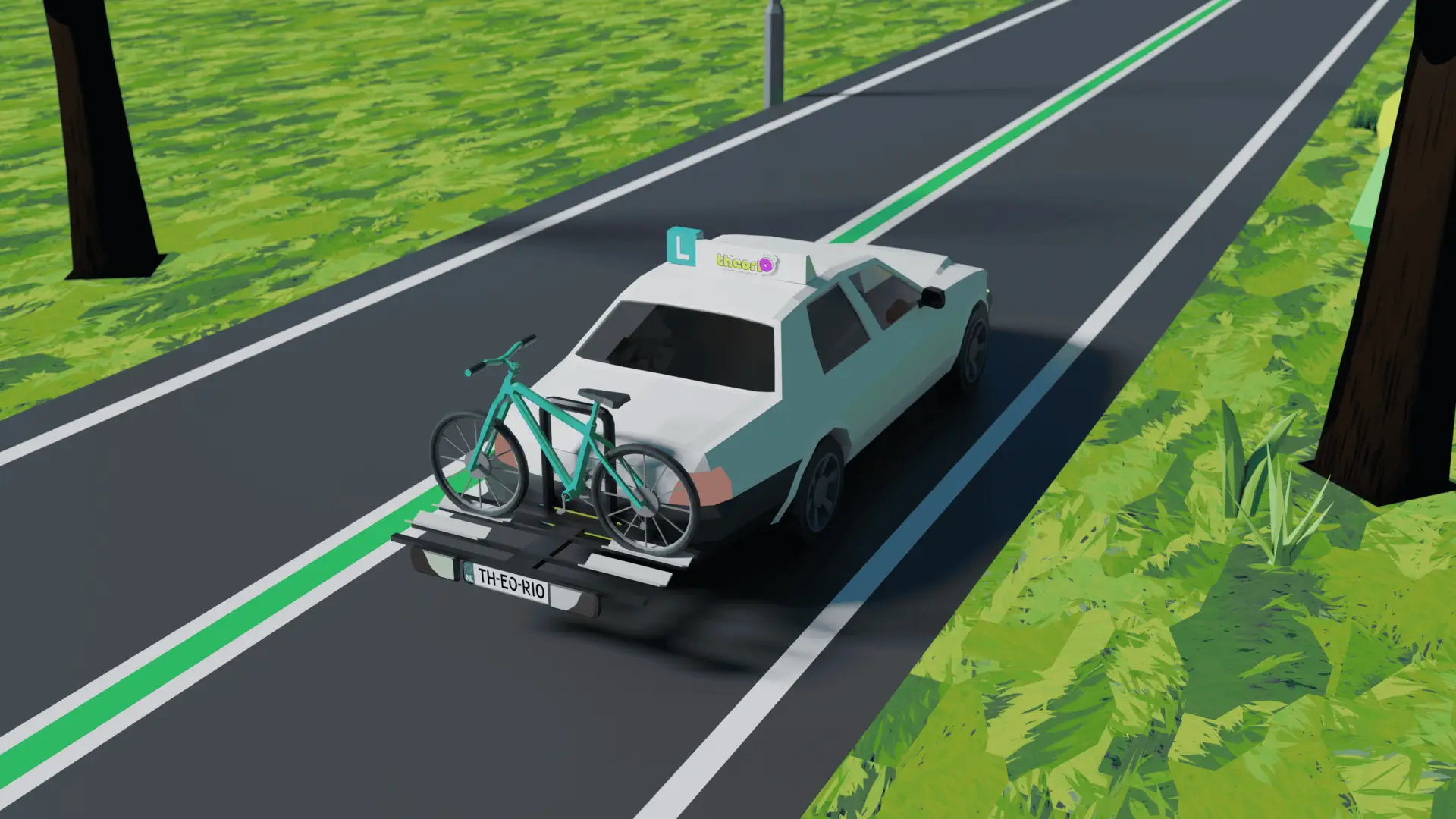
Cargo on the roof is transported always using load carriers. These distribute the weight evenly over the roof. Behind the car you use a bicycle carrier on the tow bar.
Bicycles on a carrier and cargo on the roof simply count as cargo. The same dimensions apply for that:
| Where | Maximum protrusion with a car |
|---|---|
| Sides | 20 cm per side, also for bicycles at the back |
| Front | 1 metre |
| Rear | 1 metre |
| Height and mass | Car plus cargo maximum 4 metres high and 3500 kg (see section 1) |
With a tow bar or carrier, the number plate must remain visible (see section 1).
Cargo on a trailer
With a trailer, different rules apply than with a car. Topic 11 goes into trailers in more detail; these are the cargo rules:
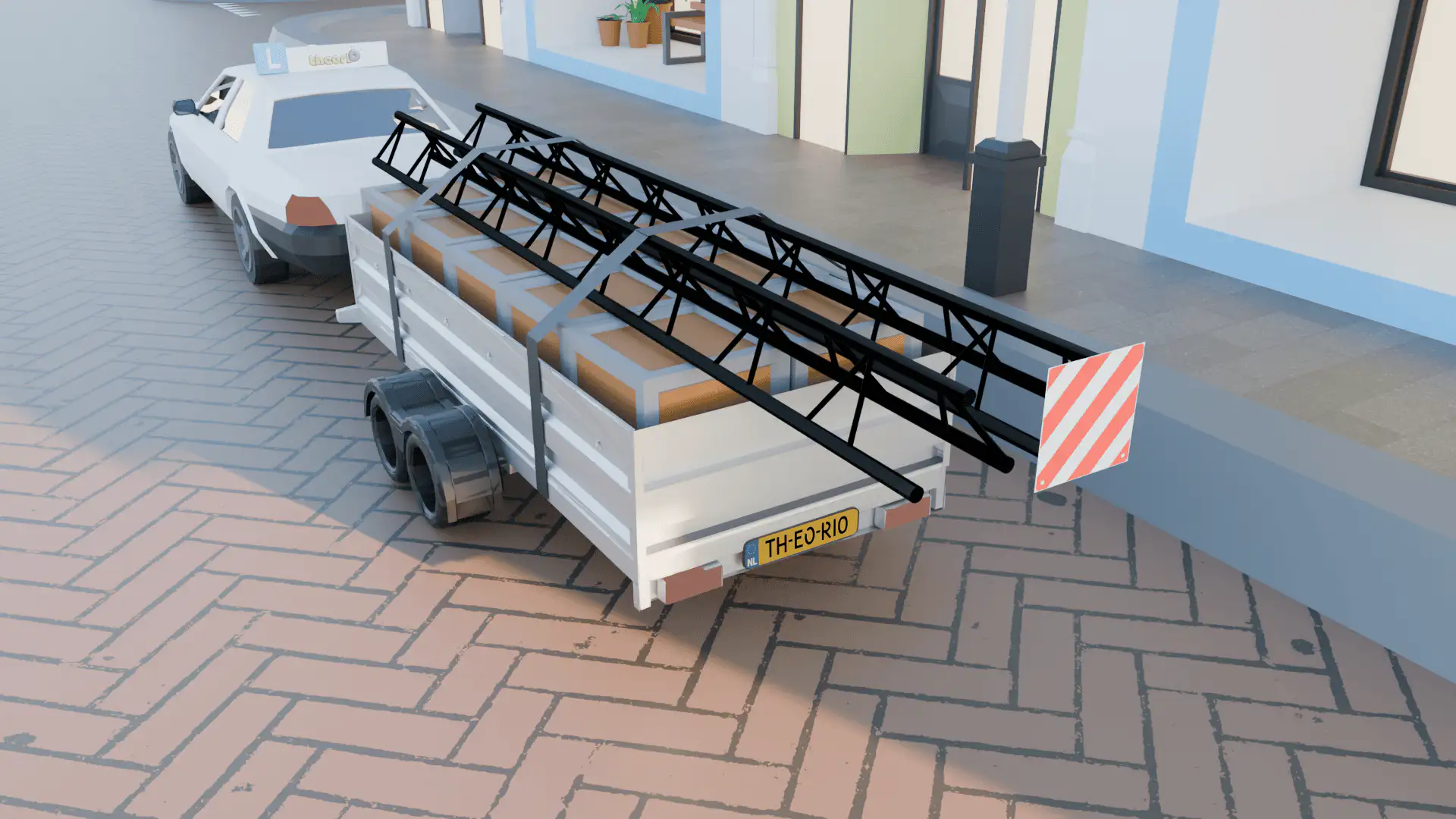
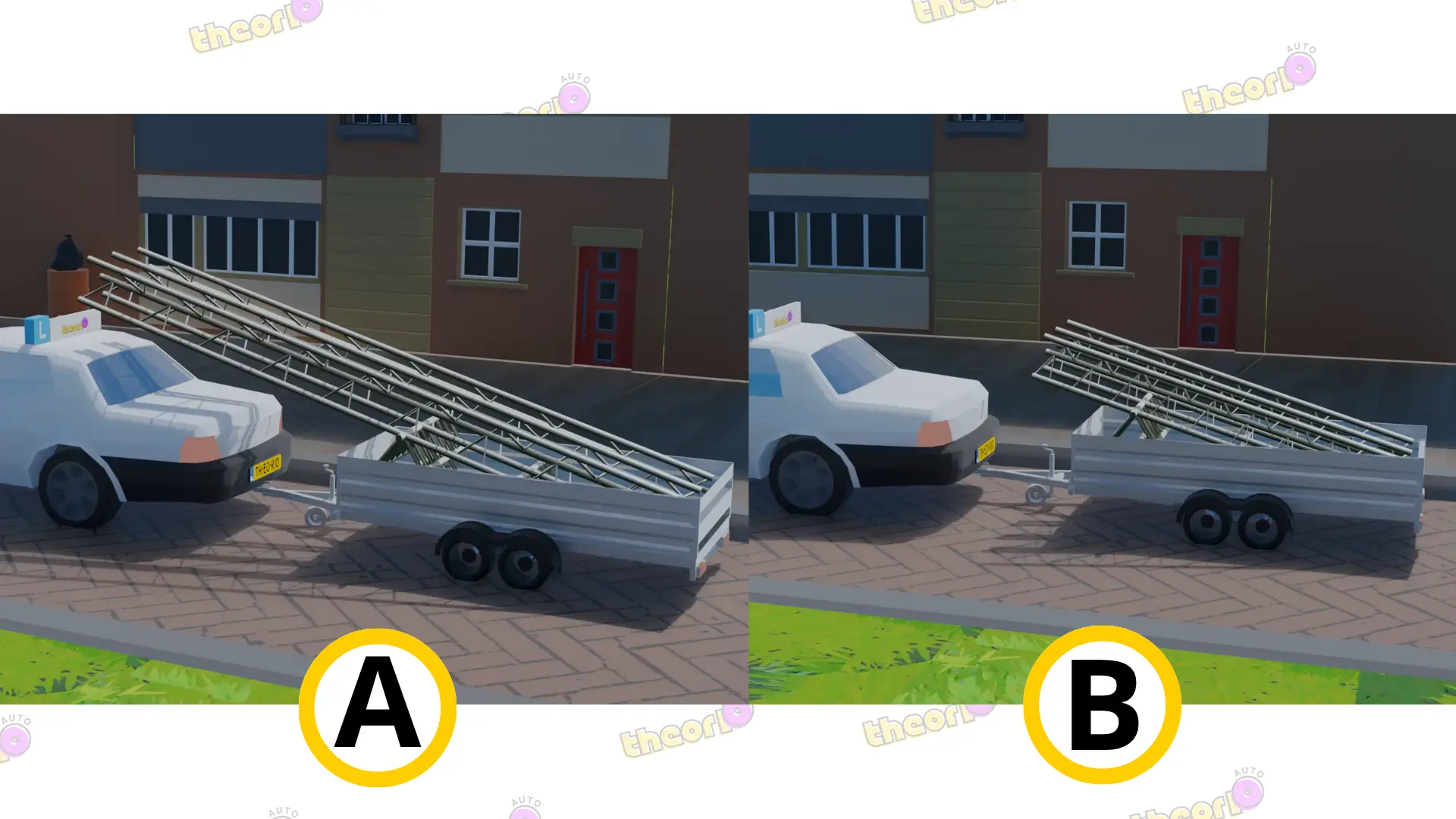
- Cargo may not protrude at the front. When you do this, look at the actual front of the trailer, not only at the loading bed: cargo may stick out a bit beyond the loading bed, as long as it does not go past the front of the trailer.
- At the rear cargo may protrude, including more than 1 metre. If the cargo protrudes more than 1 metre, a red-and-white striped marking board is mandatory. If it protrudes less than 1 metre, that board may also be used, but it is not required.
- With loose cargo you put a net over the trailer so nothing can fall out.
- Heavy cargo is placed in the middle. Too much weight at the back increases the chance of swaying.
| Situation | Car | Trailer |
|---|---|---|
| Protruding at the front | Maximum 1 metre | Not allowed |
| Protruding at the rear | Maximum 1 metre | Allowed, also more than 1 metre |
| Marking board | – | Mandatory if protruding more than 1 metre at the rear |
| Protruding at the sides | Maximum 20 cm per side | – |
| Loose cargo | Do not transport loose | Put a net over it so nothing can fall out |
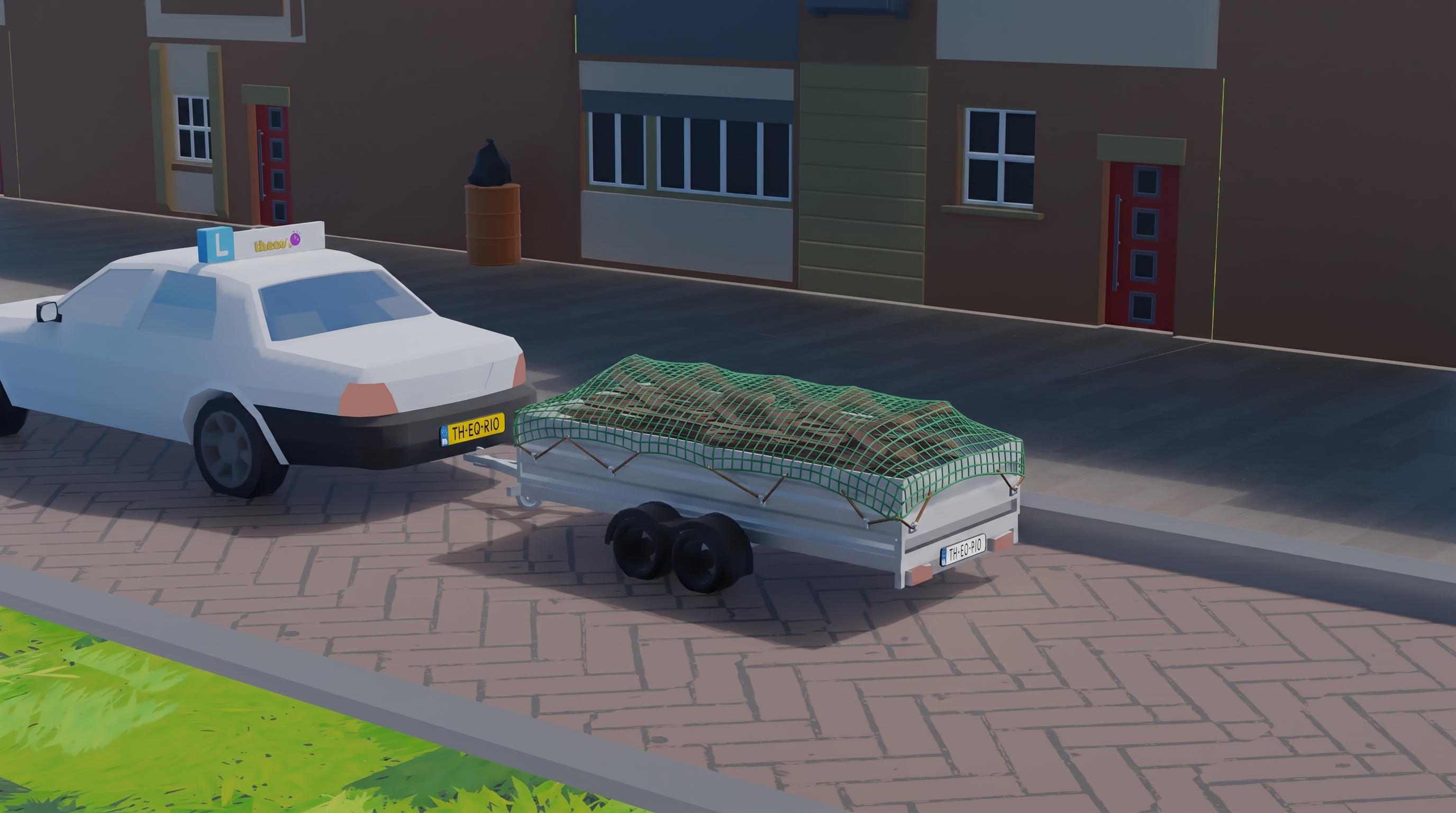
Example situations
Situation 1
You transport long boards loose between the front seats. They do not protrude outside the car.
Wrong. Even without protruding, this is unsafe: when you brake hard, the cargo shoots forward.
Situation 2
On a trailer, a ladder protrudes 1.5 metres at the rear, without a red-and-white marking board.
Wrong. If cargo protrudes more than 1 metre at the rear behind a trailer, that board is mandatory.
Situation 3
A ladder protrudes a bit at the front beyond the loading bed of the trailer, but not beyond the front of the trailer itself.
Allowed. The limit is the front of the trailer, not the loading bed.
CBR trap
- The rules for a car do not apply to a trailer: with a car, cargo may protrude at the front; with a trailer, it may not. So first choose the type of vehicle, and only then assess the cargo.
- Don’t look only at the loading bed. Cargo that protrudes beyond the loading bed but not beyond the front of the trailer is not automatically wrong.
- A marking board is not always mandatory: only if cargo protrudes more than 1 metre at the rear behind a trailer.