Aquaplaning and the road surface
Aquaplaning and road surface: recognise when you lose grip on a wet road surface and which speed really applies at that moment.
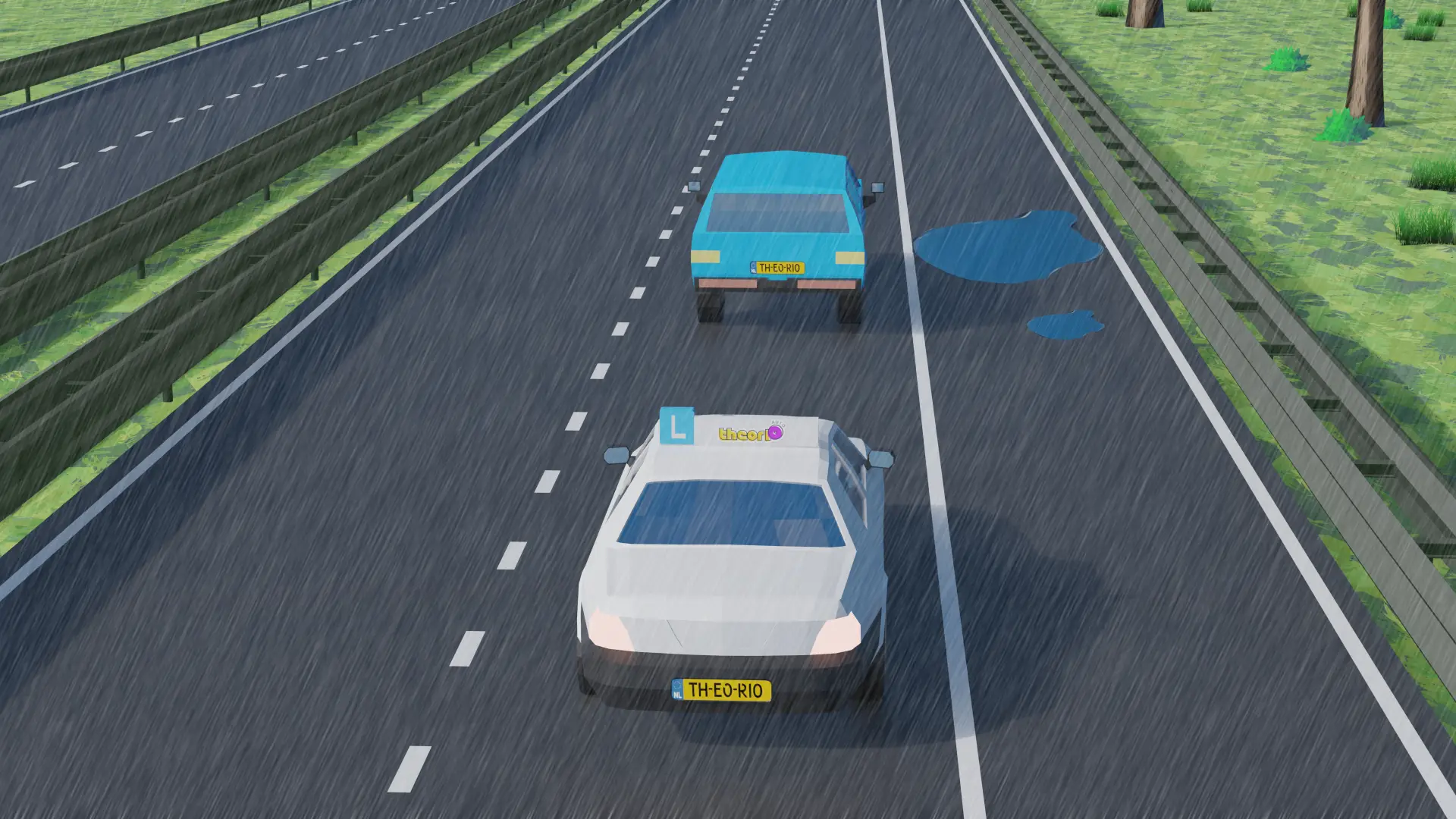
Aquaplaning is when your car slides over a layer of water instead of driving through it. At that moment, your steering and braking do nothing.
For the exam, you need to know what causes it—especially speed, and in addition your tyre tread depth, the width of your tyres, and rutting in the road surface.
Key rule for the exam: aquaplaning is losing control on a layer of water. Speed is by far the biggest cause — more speed = more chance of aquaplaning.
What aquaplaning really is
Aquaplaning is when your car slides over a layer of water instead of driving through it. Your tyres no longer make contact with the road, and at that moment your steering and braking do nothing.
The biggest culprit is speed. At low speed it almost never happens; the faster you drive, the bigger the chance. Other factors also play a role — low tyre pressure, ruts in the road — but speed is by far the most important.
And what do you do when it happens? Aquaplaning is nothing more than losing control on a patch of water, so the same rule applies here as everywhere: take your foot off the accelerator. Don’t brake, don’t steer.
Your tyres and aquaplaning
The tread pattern
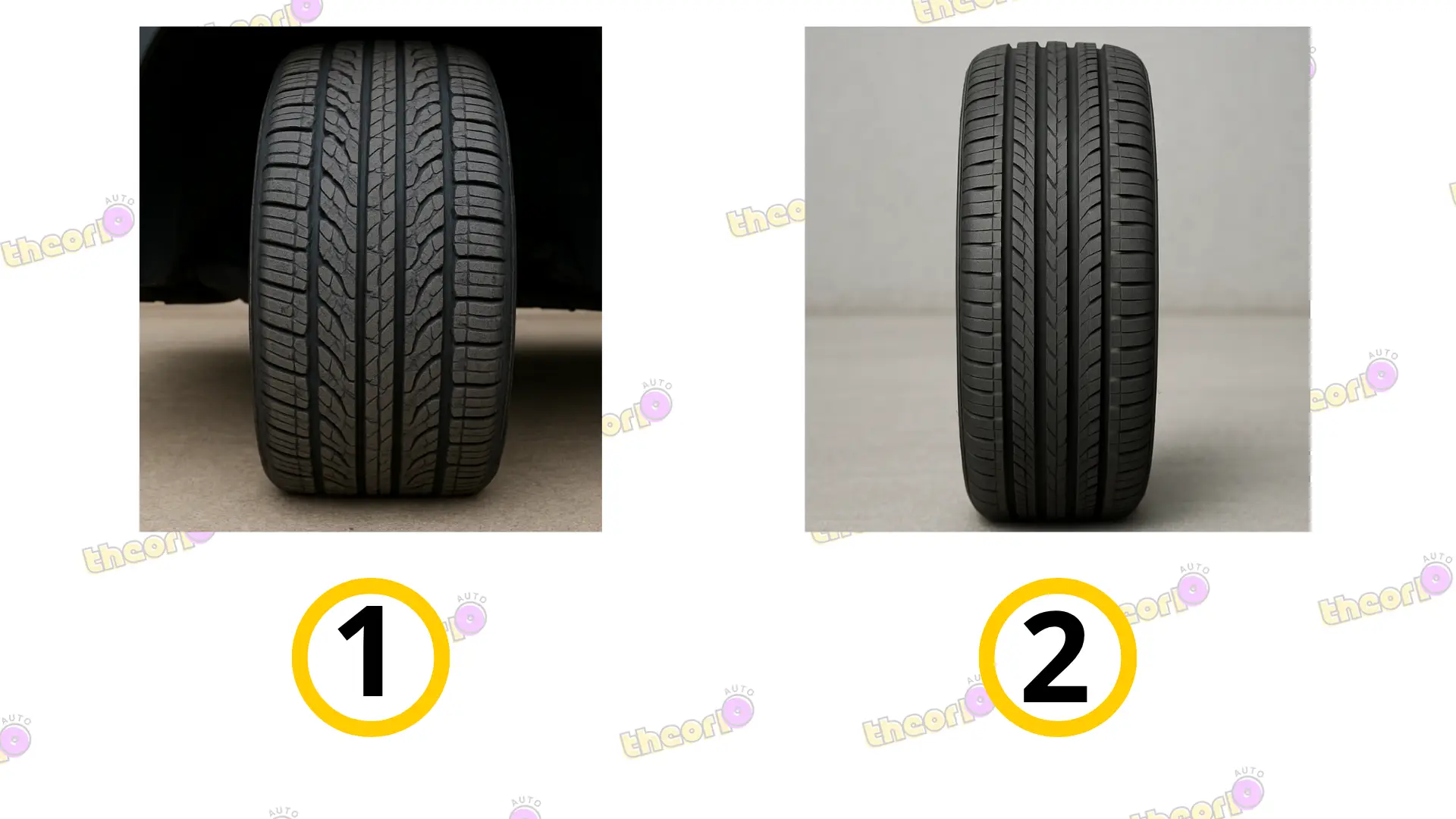
The grooves in your tyre — the tread pattern — have one job: to channel water away from under the tyre. If the tread is too shallow, the water can’t drain away quickly enough and you slide off sooner.
The width
Here, the intuitive answer often goes wrong on the exam:
- Narrow tyres cut more easily through the water. So they are better against aquaplaning.
- Wide tyres slide more easily over the water. That gives more chance of aquaplaning.
Rutting: where the water stays
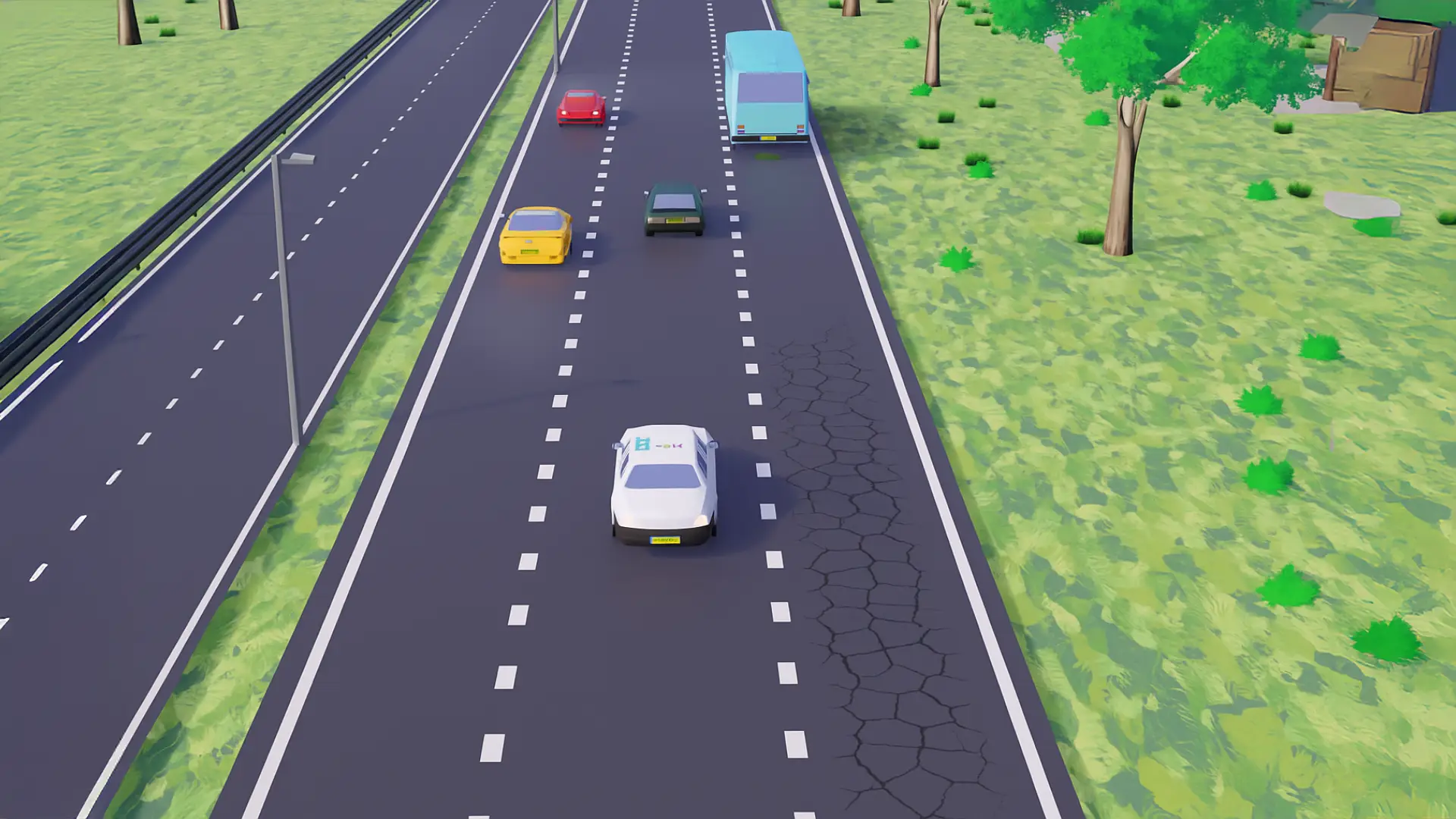
Take a close look at the road surface on the motorway, especially the right-hand lane. You often see two shallow ruts there. They are caused by the heavy lorries that always drive there — just like a pothole forms in the bank at the spot where you always sit.
Because those ruts are slightly deeper than the rest of the road, water remains there after a shower. And that’s why: aquaplaning happens most often on a road surface with rutting.
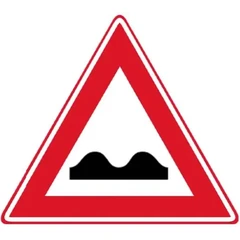
Sign J1 (Poor road surface): warns about an uneven or worn road surface — exactly the kind of road where water stays.
Summer or winter tyres
In the Netherlands we rarely have extreme winters, so winter tyres are not compulsory. Still, your tyre choice makes a difference — in your braking distance.
Both summer and winter tyres are designed to provide as much grip as possible in their season. If you drive with the right tyre for the season, you come to a stop sooner. If you drive in summer on winter tyres, or in winter on summer tyres, it takes longer before you stop.
- Summer tyres in summer: shorter braking distance.
- Winter tyres in winter: shorter braking distance.
- The wrong tyre in the wrong season: longer braking distance.
CBR trap
The CBR rarely asks for a technical explanation of aquaplaning here. The question is almost always: do you adjust your speed?
If there is no sign at all, but you see puddles or rutting, then lowering your speed is the right answer. A sign that allows 100 km/h doesn’t make 100 km/h sensible — the indicated speed is a maximum, not an instruction.
And if there is signalling above the road, then that is leading; on a wet road surface the speed is often reduced for that reason. The meaning of those signs is explained under Motorway Matrix signs, and an underpanel that only applies on a wet road surface is explained under Motorways and weather conditions.