Fog lights: when may you use them?
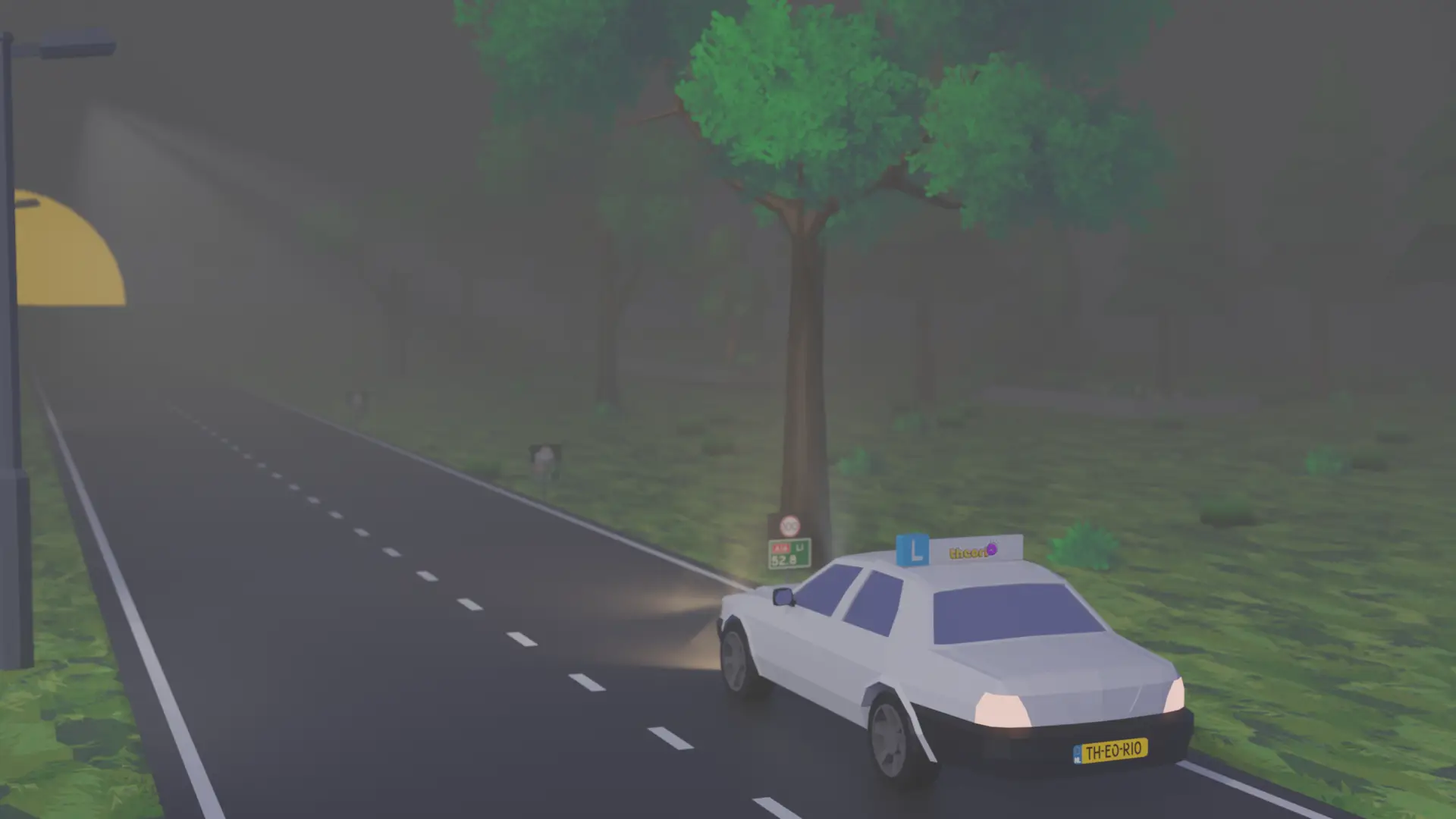
Front fog lights may only be used when visibility is seriously reduced due to fog, snow or heavy rain. It is never mandatory.
You use front fog lights only when visibility is seriously hindered by fog, snow or heavy rain.
For the CBR, the core point is: it may be used, but it never has to. Dipped headlights may always be used. The rear fog light has its own, stricter rules.
Core rule for the exam: front fog lights may only be used when visibility is seriously reduced due to fog, snow or heavy rain. The rear fog light may only be used when visibility is less than 50 metres due to fog or snow — and never in rain.
What “serious conditions” means
The term sounds serious, but what is meant is: weather that seriously hinders your visibility. So it is not only fog, but also snow and heavy rain. Only in those cases do fog lights come into play.
Pay attention to the word serious. Not every rain shower or light mist is enough. In exam questions, fog lights are about truly poor visibility.
Front fog lights
You may use fog lights at the front when visibility is seriously hindered by:
- fog;
- snow;
- heavy rain.
It is never mandatory. This is because not every car has fog lights, and because dipped headlights are allowed in every situation. If you use dipped headlights, you do not need to switch on fog lights; see section 3 for the rules about dipped headlights.
You can use front fog lights together with dipped headlights, but this is not recommended. Choose between those two instead.
Rear fog light
Stricter rules apply to the rear fog light. You may switch it on only if you have less than 50 metres visibility due to fog or snow.
The reason is that the rear fog light is a very bright red light. With better visibility, you would dazzle the drivers behind you.
In rain, the rear fog light may not be on: the rain reflects the bright light back and thus hinders the traffic behind you. Fog lights in front may be used in rain.
- ❌ Heavy rain, visibility seriously reduced → rear fog light on.✅ Heavy rain, visibility seriously reduced → only front fog lights, or dipped headlights.
| Weather condition | Front fog lights | Rear fog light |
|---|---|---|
| Fog, visibility seriously reduced | Allowed | Only when visibility is less than 50 metres |
| Snow, visibility seriously reduced | Allowed | Only when visibility is less than 50 metres |
| Heavy rain, visibility seriously reduced | Allowed | Do not use |
| Normal visibility | Do not use | Do not use |
| Mandatory? | No, always optional | No, only allowed under 50 metres |
How you measure those 50 metres
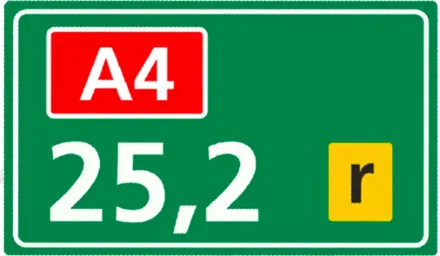
You do not have to guess. Along the road there are hectometre posts, and they are placed every 100 metres — one hectometre.
If you are at the height of a post and you can already see the next post standing there, then you have more than 50 metres visibility. The rear fog light may then not be on.
CBR trap
Learners confuse front fog lights and the rear fog light. The difference is in two things: the rain and the 50 metres.
- Front fog lights: may be used in fog, snow and heavy rain as soon as visibility is seriously reduced.
- Rear fog light: only when visibility is less than 50 metres due to fog or snow, and never in rain.
A second trap is thinking that front fog lights are made mandatory as soon as the weather is bad. That is not the case: it is and remains an allowed choice.