Your car in the Netherlands: bringing it and what it costs
If you bring your own car it has to go onto a Dutch registration. And once it does, you pay road tax every quarter — an amount set by the car itself, not by how much you drive.
Written by Chris Prosman Reviewed by Dirk van Zuijlen Checked September 2026
Bringing your own car to the Netherlands
If you bring your car, you may only drive it on foreign plates temporarily. After that it has to be on a Dutch . You arrange that at an inspection station — you must be 18 or over and registered in the .
How the inspection works
- 1
Book an appointment at an RDW inspection station
You do this online with your DigiD. Are your foreign plates no longer valid? Then request a one-day registration so you can drive to the inspection legally.
- 2
Come to the inspection yourself
Nobody else can submit the application for you. Arrive 15 minutes early; the inspection itself takes 25 to 55 minutes.
- 3
Bring your documents
The complete original foreign registration certificate and valid proof of identity. A is optional, but it sets the CO2 figure used for . Moving house with the car? Bring the document from the showing it counts as household goods.
- 4
Did your car come from a left-hand-traffic country?
Then its mirrors and lighting have to be adapted for driving on the right before it can be approved.
What registration costs
- Vehicle identification €58.50
- Registration certificate €50.00
- Registration in your name €13.10
- Recycling fee €22.50
RDW fees; check them on rdw.nl before booking an appointment. BPM comes on top of these.
And then
- Once everything is approved you receive your registration certificate within 5 working days, and the letter with your registration code about two working days later.
- Request the exemption from the Tax and Customs Administration before the inspection if the car is part of your household move. If the car is liable for BPM, you file a declaration afterwards.
- From the moment the car is in your name it must carry — and you start paying .
- Most cars also need a valid . A foreign inspection certificate that is still valid can sometimes be accepted by the RDW on request.
Road tax (motorrijtuigenbelasting)
As soon as a car is registered in your name you pay (MRB), usually per quarter. The amount does not depend on how much you drive but on the car itself — which catches a lot of expats out. Four things set the bill:
Weight
MRB is based on your car's kerb weight. Heavier cars pay significantly more; a large SUV easily costs a multiple of a small hatchback.
Fuel type
Diesel and LPG carry higher rates than petrol. Fully electric cars get a discount: since 1 January 2026 they pay 70% of the normal rate, an arrangement currently set to run through 2028.
Province
On top of the national part come (opcenten). Each province sets its own rate, so the same car costs slightly more in Noord-Holland than in Drenthe.
Particulate surcharge
Diesel cars with high particulate emissions pay an extra fixed amount per quarter ( ), rising with the weight of the car.
Work out what a car costs you per quarter with the Belastingdienst's calculator before you buy — especially if you are weighing up petrol, diesel and electric.
Frequently asked questions
How much road tax will I pay for my car?
It depends on your car's kerb weight, its fuel type, the province you live in and, for diesels, a possible particulate surcharge. There is no flat rate: work it out up front with the Belastingdienst calculator.
Do I pay road tax on an electric car?
Yes, but at a discount. Since 1 January 2026 fully electric passenger cars pay 70% of the normal rate. That arrangement currently runs through 2028.
Read next
 Exchange your licence Who qualifies, the 30% ruling, the documents you need and how long it takes. Open guide
  Take the CBR exams The four steps, the theory exam in English, what it costs and how to book. Open guide
  Choosing a driving school Look up real pass rates, compare prices and reviews, and avoid the cheapest-school trap. Open guide
  Driving licence costs One overview table: driving lessons, CBR exams and the municipal fee. Open guide
 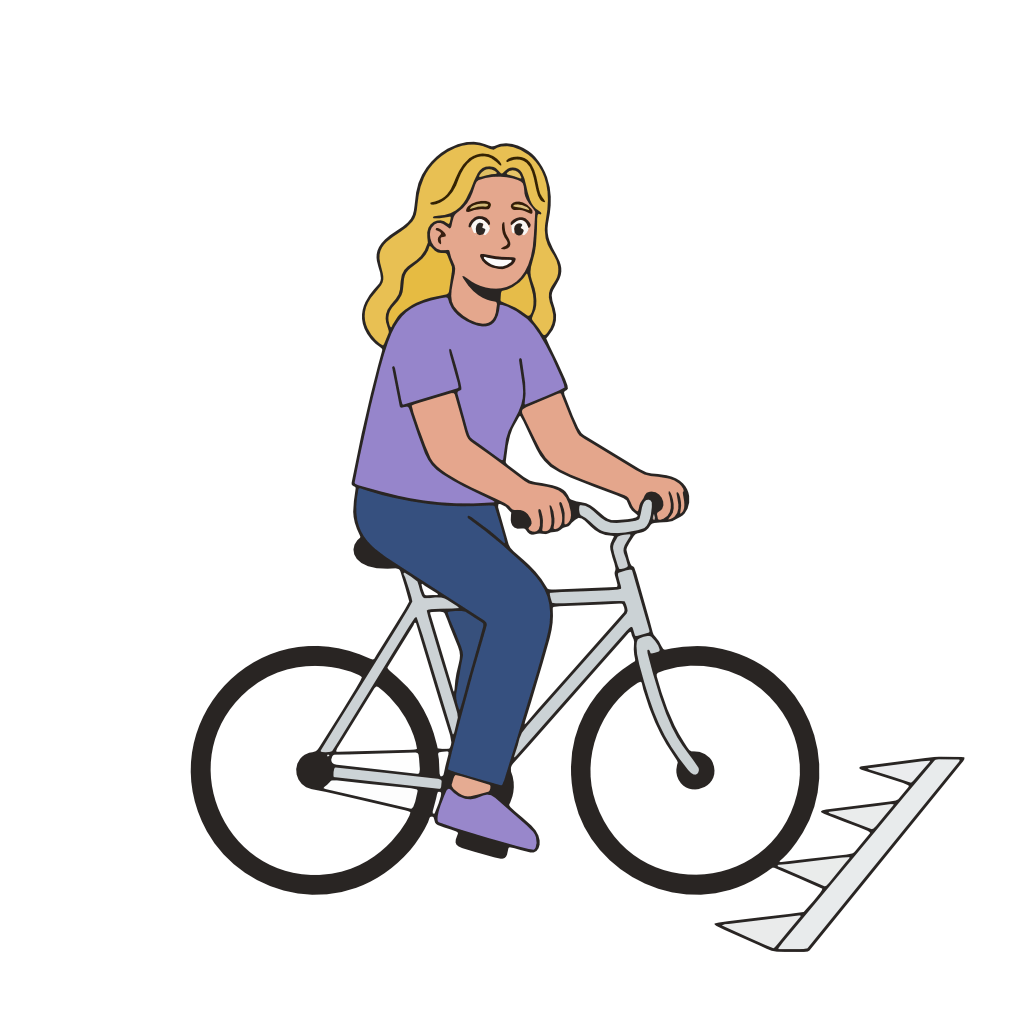 Dutch driving quirks Cyclists, priority from the right, shark teeth, environmental zones and more. Open guide
Need to take the theory exam?
Practise in English with more than 1,700 questions. Every answer includes an explanation, and the mock exams follow the CBR format.
Checked September 2026
How we check this guide
Chris Prosman writes and maintains this guide. Dirk van Zuijlen reviews changes against the linked first-party information from RDW, CBR, DigiD, Rijksoverheid and the Belastingdienst. Market-price estimates are recalculated from the dated Theorio driving-school dataset and are kept separate from CBR research.
We review the guide at least every three months and whenever an official authority announces a relevant rule or fee change.
Theorio is not a government authority. For a decision about your own licence, follow the linked official source or contact the RDW or CBR.
Sources
The official sources and Theorio dataset below were checked in September 2026. If anything is unclear, check the official source before you act.