All Traffic Signs and Their Meanings: The Most Important Ones at a Glance
All the most important traffic signs and their meanings on one page: prohibition signs, mandatory signs, warning signs, priority signs, and more. With official RVV pictograms for each sign, for your CBR theory exam 2026.
All Traffic Signs and Their Meanings: The Most Important Ones at a Glance
Traffic signs are a fixed part of the CBR theory exam: there are as many as 98 different exam questions about them. In this overview, you will find the most important traffic signs and their meanings, categorized — with the official RVV pictogram for each sign.
The 4 categories of traffic signs
According to the RVV 1990, the Netherlands has four main categories of traffic signs. Once you know which category a sign belongs to, you can often largely deduce its meaning: prohibition signs (round, red border) tell you what you are not allowed to do, mandatory signs (round, blue) tell you what you are required to do, warning signs (triangle, red border) warn you of danger or a special situation, and priority signs & indication signs regulate who has priority or provide other information, such as parking and signage.
1. Prohibition Signs
Prohibition signs are round signs with a red border. They indicate what is prohibited at that location, for example, for certain types of vehicles, dimensions, or weights.
| Sign | Code | Meaning |
|---|---|---|
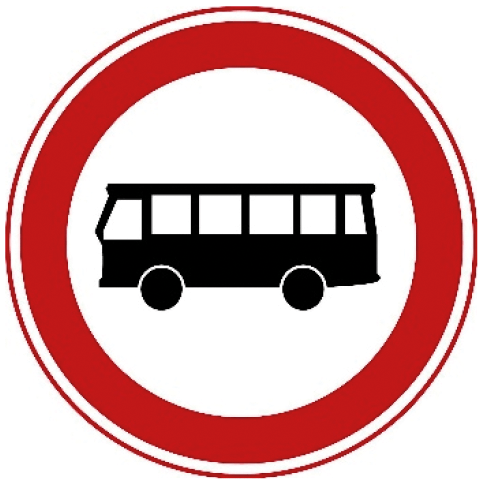 | C7a | Closed for certain vehicles and buses, for example, due to an environmental/emission zone. |
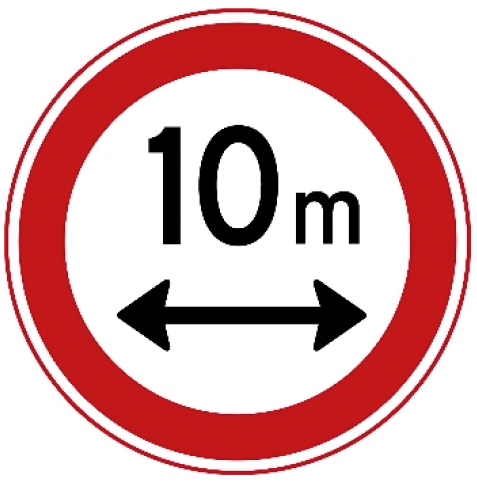 | C17 | Closed for vehicles and combinations (with load) longer than indicated on the sign, for example, 10 meters. |
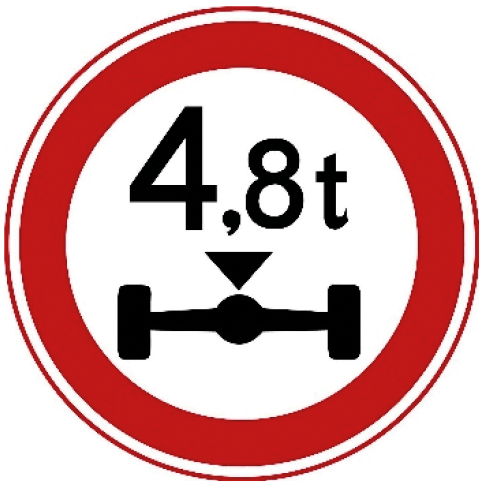 | C20 | Closed for vehicles with a higher axle load than indicated on the sign, for example, 4.8 tonnes. |
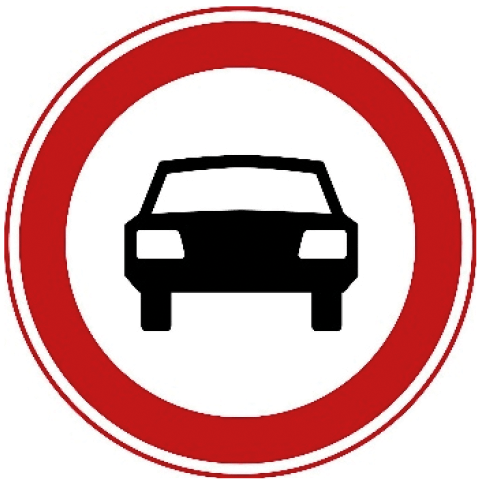 | C6 | Closed for motor vehicles with more than two wheels. |
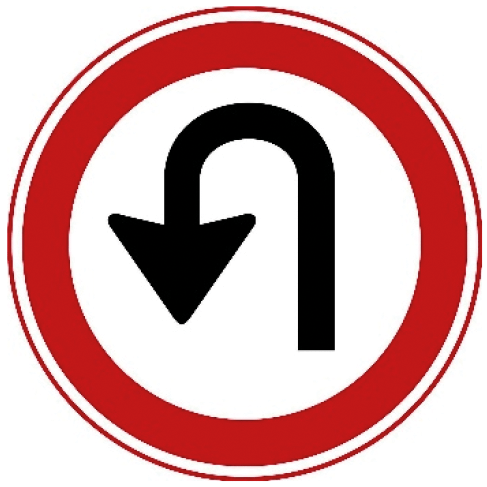 | F7 | No U-turn — you are not allowed to turn here. |
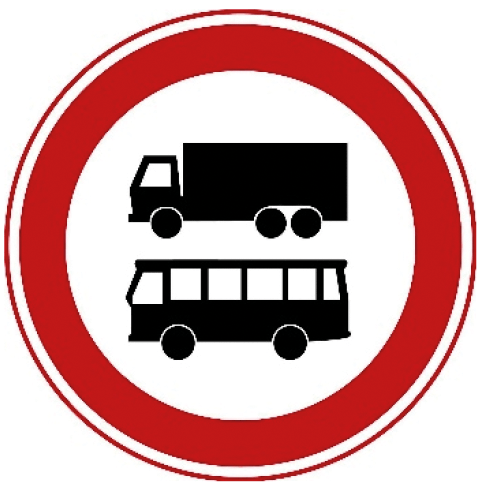 | C7b | Closed for buses and trucks. |
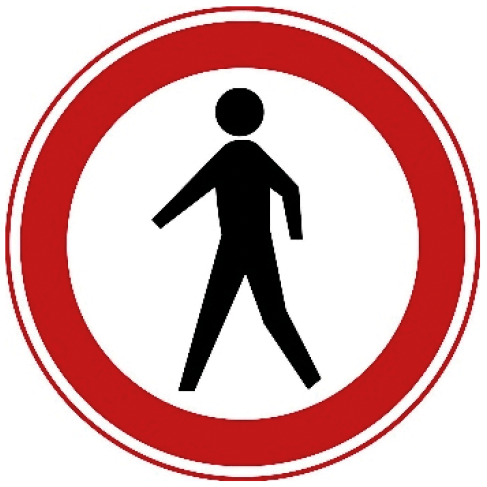 | C16 | Closed for pedestrians. |
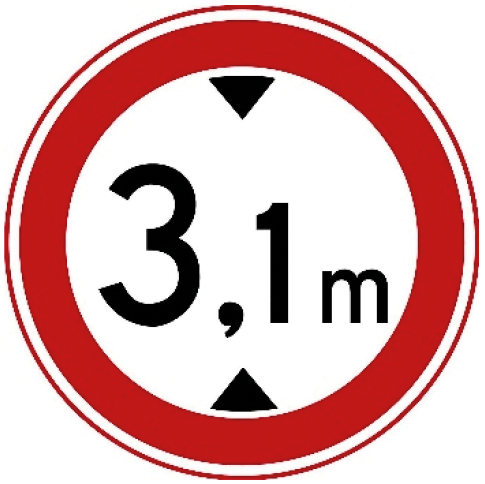 | C19 | Closed for vehicles that, with load, are higher than indicated on the sign, for example, 3.1 meters. |
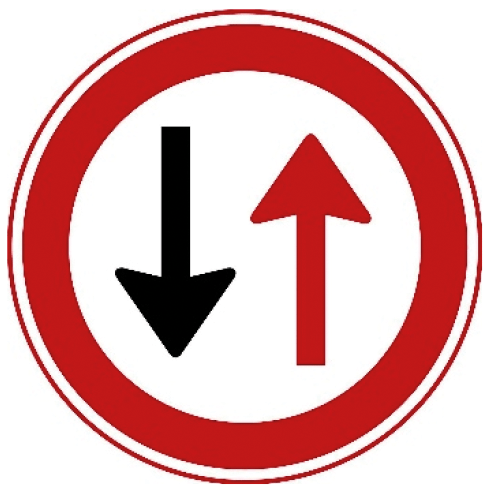 | F5 | Prohibition for drivers to proceed when approaching traffic from the opposite direction — often at narrow roads or bridges. |
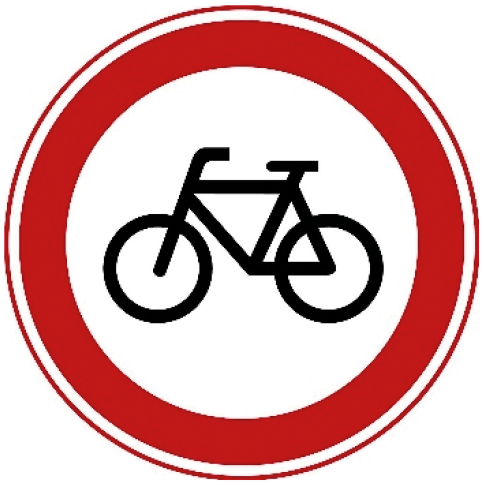 | C14 | Closed for bicycles and mobility scooters without a motor. |
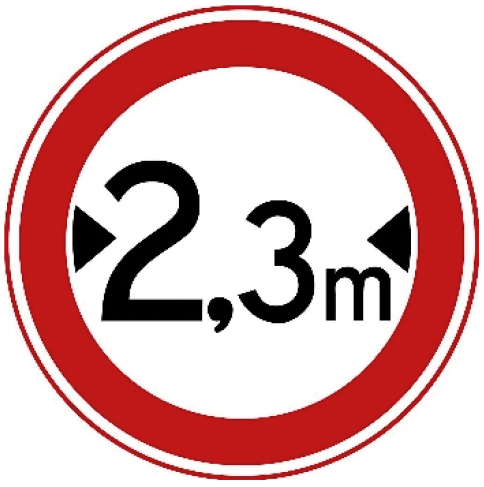 | C18 | Closed for vehicles that, with load, are wider than indicated on the sign, for example, 2.3 meters. |
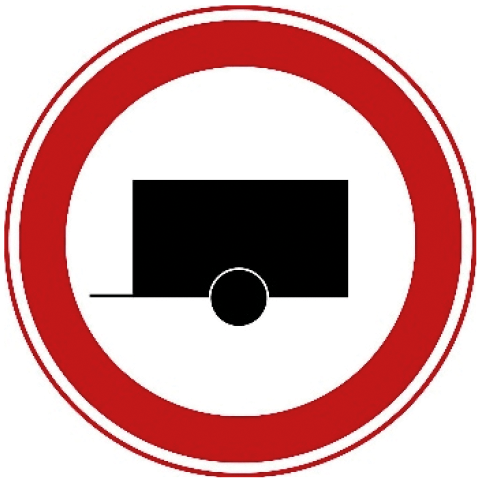 | C10 | Closed for motor vehicles with a trailer. |
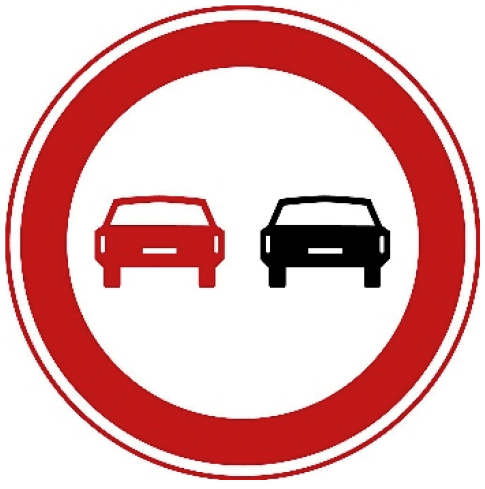 | F1 | Prohibition for motor vehicles to overtake each other. |
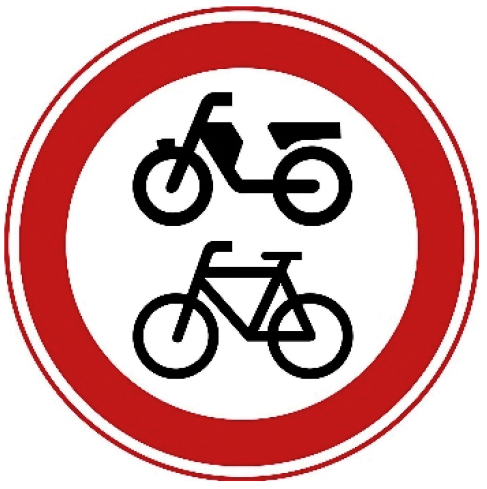 | C15 | Closed for bicycles, mopeds, and mobility scooters. |
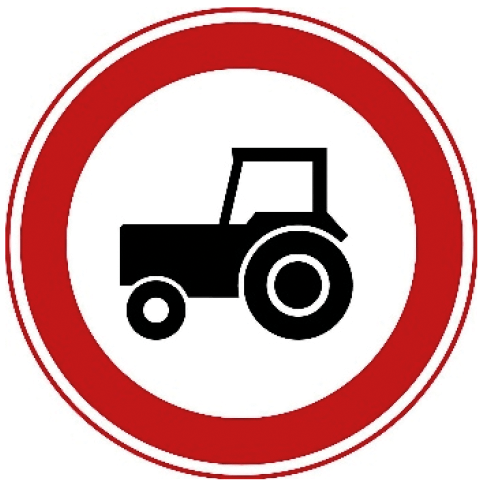 | C8 | Closed for agricultural and forestry tractors, low-speed motor vehicles, and mobile machines. |
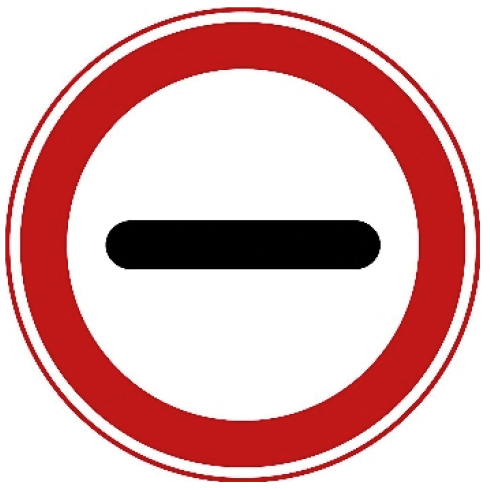 | F10 | Stop — the sign itself may state who or why you must stop. |
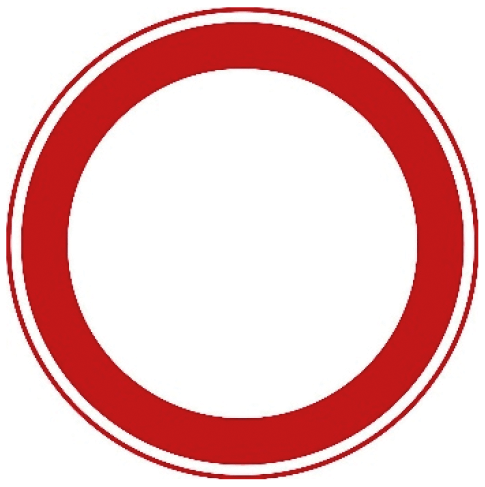 | C1 | Closed in both directions for vehicles, riders, and handlers of riding or draft animals or cattle. |
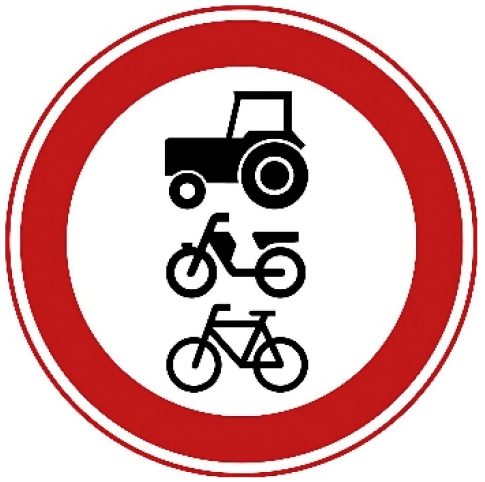 | C9 | Closed for riders, cattle, carts, (mopeds) bicycles, and various slow vehicles. |
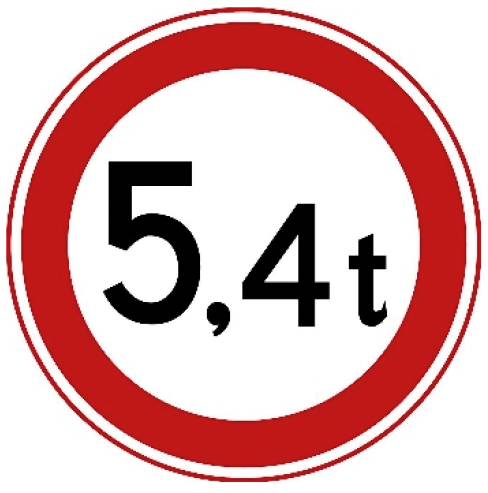 | C21 | Closed for vehicles whose mass or sum of axle loads is higher than indicated on the sign, for example, 5.4 tonnes. |
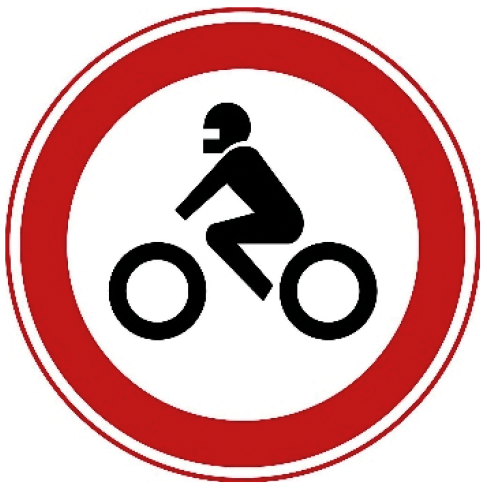 | C11 | Closed for motorcycles. |
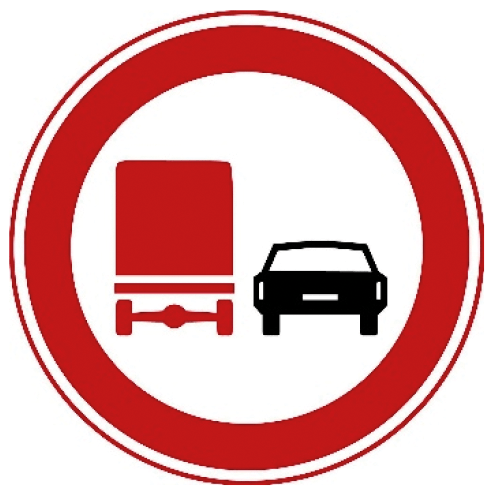 | F3 | Prohibition for trucks to overtake motor vehicles. |
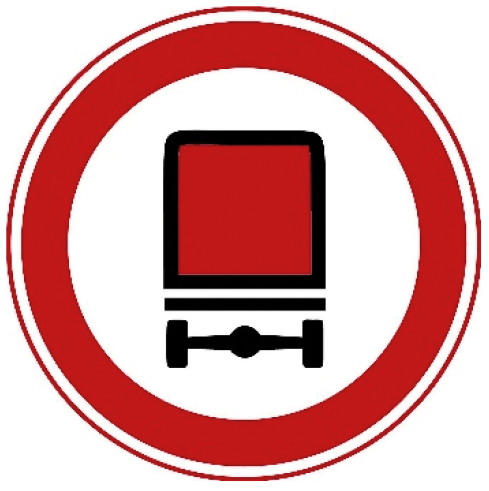 | C22 | Closed for vehicles carrying certain hazardous substances. |
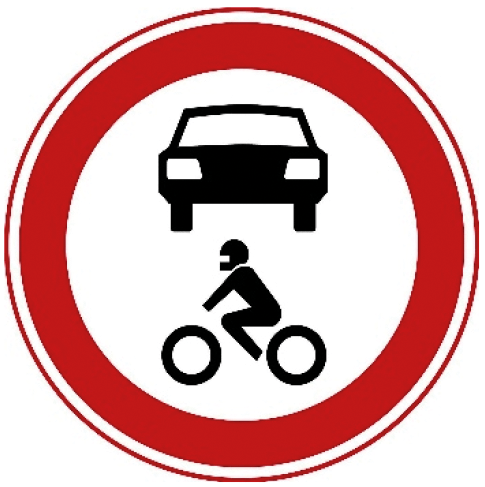 | C12 | Closed for all motor vehicles. |
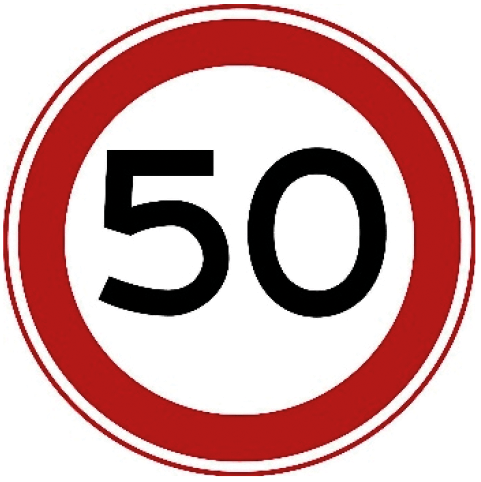 | A1 | Maximum speed, for example, 50 km/h. |
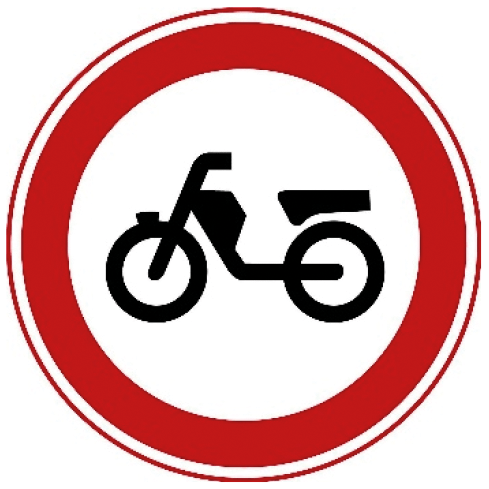 | C13 | Closed for mopeds and mobility scooters with a working motor. |
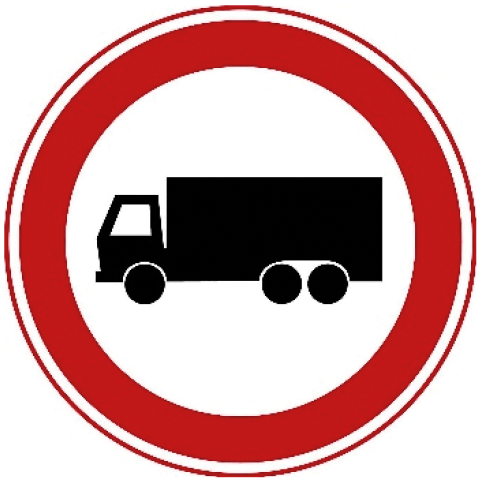 | C7 | Closed for trucks. |
2. Mandatory Signs & Required Direction
Mandatory signs are round and blue. Unlike prohibition signs, they tell you what you must do — think of a required direction or a mandatory bicycle or footpath.
| Sign | Code | Meaning |
|---|---|---|
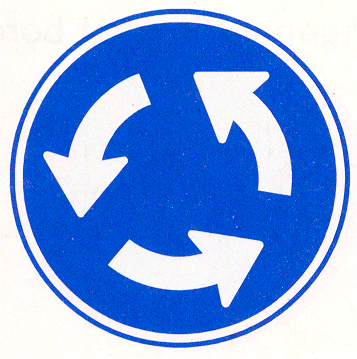 | D1 | Roundabout, mandatory direction. |
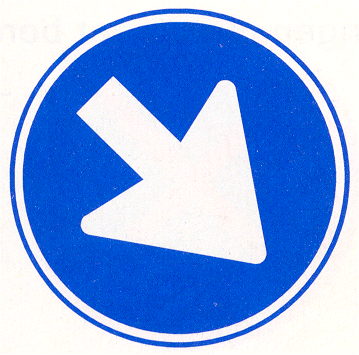 | D2 | Obligation for all drivers to pass the sign on the side indicated by the arrow. |
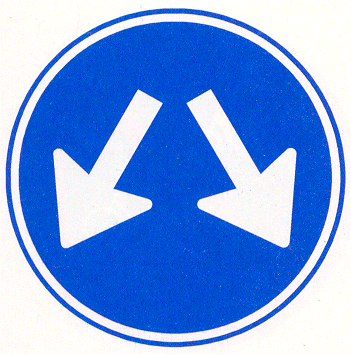 | D3 | Sign may be passed on both sides. |
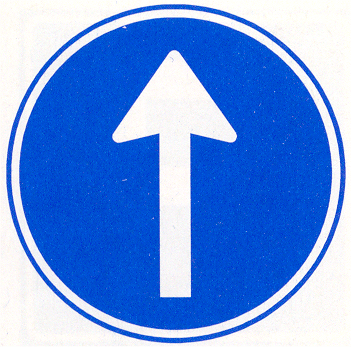 | D4 | Mandatory direction straight ahead. |
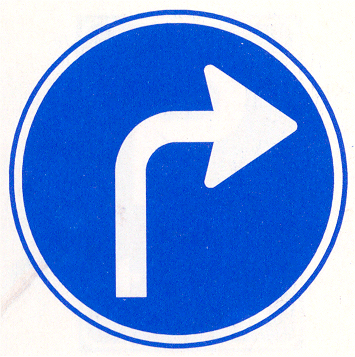 | D5 | Mandatory direction to the right (or left). |
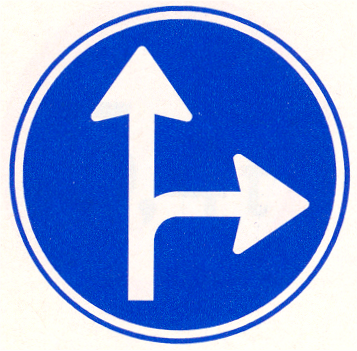 | D6 | Follow one of the directions indicated on the sign. |
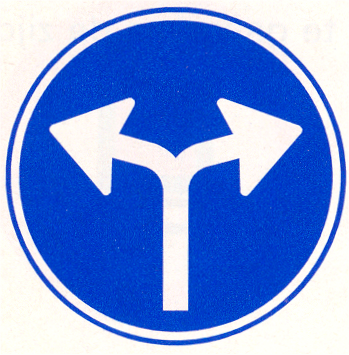 | D7 | Mandatory to follow one of the indicated directions, for example, turning left or right. |
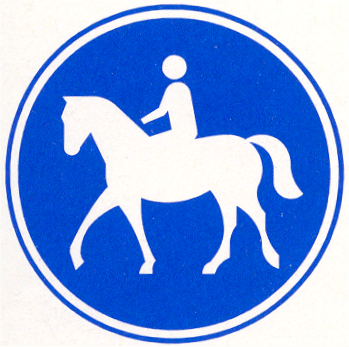 | G9 | Rider path — only for horseback riders. |
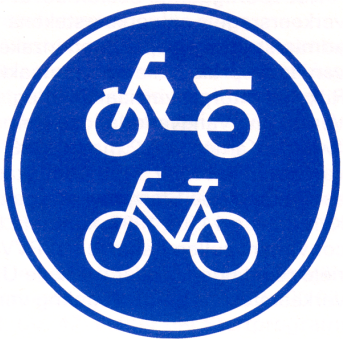 | G12a | Bicycle/moped path — for cyclists and moped/scooter riders. |
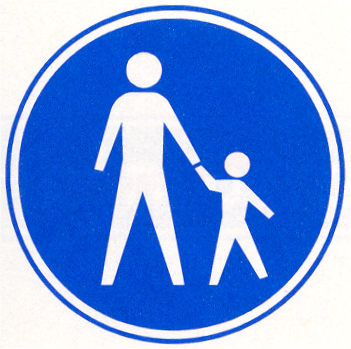 | G7 | Footpath — only for pedestrians. |
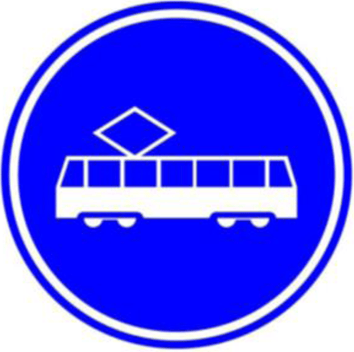 | F15 | Lane or strip exclusively for trams. |
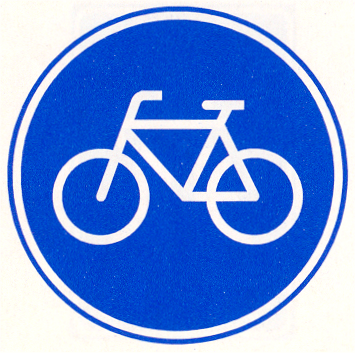 | G11 | Mandatory bicycle path — cyclists must ride here. |
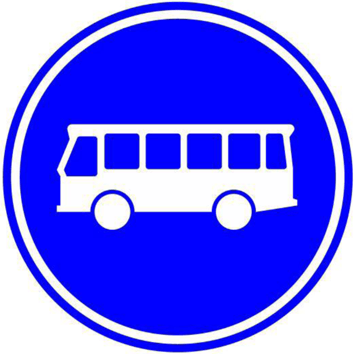 | F13 | Lane or strip exclusively for line buses. |
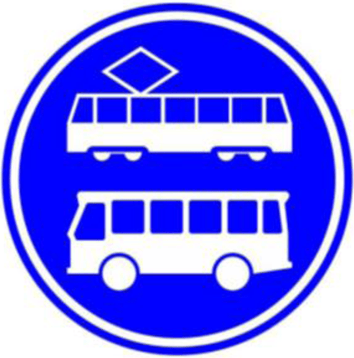 | F17 | Lane or strip exclusively for line buses and trams. |
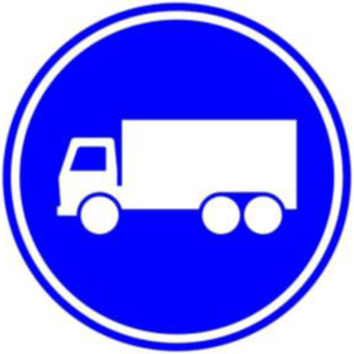 | F21 | Lane or strip exclusively for trucks. |
3. Warning Signs
Warning signs are triangular with a red border. They prepare you for danger ahead, such as a slippery road, wildlife, or a railway crossing.
| Sign | Code | Meaning |
|---|---|---|
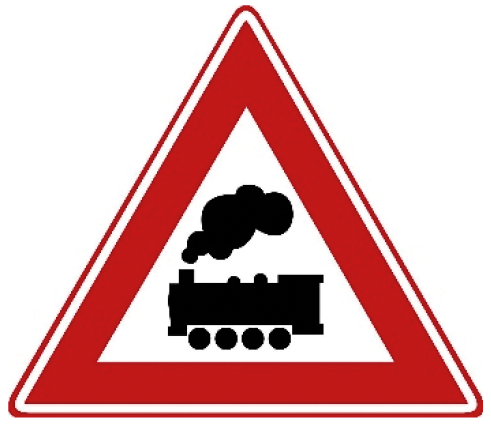 | J11 | Railway crossing without barriers. |
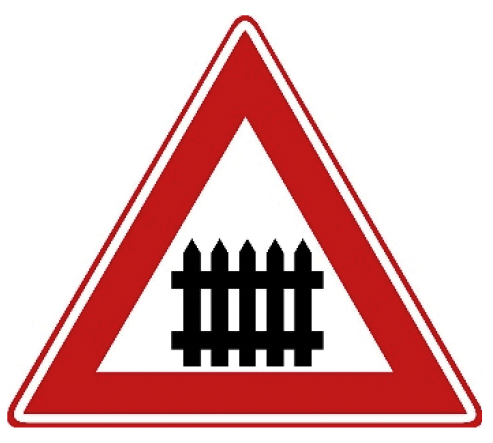 | J10 | Railway crossing with barriers. |
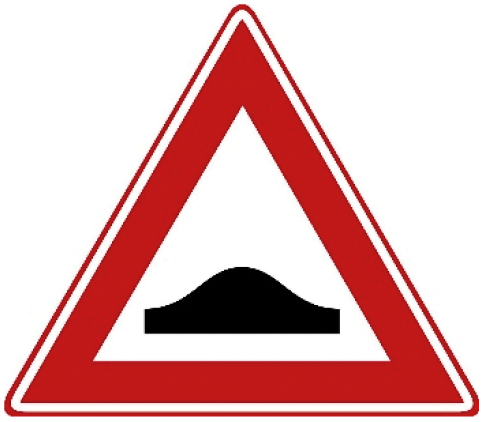 | J38 | Traffic bump. |
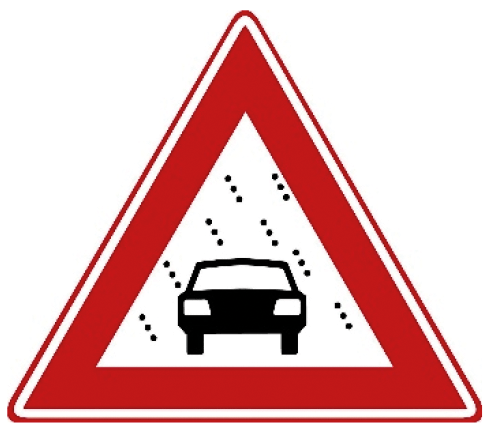 | J35 | Poor visibility due to snow, rain, or fog. |
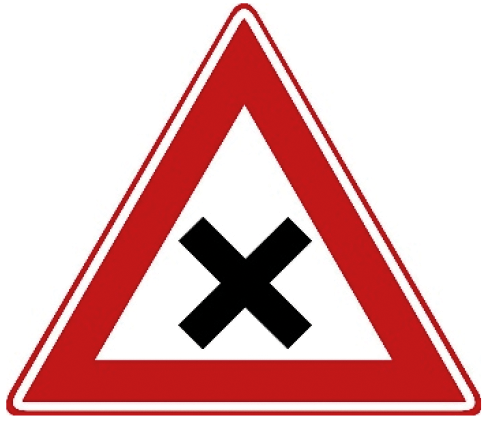 | J8 | Dangerous intersection. |
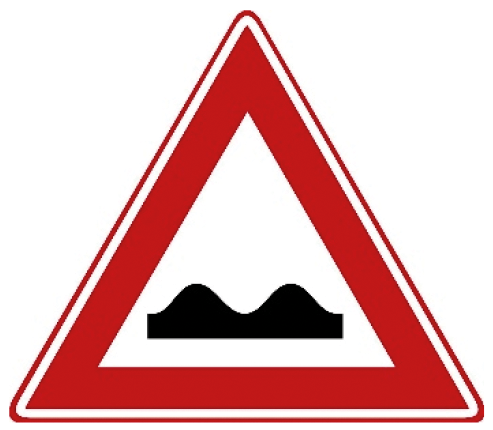 | J1 | Poor road surface. |
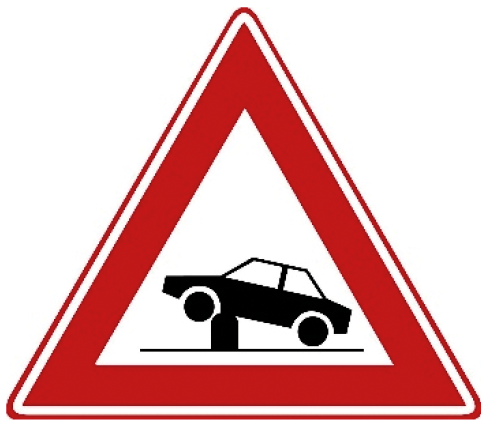 | J39 | Warning for an electric retractable post in the roadway (bollard). |
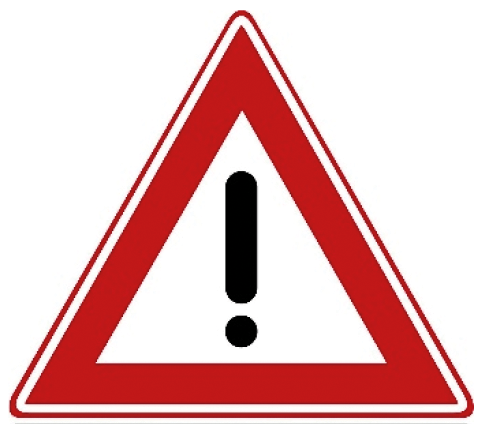 | J37 | General danger warning — the nature of the danger is stated on a supplementary sign. |
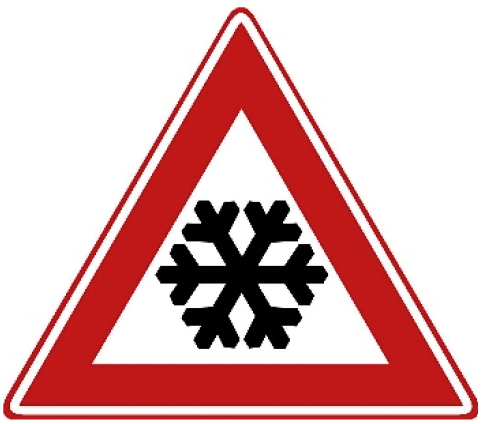 | J36 | Black ice or snow. |
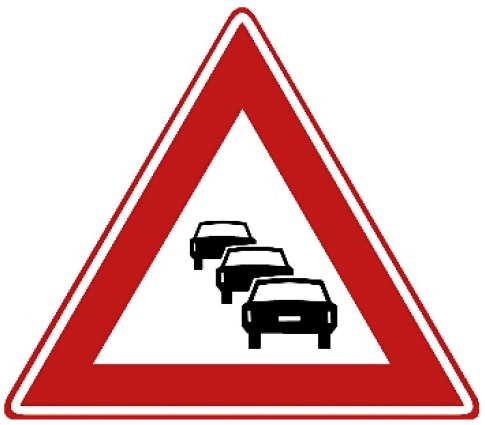 | J33 | Traffic jam. |
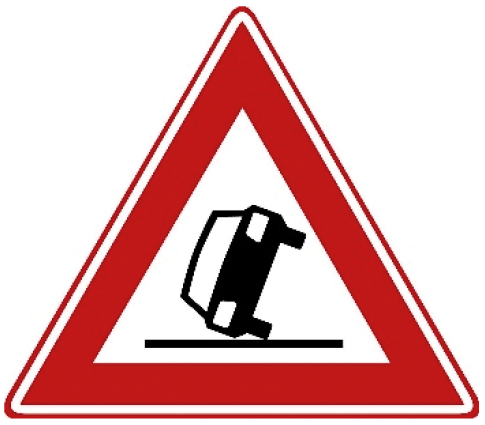 | J34 | An accident has occurred. |
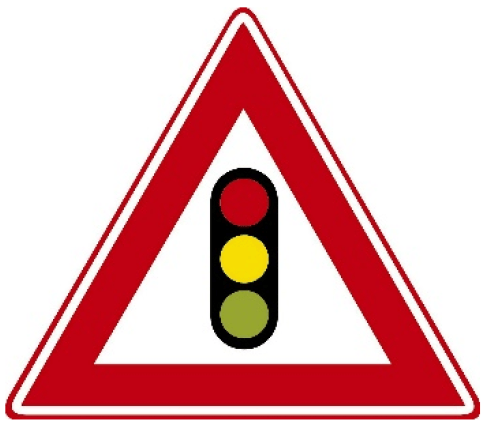 | J32 | Traffic lights ahead. |
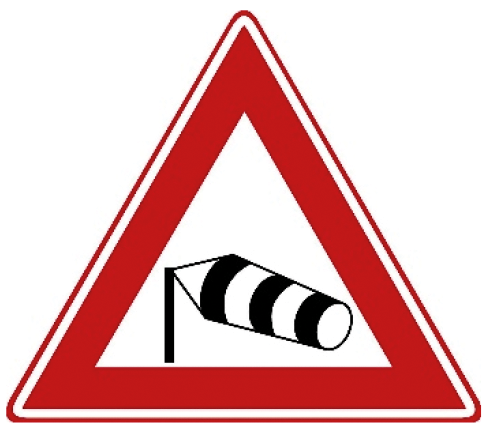 | J31 | Crosswinds. |
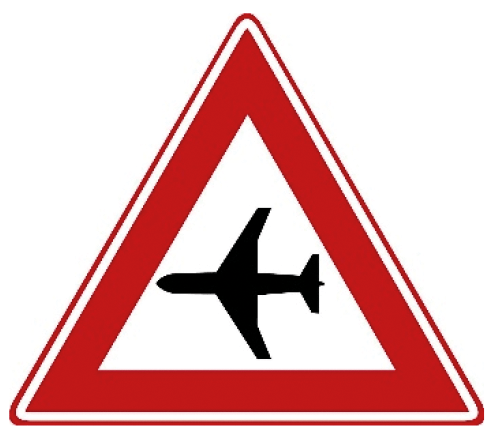 | J30 | Low-flying aircraft. |
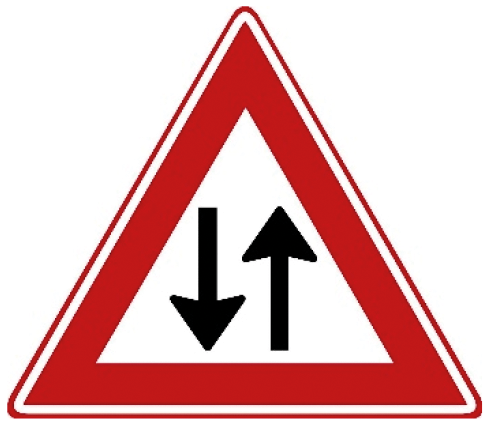 | J29 | Oncoming traffic. |
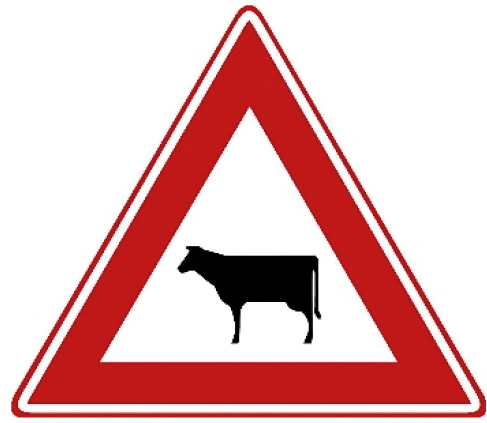 | J28 | Cattle on the road. |
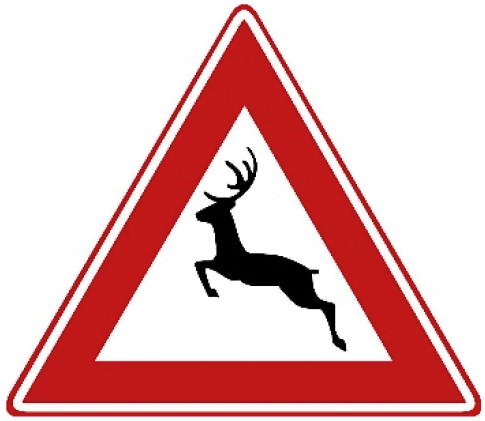 | J27 | Large game. |
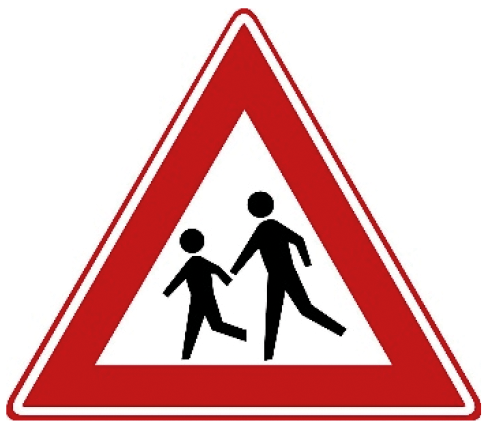 | J21 | Playing/crossing children. |
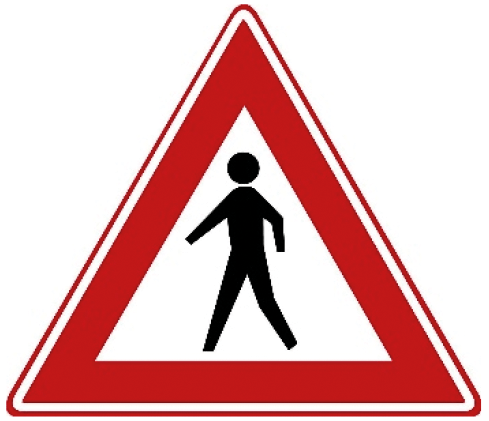 | J23 | Pedestrians. |
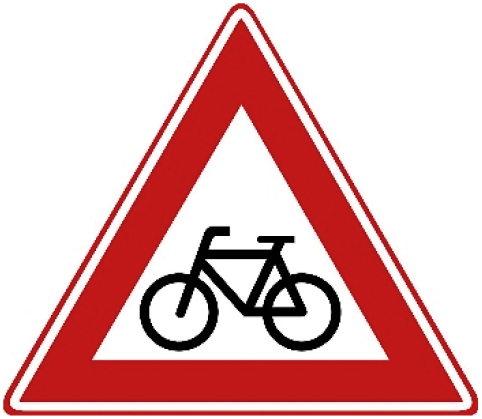 | J24 | Cyclists and moped riders. |
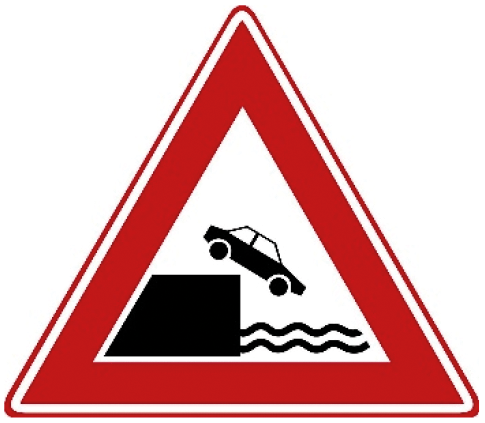 | J26 | Quay or riverbank. |
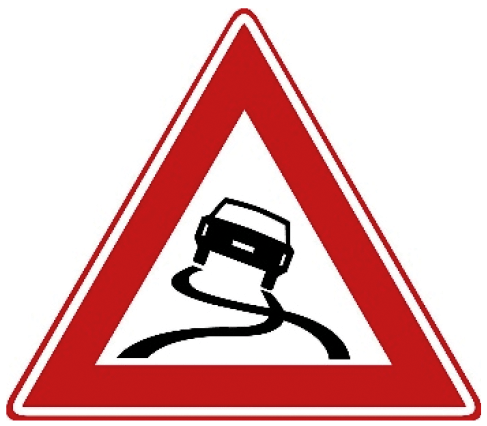 | J20 | Slip hazard / slippery road surface. |
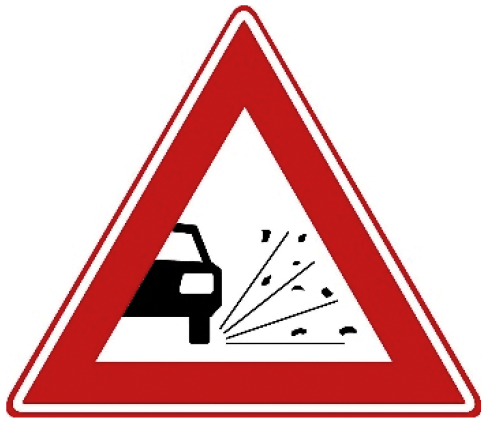 | J25 | Loose stones. |
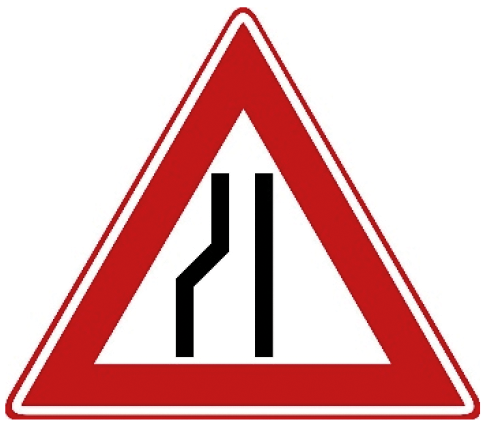 | J19 | Lane narrowing on the left. |
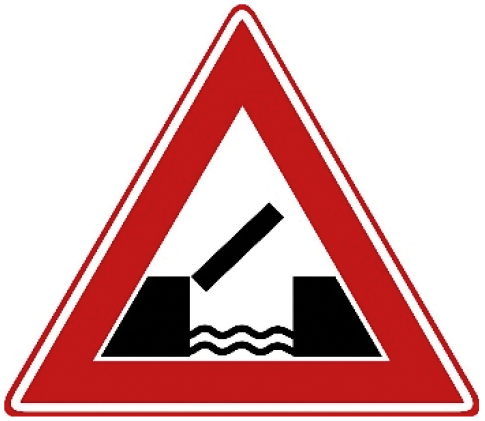 | J15 | Movable bridge. |
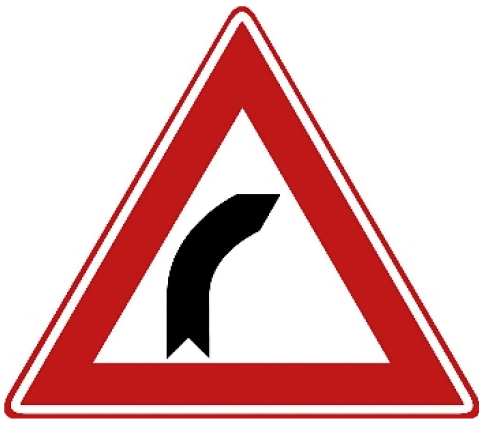 | J2 | Turn to the right. |
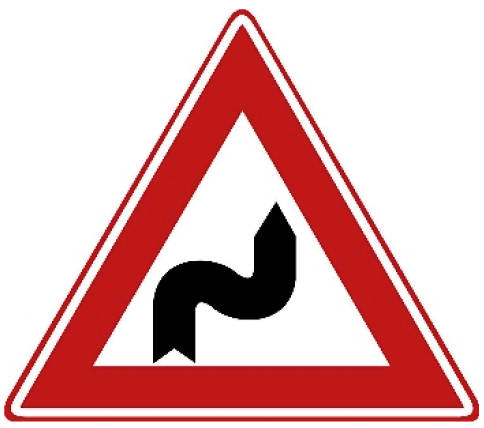 | J4 | S-bend(s), first to the right. |
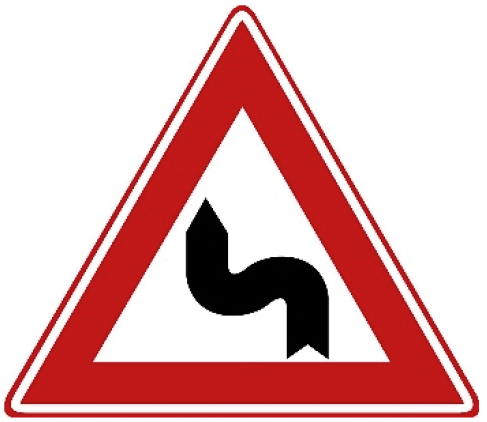 | J5 | S-bend(s), first to the left. |
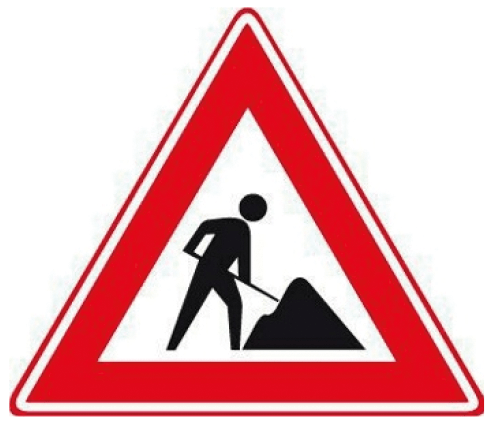 | J16 | Work in progress / road works. |
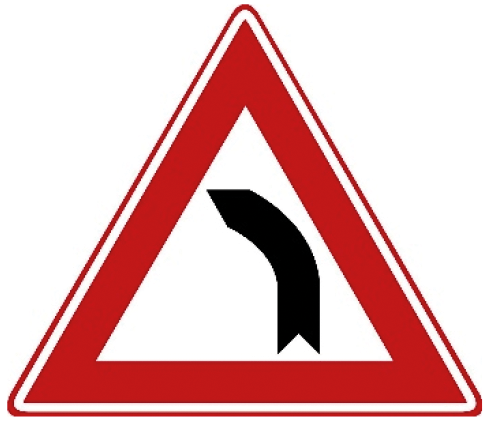 | J3 | Turn to the left. |
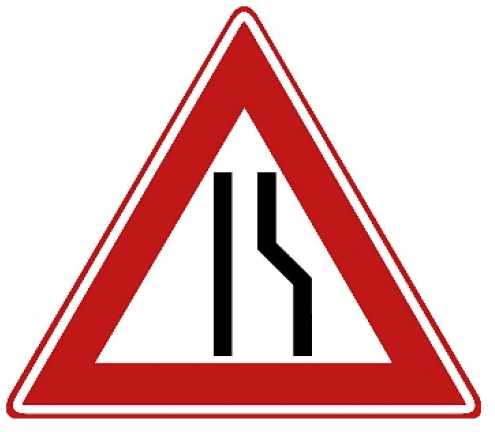 | J18 | Lane narrowing on the right. |
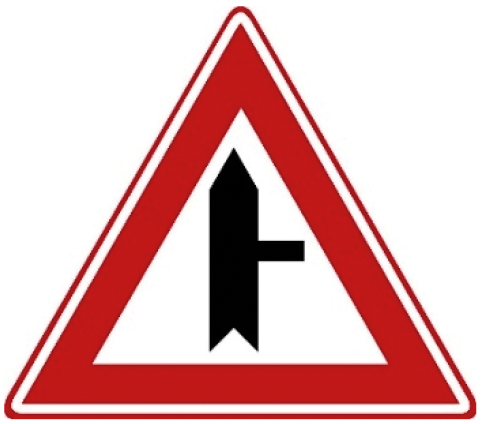 | B5 | Priority from side road on the right. |
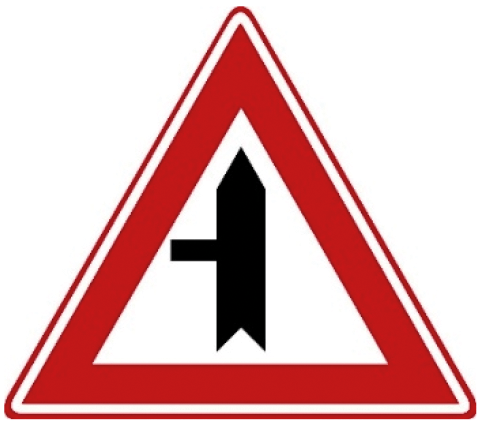 | B4 | Priority from side road on the left. |
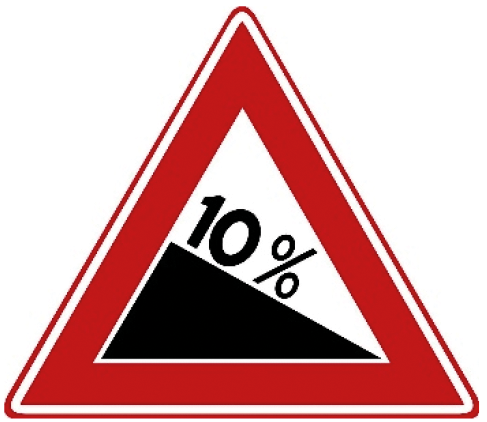 | J7 | Dangerous descent, for example, 10%. |
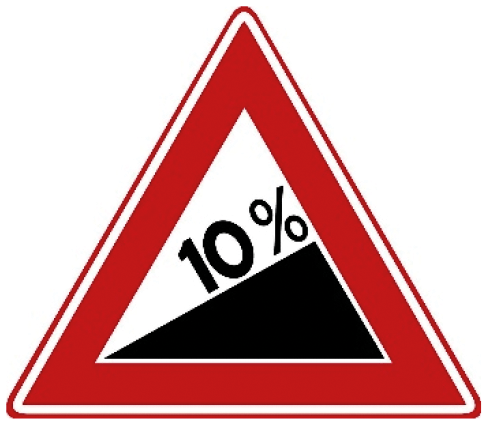 | J6 | Steep incline, for example, 10%. |
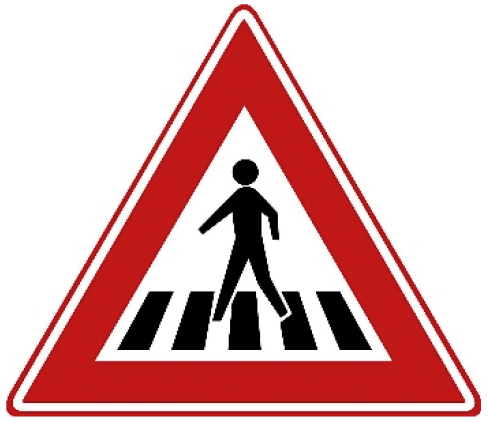 | J22 | Pedestrian crossing / zebra crossing. |
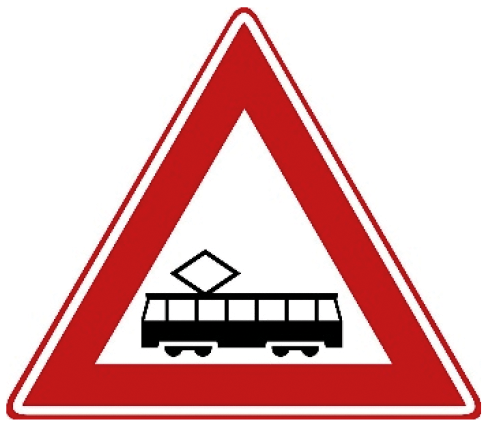 | J14 | Tram (crossing). |
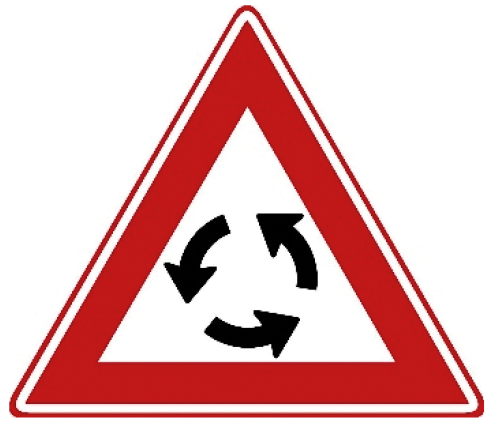 | J9 | Roundabout ahead. |
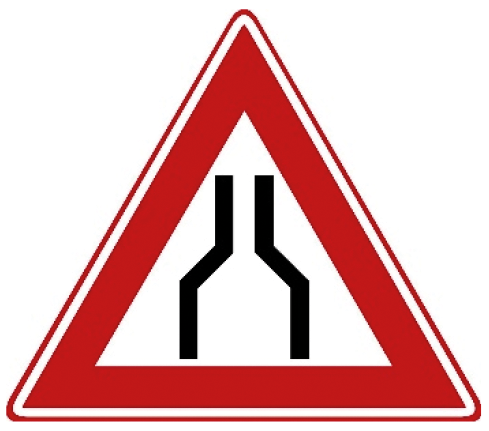 | J17 | Lane narrowing (general). |
4. Priority Signs
Priority signs indicate who has priority at an intersection or must yield. These signs are especially important: traffic signs always take precedence over normal priority rules.
| Sign | Code | Meaning |
|---|---|---|
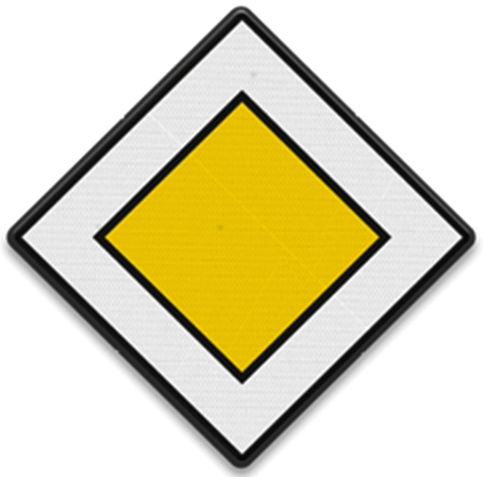 | B1 | Priority road — you are on a priority road and have priority over other drivers. |
 | B2 | End of priority road — you no longer have priority from other drivers starting here. |
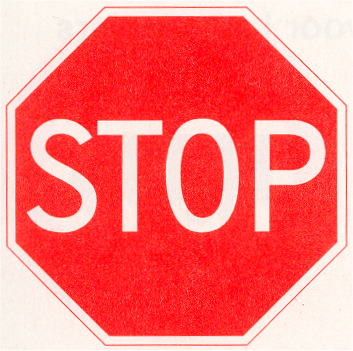 | B7 | Stop; yield to drivers on the intersecting road. |
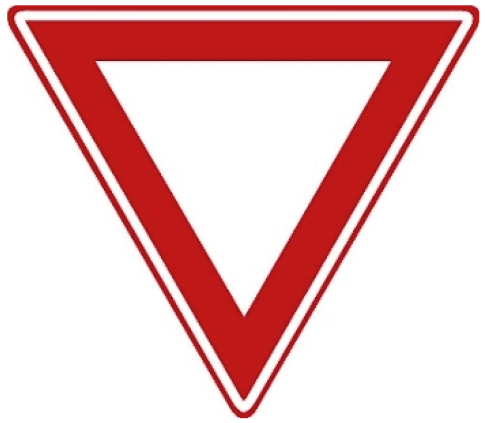 | B6 | Priority intersection (shark teeth) — you must yield to drivers on the intersecting road. |
| B4 | Warning sign for priority intersection with side road on the left — announces a priority intersection ahead. |
Note: a sign with shark teeth or a stop sign always means you must stop or yield — regardless of whether the intersection looks "equal" otherwise.
5. Supplementary Signs
Supplementary signs hang below another sign and make its meaning more precise: for whom it applies, from where, or for how long. Supplementary signs are text signs without their own pictogram, so only the explanation is provided here.
- Except for cyclists and mopeds — the sign above does not apply to them.
- Prohibited to enter, except for (excepted) cyclists and mopeds.
- Only for trucks — the sign above applies exclusively to trucks.
- Mandatory direction to the right, only for trucks.
- Valid over 500 meters — the above sign is only valid after 500 meters, so not immediately.
- Prohibited to enter, over 500 meters.
- Valid from now, for 500 meters — the above sign applies immediately and remains valid for 500 meters.
- Prohibited to stop, from here for 500 meters.
- Valid in wet road conditions — for example, a mandatory maximum speed of 50 km/h when the road surface is wet.
6. Railway Signs
Railway signs warn you step by step of an approaching railway crossing.
| Sign | Code | Meaning |
|---|---|---|
| – | – | Distance to the track: three consecutive distance signs at 80 m, 160 m, and 240 m count down the distance. |
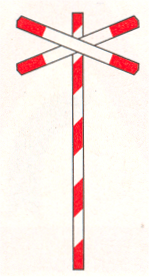 | J12 | Railway crossing with 1 track. |
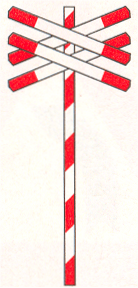 | J13 | Railway crossing with at least 2 tracks. |
7. Lane Narrowing: Who Has Priority?
At a lane narrowing, you usually encounter one of two signs. The difference lies in the shape: a round sign means you have priority, a square (rectangular) sign means you must yield.
- Round sign — the red arrow always indicates priority. If that arrow does not belong to you, then you yield to the black arrow (yourself).
- Square sign — the same principle, but you must yield to your oncoming traffic.
8. Parking Prohibition & Stopping Prohibition
These signs look similar, but the difference is exam-relevant: with a parking prohibition, you may still load, unload, or let someone get in/out. With a stopping prohibition, none of that is allowed — just keep driving.
| Sign | Code | Meaning |
|---|---|---|
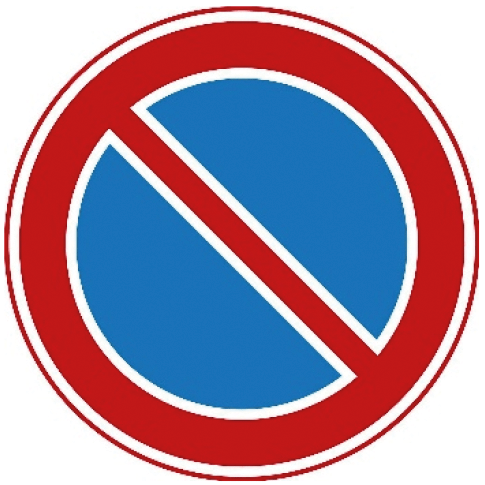 | – | Parking prohibition. |
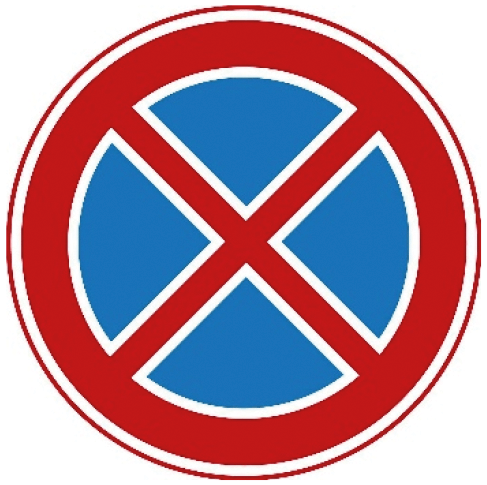 | – | Prohibition to stop. |
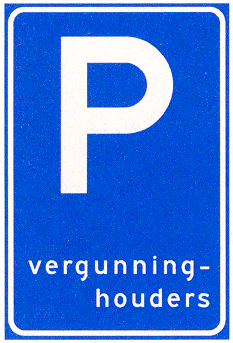 | – | Parking space only intended for permit holders. |
9. One-Way Street & Mandatory Direction
A one-way street is indicated by different signs. All traffic moves in the same direction here; from an exit, you are required to follow the arrow on the sign. Therefore, you cannot expect oncoming traffic on a one-way street. With a mandatory direction, the rule is slightly different: you must follow the indicated direction, but you can encounter oncoming traffic here.
| Sign | Code | Meaning |
|---|---|---|
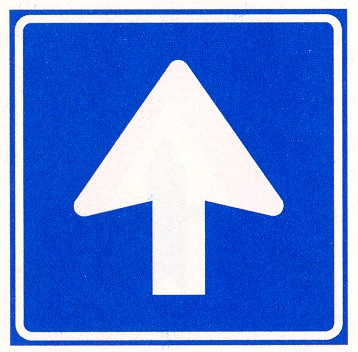 | C3 | One-way street. |
| D4 | Mandatory direction straight ahead. |
10. Other Confusing Signs
These signs often cause confusion on the exam because they look alike or are rarely seen in everyday traffic.
| Sign | Code | Meaning |
|---|---|---|
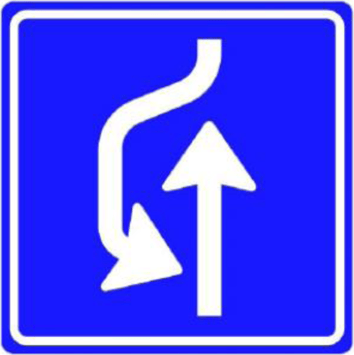 | L21 | Bypass on the left side of the road. |
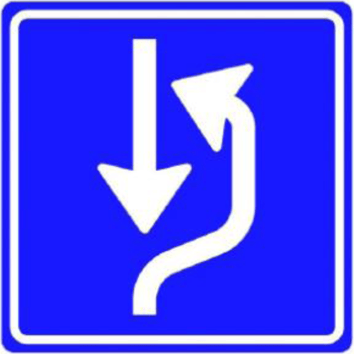 | L20 | Bypass on the right side of the road. |
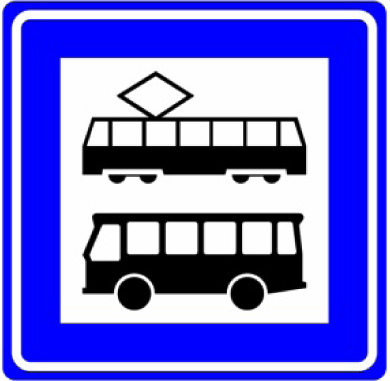 | L3 | Bus stop / tram stop. |
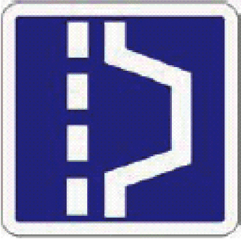 | L14 | Emergency lane. |
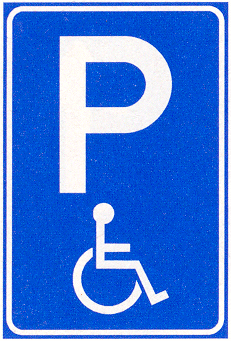 | – | Disabled parking space. |
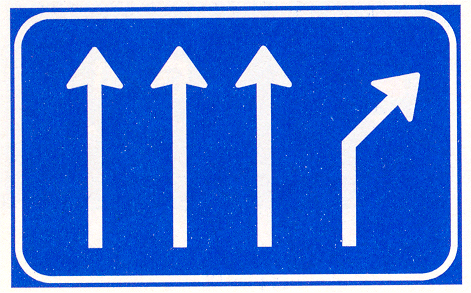 | L6 | Split of the highway. |
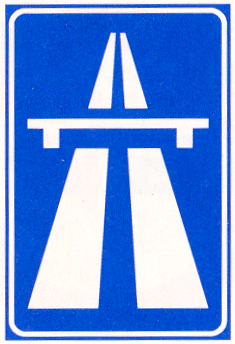 | G1 | Highway (beginning). |
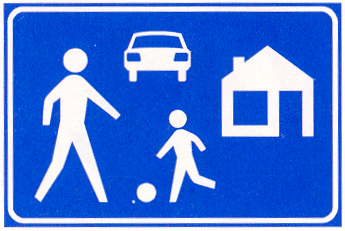 | G5 | Residential area. |
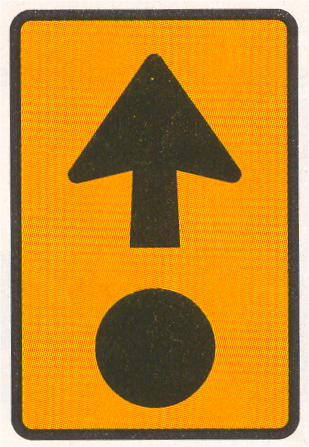 | K14 | Route for the transport of certain hazardous substances. |
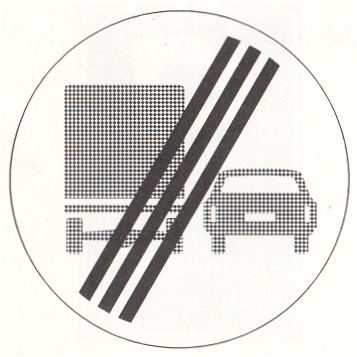 | F4 | End of overtaking prohibition for trucks to overtake motor vehicles. |
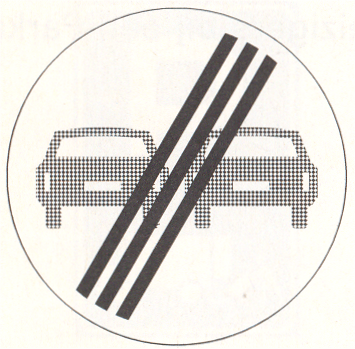 | F2 | End of prohibition for motor vehicles to overtake each other. |
| – | – | Rush hour lane, exit to an N-road, exit towards a place name on the highway, and Park & Rest are mainly directional and road section-specific indications without a separate RVV pictogram — recognize them by the context on the highway. |