Part 2 of 8 in General Legislation & Driver Requirements
How much alcohol may you drink before driving? Blood alcohol and medicines
How much alcohol may you drink and drive? Novice drivers 0.2, experienced drivers 0.5 per mille. Plus driving bans, disqualification and EMA.


Written by Chris Prosman Reviewed by Dirk van Zuijlen
Updated Reviewed on 7 min read
Free mock exam · no account needed
How much alcohol may you drink if you are going to drive? As a novice at most 0.2 per mille, as an experienced driver 0.5 per mille. Here you read what that means in glasses, when you may drive again, which medicines are dangerous and what happens to your licence if you have had too much.
How much alcohol can you drink and drive in the Netherlands?
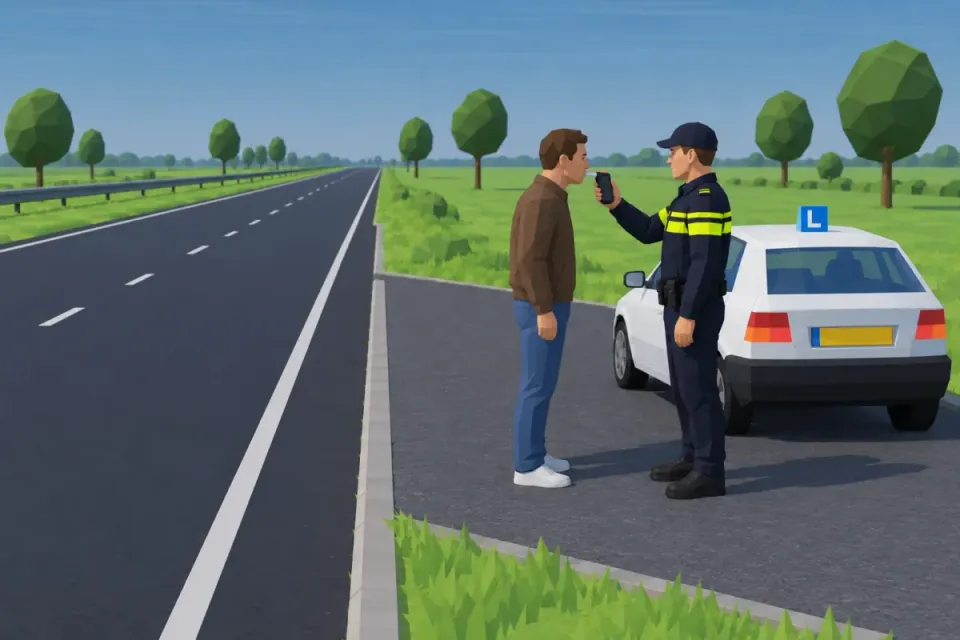
The safest answer: nothing. The law allows a small amount, but that limit is not advice to drink up to it.
Alcohol makes your reaction time longer. You see less, you judge speed and distance worse and your stopping distance gets longer. This happens before you feel drunk. That is why not drinking when you drive is the best choice.
What is the legal alcohol limit for driving in the Netherlands?
It depends on how long you have had your licence. Per mille is how much alcohol is in your blood. The police use a breath test. That result is in micrograms per litre of breath (µg/l).
| Who | Blood | Breath | Roughly how many beers? |
|---|---|---|---|
| Novice driver | 0.2 per mille | 88 µg/l | Less than 1 glass |
| Experienced driver | 0.5 per mille | 220 µg/l | About 2 glasses |
| Cyclist, also on a normal e-bike | 0.5 per mille | 220 µg/l | About 2 glasses |
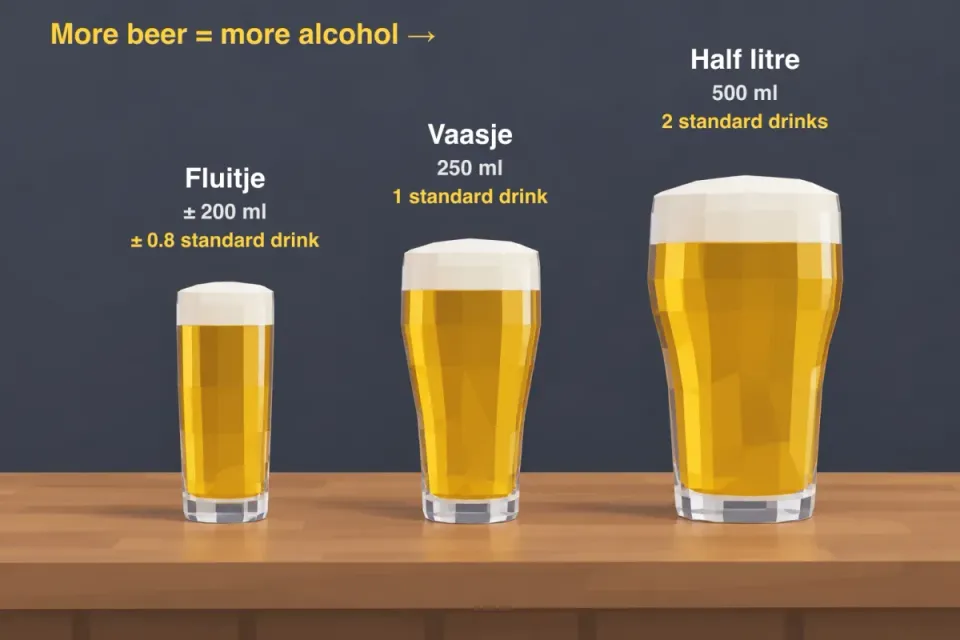
One glass is a standard drink with about 10 grams of alcohol. For beer that is a vaasje of 250 ml. A fluitje of about 200 ml is a bit less (about 0.8 of a glass). A half litre counts as 2 glasses. The number of glasses is an estimate: you may reach the limit sooner. Sources: Dutch government, alcohol rules (2026) and Trimbos Institute, standard drink (2026).
What is the alcohol limit for a novice driver?
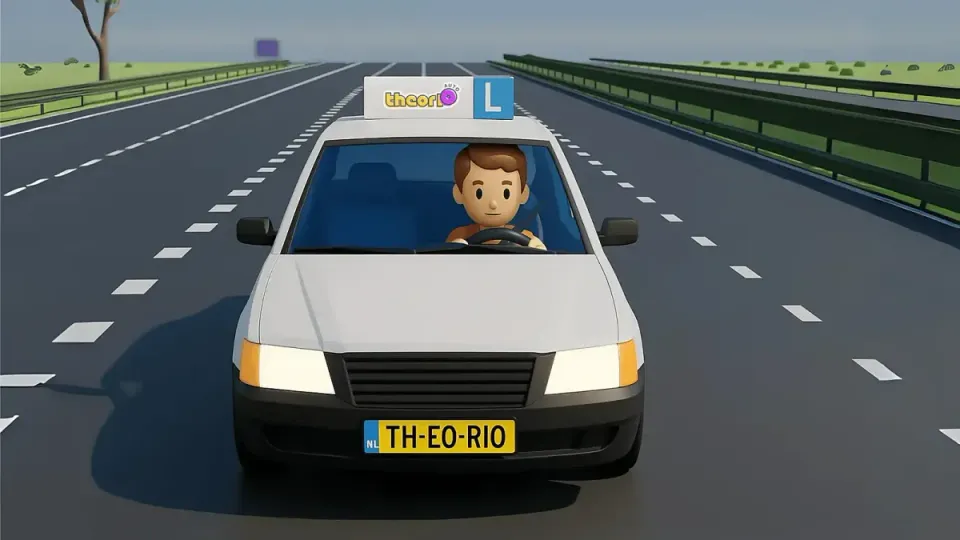
A novice driver may have at most 0.2 per mille. You are usually a novice for 5 years. If you had an AM or T licence before you turned 18, it can be 7 years. See how long you are a novice driver.
What is the alcohol limit for an experienced driver?
After your novice period you may have at most 0.5 per mille. Note: if you have also used drugs, the alcohol limit is 0.2 per mille, even if you are experienced. Source: Road Traffic Act 1994, article 8.
How much per mille is one beer?
That is different for everyone. It depends on your weight, whether you have eaten, whether you are a man or a woman and how fast you drink. For a novice, one beer can already be too much.
So there is no fixed number of glasses for 0.2 or 0.5 per mille. The Dutch government counts on less than 1 glass for 0.2 per mille and about 2 glasses for 0.5 per mille. A table or app only gives an estimate, not certainty.
A standard glass of beer, wine or Dutch gin holds about the same amount of alcohol, because the glasses have different sizes. Watch the size of your beer: a fluitje (about 200 ml) is a bit less than a standard drink, a vaasje (250 ml) is one standard drink and a half litre counts as two. A strong special beer or a glass you pour yourself often holds even more.
When can you drive again after drinking alcohol?
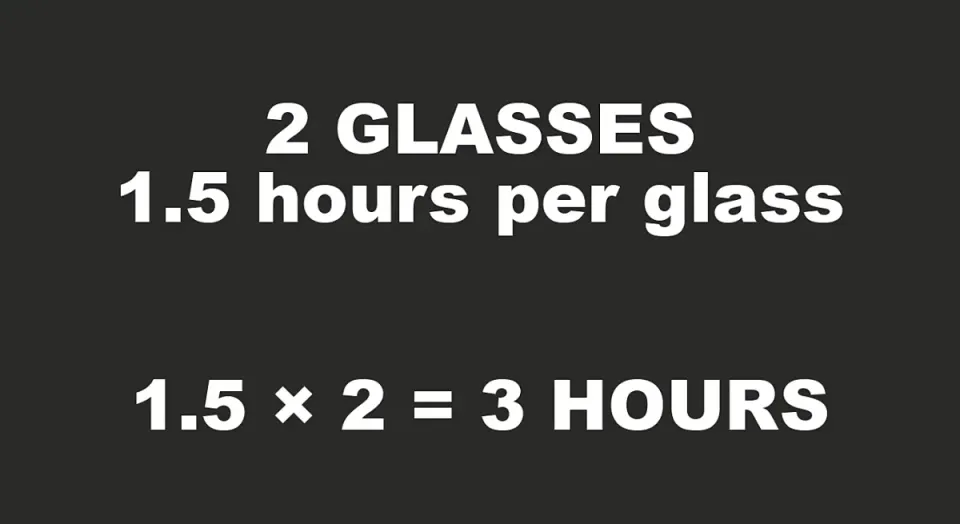
Count on about 1.5 hours per glass. After three glasses that is about 4.5 hours. This is a rule of thumb: for you it may take longer.
Coffee, water, fresh air or a cold shower do not help. Your body does not break down alcohol faster. After a night of drinking you may still have alcohol in your blood the next morning. In doubt whether you may drive? Leave the car.
Which medicines should you not drive with?
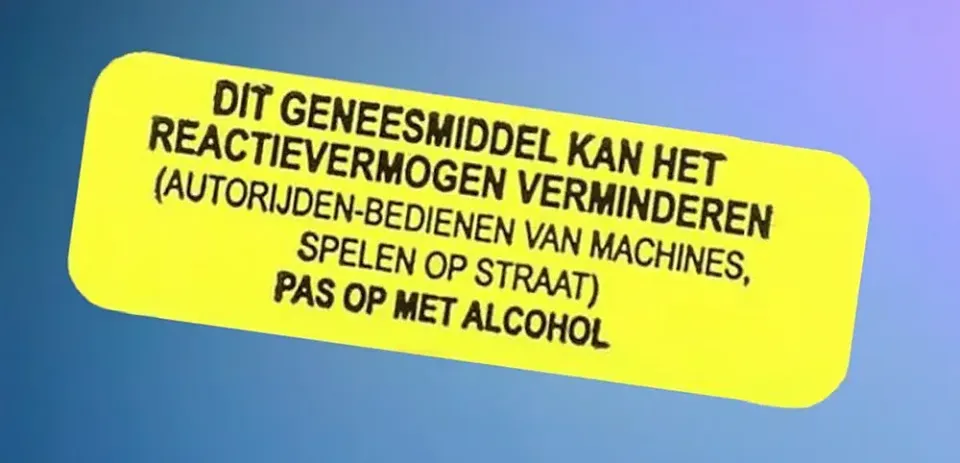
Do not drive with medicines that make you drowsy or slow. Examples are some sleeping pills, sedatives, painkillers and antidepressants.
A yellow sticker on the box warns that the medicine can slow your reactions. Read the leaflet. Ask your doctor or pharmacist whether you may drive and how long you must wait. Do not drive when you feel drowsy. Coffee does not help.
Drugs also make you a worse driver. Driving under the influence is a criminal offence. Never combine alcohol with drugs or with such medicines: together the effect is much stronger. See also reaction time and stopping distance.
What happens if you drive over the alcohol limit?
If you are over the limit, or cannot drive safely, you can get four measures. They differ in who decides, how long they last and what you may still drive afterwards. A criminal case and a CBR measure can run at the same time.
Driving ban: the police, up to 24 hours
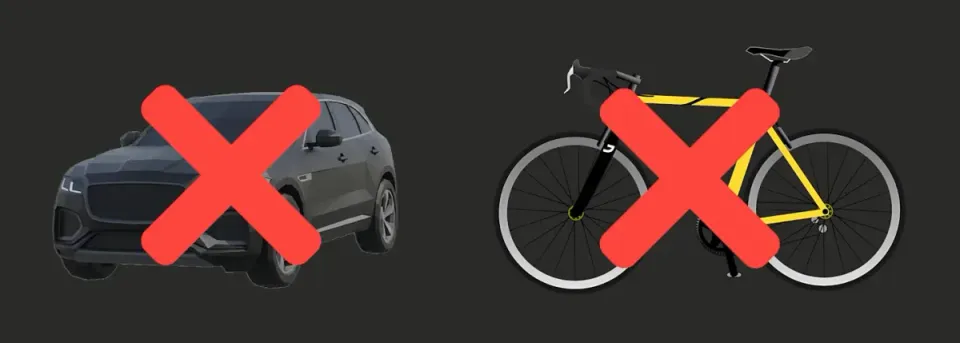
Are you unfit to drive because of alcohol, drugs or medicines? Then the police can give you a driving ban of up to 24 hours. You may then drive or ride nothing, not even a bicycle or e-bike.
Confiscation: the police take your licence
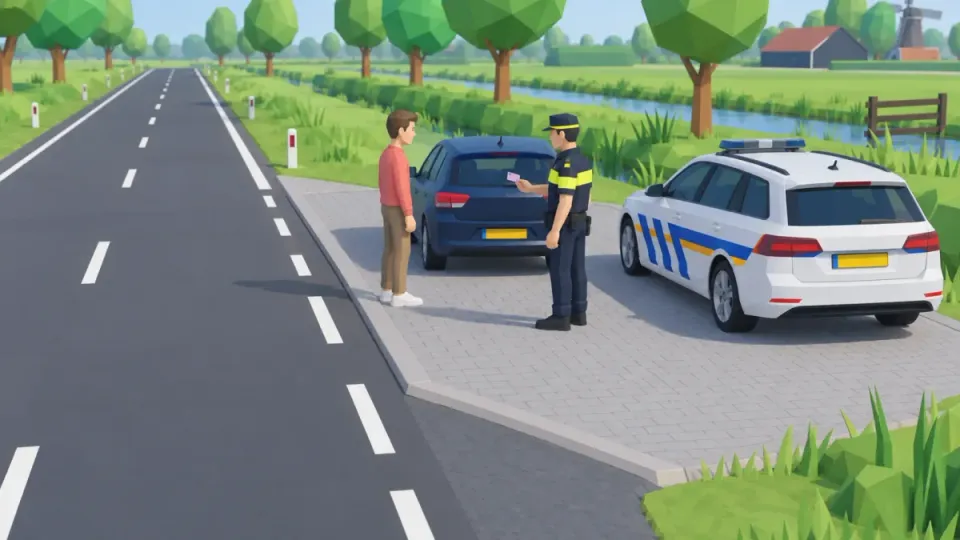
This can happen with far too much alcohol, if you refuse an ordered breath test, or if you drive a car 50 km/h or more over the limit. The public prosecutor decides within 10 days whether you get your licence back. Until then you may not drive a car, motorcycle or moped. Source: OM: licence withheld.
Disqualification: a punishment from the court
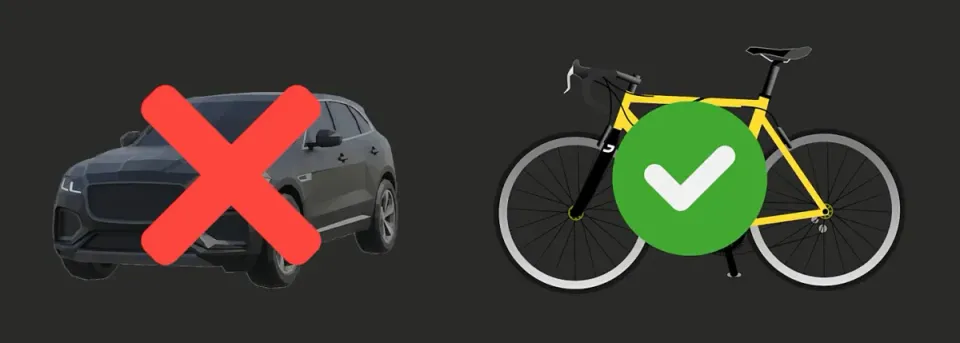
The court can forbid you to drive. For alcohol or drugs that is at most 5 years, for a repeat offence at most 10 years. The Public Prosecution Service can itself disqualify you for up to 6 months. During that time you may not drive any motor vehicle, not even during a driving lesson.
Invalidation: a CBR decision
Do you skip a compulsory course, not cooperate or not pay? Or does an assessment show that you are not fit to drive? Then the CBR can declare your licence invalid. You may only drive again once you have a new licence. Sometimes you first need a course, assessment or new exam.
What may you still ride?
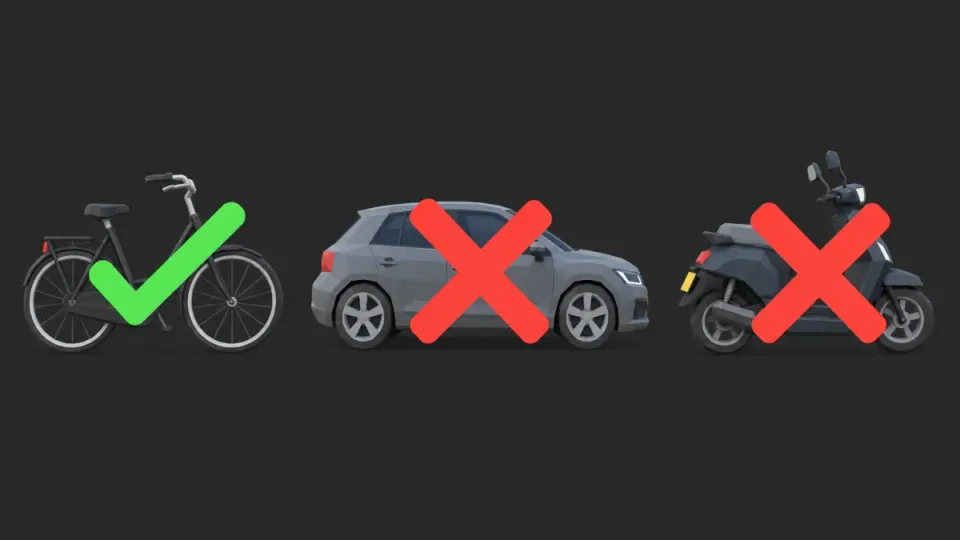
| Measure | Bicycle or normal e-bike | Car, motorcycle, moped or speed pedelec |
|---|---|---|
| Driving ban | No | No |
| Licence confiscated or disqualification | Yes, if you have no separate driving ban | No |
| Licence declared invalid | Yes, if you have no separate driving ban | No |
A speed pedelec, light moped, moped or brommobiel falls under licence AM. So you may not use one while your licence is taken. See the vehicle types.
CBR courses and assessments
On top of a fine or punishment, the CBR can give you a compulsory course or an assessment. This is the usual split for a first offence:
| Measure | When usually? |
|---|---|
| LEMA: light educational measure on alcohol and traffic | Novice: from 0.5 to below 0.8 per mille. Experienced: from 0.8 to below 1.0. |
| EMA: educational measure on alcohol and traffic | Novice: from 0.8 to below 1.3 per mille. Experienced: from 1.0 to below 1.8. Refusing an ordered alcohol test can also lead to this. |
| Fitness to drive assessment (alcohol) | Novice: from 1.3 per mille. Experienced: from 1.8. |
| EMG: educational measure on behaviour and traffic | For example 60 km/h or more over the limit, or several dangerous actions. |
| LEMG: light educational measure on behaviour and traffic | Among other things 50 to 59 km/h over the limit in a car. Lower limits apply at road works. |
| EMD: educational measure on drugs and traffic | An offence involving drugs can lead to a drugs course or an assessment. |
Do you not attend or not pay? Then the CBR declares your licence invalid. The course comes on top of the fine or punishment from the prosecutor or court.
Practise like the exam
Example questions like in the CBR exam
Real questions from the Theorio app. You can expect similar questions in your CBR exam.
Question 1 of 5
This driver is 20 years old. What is the allowed blood alcohol content?
Tap the answer you think is right.
What can speed up the breakdown of alcohol in the blood?
Tap the answer you think is right.
Is it allowed to cycle if you have had too much alcohol to drive a car?
Tap the answer you think is right.
You have not consumed alcohol. Do you still have to take a breath test?
Tap the answer you think is right.
If medications affect your driving behavior, where is this mentioned?
Tap the answer you think is right.
Answers and explanations for the example questions
Question 1: This driver is 20 years old. What is the allowed blood alcohol content?
Correct answer: 0.2 ‰
You are a novice driver for the first 5 years after obtaining your driving licence. A 20-year-old falls under this category. For novice drivers, a limit of 0.2 per mille applies. Experienced drivers may have a maximum of 0.5 per mille in their blood. 🍺
Question 2: What can speed up the breakdown of alcohol in the blood?
Correct answer: Nothing at all
Nothing at all speeds up the breakdown of alcohol. Coffee, water, fresh air, or sleeping do not help. The liver takes about 1.5 hours to break down 1 standard drink of alcohol. ⏳
Question 3: Is it allowed to cycle if you have had too much alcohol to drive a car?
Correct answer: No
It is legally forbidden to cycle if you have drunk too much, as the same limit (0.5 per mille) applies to cyclists as to motorists. Although the police usually do not confiscate your driving licence, you can receive a fine or a temporary driving ban imposed, which means you are not allowed to cycle further. Alcohol reduces your balance and reaction ability, making you a danger to yourself and other road users 🍺.
Question 4: You have not consumed alcohol. Do you still have to take a breath test?
Correct answer: Yes
The police want to check if it is safe on the road. If the police ask you to blow? Then you must always listen. Even if you haven't drunk anything at all. You are required to cooperate. Do you say no? That is not allowed. Then you are committing an offense and can be penalized.
Question 5: If medications affect your driving behavior, where is this mentioned?
Correct answer: On the package insert
Information about the influence on driving behavior is always mentioned on the package insert. There may also be a warning sticker (often yellow) on the packaging. 📄
FAQ
Frequently asked questions
Short answers to questions that often come up on this subject.
How much may you drink as a new driver?
A novice driver of a motorised vehicle has a limit of 0.2 per mille in blood or 88 µg/l in breath. One drink can already be too much. The normal limit becomes 0.5 after the novice period. That period is often 5 years, but may be 7 after AM or T before 18; obtaining B at 17 has a specific exception.
What is the difference between being forbidden to drive and a suspended licence?
Being forbidden to drive (rijverbod) comes from the police and lasts up to 24 hours: you may not ride anything, not even a bicycle. A suspension (rijontzegging) is a penalty from the court, for alcohol or drugs up to 5 years: you may not drive a car, but you may cycle.
May you ride a speed pedelec while your licence is suspended?
No. A speed pedelec goes up to 45 km/h and counts as a moped, and for that you need a licence. An ordinary bicycle and a pedal-assist e-bike up to 25 km/h are allowed.
Ready to practise?
Test your knowledge of General Legislation & Driver Requirements with 80 practice questions in the app.
Free mock exam · no account needed
Your first quiz is free, no account needed. After that from €34.99 for 90 days of access.